
A-du vs Zillow
How A-du and Zillow compare for ADU owners. Zillow advertises a vacancy to a large audience; A-du covers the whole ADU lifecycle, from design and permitting to leasing and rent collection.
A-du and Zillow are different categories of tool: A-du is an end-to-end ADU platform, and Zillow is a large rental-listing marketplace that advertises vacancies and collects applications.
For an ADU owner the practical question is not which one wins, but which job you are doing: building and operating a unit, or simply advertising one.
The short version
Zillow is excellent at one thing: putting a vacancy in front of a very large audience of renters. If all you need is reach, it is hard to beat. But Zillow starts at the listing. It assumes the unit already exists and that you already know how to screen, lease, and collect rent safely.
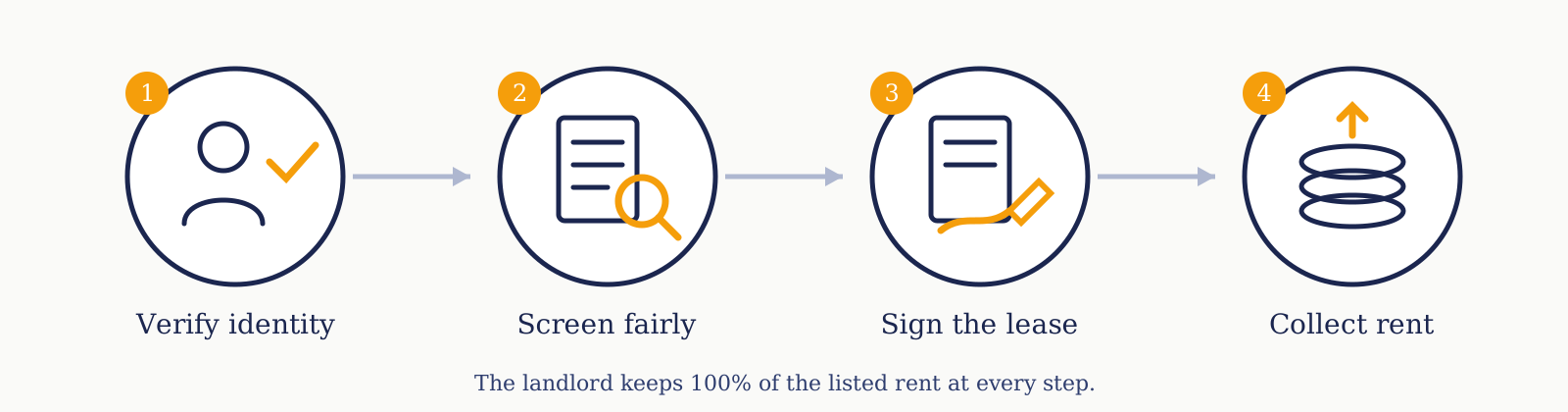
A-du is built for the part of the journey that happens before and after the listing, specifically for Accessory Dwelling Units. Before: pre-approved ADU plans, permit-fee calculators, GIS lot lookup, and license-verified contractor bids. After: identity-verified tenants, FCRA-compliant screening with reusable portable profiles, e-signed leases, and rent collection where the landlord keeps 100% of the listed rent.
Feature comparison
| Feature | A-du | Zillow Rental Manager |
|---|---|---|
| Primary purposeWhat the product is actually built to do. | End-to-end ADU platform: build, rent, and manage | Advertise a vacancy and take applications |
| ADU design & pre-approved plansHelp before the unit exists. | YesPlan marketplace incl. LADBS Standard Plan and municipal pre-approved designs | No |
| Permitting tools | YesLA County + NYC permit-fee calculators, GIS lot lookup, permitting requests | No |
| Licensed contractor / vendor bids | YesLicense-verified architects, engineers, and contractors with structured bidding | No |
| Identity verification | RequiredStripe Identity KYC before listing or applying | LimitedOptional / varies |
| Tenant screening | FCRA-compliantPass/fail result, adverse-action workflow, landlord pays, applicants pay nothing | AvailableApplicant-paid reports via partner |
| Lease & e-signature | YesGenerated lease + supplemental docs, e-signed and stored | YesTemplated lease in supported states |
| Rent collection | YesLandlord receives 100% of listed rent; tenant pays the service fee | YesACH/card; fees and terms vary |
| Audience reachWhere the eyeballs are. | FocusedADU renters in served markets (LA County) | Very largeOne of the largest rental search audiences in the US |
| Bottom line | Built for the whole ADU lifecycle: design and permit it, then list, screen, lease, and collect rent in one place. | A high-traffic listing and application portal for any rental. No ADU design, permitting, or build tools. |
How to think about it
These tools are not mutually exclusive. A common pattern: build and permit your ADU with A-du, run screening and the lease through A-du so it is your system of record, and syndicate the listing to a large portal like Zillow for extra reach. The difference is that A-du owns the steps Zillow cannot, plus the relationship that starts a year earlier, when you first decide to build.
Next steps: Explore ADU plans & contractors, see how rent collection works, or read the guide to renting out your ADU.
Related: Best PM software · vs TurboTenant · vs Craigslist & Facebook · Best ADU tools in LA.
Frequently asked questions
- Is A-du a replacement for Zillow?
- For ADU owners, A-du replaces the parts Zillow does not cover and overlaps on the rest. Zillow is built to advertise a vacancy to a large audience and take applications. A-du covers the full ADU lifecycle: designing and permitting the unit, finding licensed contractors, then listing, screening, leasing, and collecting rent. Many owners list on both and use A-du as the system of record.
- Does Zillow help me build or permit an ADU?
- No. Zillow is a rental marketing and application platform. It does not offer ADU plans, permit-fee estimates, GIS lot lookups, or contractor bidding. A-du is built specifically for those pre-rental steps in addition to leasing and rent collection.
- Why does A-du require identity verification?
- A-du requires Stripe Identity verification before a user can list a unit or apply to rent one. This reduces fraud and scam listings, which are common on open marketing portals, and it is part of A-du trust-first model for both landlords and tenants.
- Who is A-du best for?
- A-du is best for homeowners and small landlords who own or are building an Accessory Dwelling Unit in a served market and want one platform from design through rent collection. If you only need to advertise an existing apartment to the widest possible audience, a large portal like Zillow is a reasonable complement.
Comparison reflects publicly available product information as of 2026 and A-du features at time of writing. Competitor capabilities and pricing change; confirm current details with each provider.