Cash-Out Refi for a Brooklyn Brownstone ADU: What the Appraisal Gap Means for You
Chris Koss, AIA|Published: June 29, 2026
Last updated: September 25, 2026
Before you tap your brownstone's equity to build an ADU, understand why appraisers struggle to value ADU potential in NYC, and what your real financing options are.
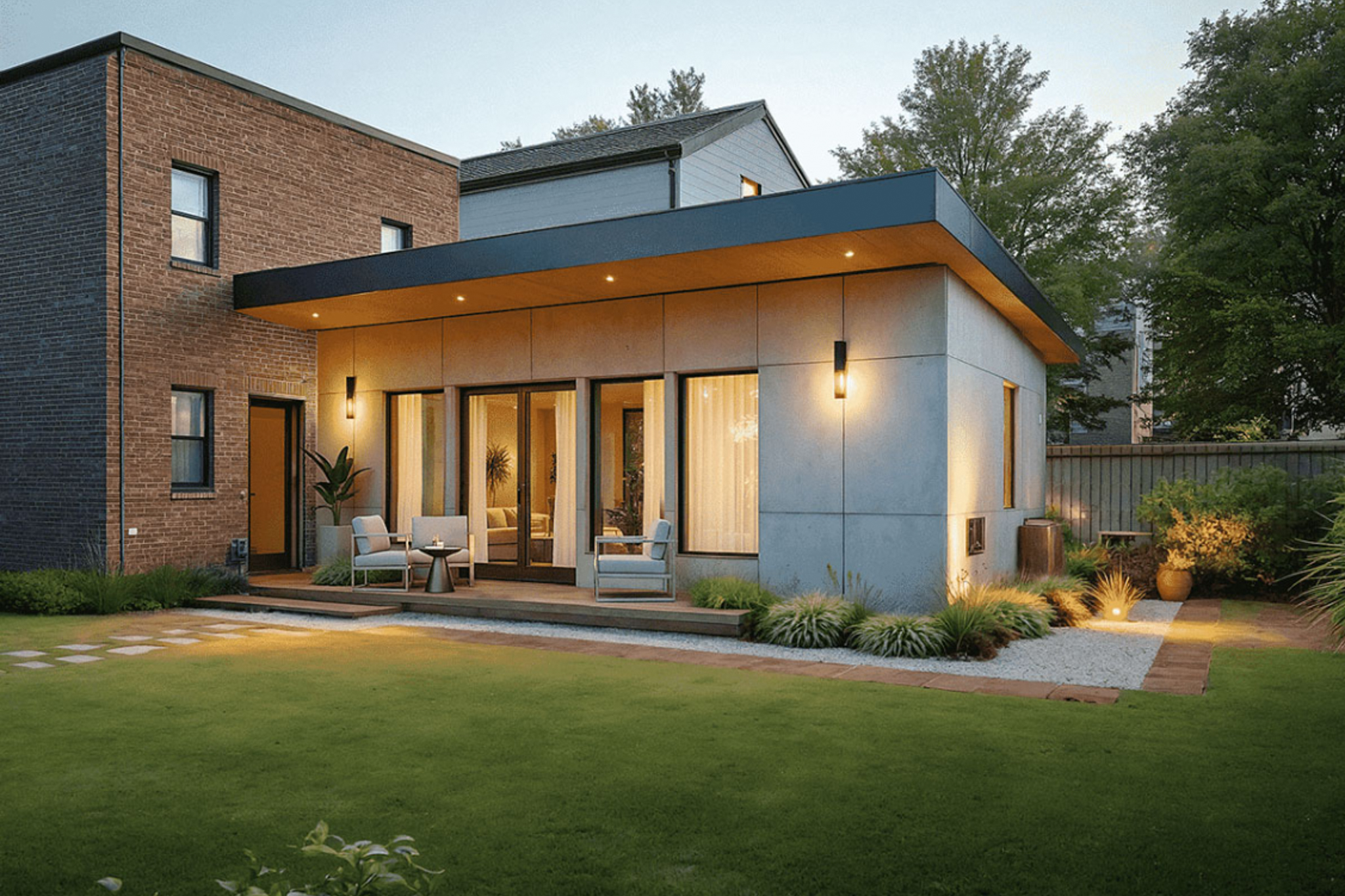
If you own a brownstone in Brooklyn and want to build an accessory dwelling unit, the first thing most people reach for is the equity in their home. A cash-out refinance feels intuitive: you have $600,000 in equity, the ADU costs $150,000 to build, so you pull out the cash and get started. The reality is more complicated, and the bottleneck is almost always the appraisal.
Why Appraisals Are the Gatekeeping Problem
A cash-out refinance caps your borrowing at a percentage of your home's appraised value, typically 80% loan-to-value (LTV) for conventional loans. That means the appraiser's number determines how much cash you can access, not your intuition about what your brownstone is worth.
The challenge in NYC is that appraisers rely on comparable sales ("comps"): recent sales of similar nearby properties. For an ADU project, lenders want an "as-completed" appraisal that estimates what your home will be worth after the ADU is built. That requires comps of homes that already have ADUs, and in Brooklyn, those comps are nearly nonexistent.
ADUs have historically been rare in New York City because zoning restricted them. The City of Yes for Housing Opportunity, adopted December 5, 2024, expanded ADU rights significantly, but the appraisal market hasn't caught up. Appraisers are still working from a comp pool that mostly predates legal ADUs. The result: your brownstone's "as-completed" value gets conservatively underestimated, which shrinks the cash-out amount available to you.
The Math That Trips People Up
Here's a simplified example of how the gap materializes:
- Current appraised value: $1,200,000
- Existing mortgage balance: $400,000
- Max cash-out at 80% LTV: $960,000 − $400,000 = $560,000 available
- ADU construction budget: $200,000
Sounds workable, but now the appraiser looks at your as-completed value and, lacking ADU comps, assigns the same $1,200,000 (the ADU adds no appraised value). The math doesn't change. But if the appraiser could credit the ADU, that $200,000 addition might push your value to $1,350,000, unlocking an extra $120,000 in borrowing capacity. That gap between what your ADU is worth and what the appraiser can support with comps is the central problem.
In practice, many Brooklyn homeowners discover their cash-out proceeds are insufficient by $50,000 to $150,000 because the ADU's value simply can't be substantiated today.
Fannie Mae's ADU Guidelines Help, but Only If Comps Exist
Fannie Mae's Selling Guide (section B4-1.3-05) requires the appraisal to describe an ADU, analyze its effect on the home's value and marketability, and show the improvement is acceptable for the market, and it lets an older closed sale count as a comparable. The problem is finding those comparable sales. In most Brooklyn neighborhoods, they do not exist yet. Fannie Mae did expand the use of ADU rental income in October 2025 (announcement SEL-2025-08), letting lenders count it for up to 30 percent of qualifying income, but only on purchases and limited cash-out refinances of one-unit primary residences, so it does not help a cash-out refi.
For a conventional cash-out refi, this means your appraisal will likely still undervalue the ADU contribution until the City of Yes wave of legal ADU construction starts generating sales comps, which analysts estimate won't meaningfully populate comp pools until 2027 or 2028.
The HPD Plus One ADU Program: Read the Fine Print First
If cash-out refi falls short, NYC's HPD Plus One ADU program is the city's main ADU financing tool, but two of its terms cut against the plan in this post. First, it covers detached, semi-detached and semi-attached homes, so a typical attached row-house brownstone does not qualify. Second, HPD's term sheet makes the Plus One loan due if you do a cash-out refinance before it matures, so you cannot use a later cash-out refi to top up a Plus One project. The program offers low- or no-interest loans and construction financing grants, funded jointly by New York State's HCR and NYC's Department of Housing Preservation and Development (HPD), and administered by Restored Homes HDFC.
Key eligibility details from HPD:
- Income: Up to 165% of Area Median Income (AMI), with preference given to applicants at or below 120% AMI
- Occupancy: Owner-occupant required; you must live in the property
- Mortgage status: Must be current on all mortgages
- No municipal arrears: No outstanding tax liens or city debt
- Property type: Detached, semi-detached, or semi-attached 1- to 2-unit homes
- ADU types: Attached or detached additions, basement conversions, attic conversions, or newly constructed detached structures
The initial survey drew approximately 2,800 interested homeowners (mostly from Queens, Staten Island, and the Bronx), with about 25% found eligible after screening. The program expected to close roughly 35 loans in its initial phase, with intake closing June 12, 2026.
If you missed the intake window, the program is worth tracking for future funding rounds. Check the HPD Plus One ADU page for updates on reopening.
Practical Alternatives While Comps Catch Up
If you don't qualify for HPD Plus One and your cash-out refi comes up short, here are financing approaches Brooklyn owners are using:
- HELOC as a supplement: Pair a cash-out refi with a home equity line of credit. You access the refi cash first, then draw on the HELOC for the remaining shortfall. HELOCs are typically variable-rate and subordinate to your first mortgage.
- Construction-to-permanent loan: Some lenders underwrite based on the after-construction value using the contractor's scope of work and their own ADU valuation model, not purely comp-based. Ask lenders who specialize in renovation lending (203k, Fannie Mae HomeStyle).
- ADU-specific lenders: A small but growing category of lenders underwrite ADU projects with proprietary comp models. They're more common in California but are beginning to operate in New York.
- Phase the project: If the full ADU exceeds what you can finance now, start with a basement conversion (lower cost) that generates rental income, then refinance again in 2 to 3 years when your comp pool has improved.
What to Ask Your Appraiser Before You Apply
Before you commit to a cash-out refi application (and pay for the appraisal), ask your loan officer these questions:
- Does the lender allow as-completed appraisals for ADU projects, or do they require the ADU to be finished before appraising?
- What comparable sales will the appraiser use? Are there any recent ADU sales in your target neighborhood?
- What LTV cap applies to your loan type, and how much cushion do you have above 80%?
Getting clear answers upfront prevents the scenario where you order an appraisal, pay $600 to $900, and discover the appraised value doesn't support your cash-out amount.
The Bottom Line
Cash-out refinancing is a legitimate path to ADU financing in Brooklyn, but the appraisal gap is real and specific to NYC's thin ADU comp environment. The City of Yes will eventually improve this, but "eventually" is 2027 or later. In the meantime, remember that HPD Plus One ADU excludes most attached brownstones and makes its loan due on a cash-out refi, pair your refi with a HELOC if you need a top-up, and talk to renovation-specialist lenders before assuming conventional cash-out will cover the full build.
Sources: NYC HPD Plus One ADU Program; Fannie Mae Selling Guide B4-1.3-05 (ADU Appraisal Requirements); Fannie Mae Selling Guide Announcement SEL-2025-08 (October 8, 2025); HPD Plus One ADU term sheet; The City NYC, ADU coverage, March 2026.