The $349,000 ADU Value Gap Is Real. It Is Not Your Payout.
Chris Koss, AIA|Published: July 19, 2026
Last updated: September 25, 2026
California homes with an ADU appraised at a median $1,064,000 in 2023, versus $715,000 without one. Before you count that $349,000 as your payout, read what the FHFA data actually measured, and what it did not.
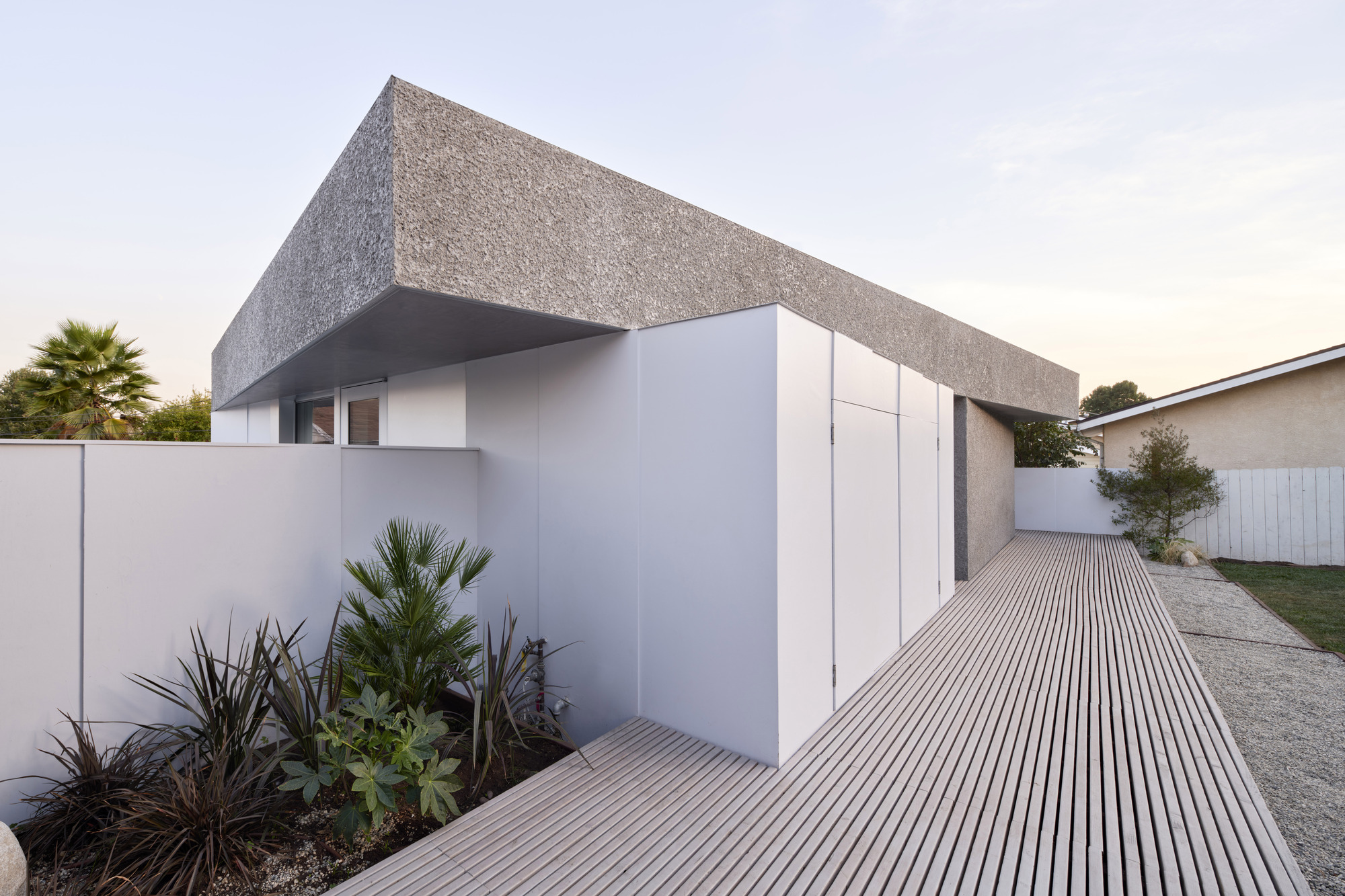
An ADU designed as a rental by Yeh-Yeh-Yeh Architects in Los Angeles. ArchDaily.
The number everyone will quote you is $349,000. That is the gap between what a California home with an accessory dwelling unit appraised for in 2023, a median of $1,064,000, and what a home without one appraised for, $715,000, according to the Federal Housing Finance Agency. It is a real gap. It is also, mostly, not a check anyone is writing you.
The short version:
- In 2023, California homes with an ADU carried a median appraised value of $1,064,000, against $715,000 for homes without one, per FHFA's appraisal dataset.
- Homes with ADUs grew in value faster over the decade, 9.34 percent a year versus 7.65 percent, but FHFA says the cause still requires further analysis.
- The headline gap reflects which homes get ADUs as much as the ADU itself, so read it as a ceiling on optimism, not a payout.
The number, and the number under the number
Here is the ledger FHFA published in January 2025, drawn from purchase appraisals on Fannie Mae and Freddie Mac loans in California.
| Year | Median value, with ADU | Without ADU | Gap |
|---|---|---|---|
| 2013 | $550,000 | $405,000 | $145,000 |
| 2023 | $1,064,000 | $715,000 | $349,000 |
Translate the 2023 gap into something you can feel. $349,000 is roughly half the value of the median no-ADU home. It is larger than the all-in cost of most detached ADUs in California. On paper, the unit pays for itself and buys a second one. That is the story that gets a homeowner to sign a construction contract, and it is the story you should be most suspicious of.
"By 2023, the median appraised value increased to $1,064,000 and $715,000 for properties with and without ADUs, respectively." FHFA, Trends in Median Appraised Value for Properties With ADUs in California.
Why the gap lies. An appraisal gap is not the same as value added. The homes that carry ADUs in this dataset are not a random slice of California; they skew toward larger lots, pricier neighborhoods, and owners with the cash to build. A $1,064,000 home would likely have appraised well above $715,000 with no ADU at all. FHFA measured a correlation, not a renovation. The agency is careful about that distinction, and so should you be.
The signal worth watching
The more honest number is the growth rate. From 2013 to 2023, California homes with ADUs grew in median appraised value at 9.34 percent a year, while homes without them grew at 7.65 percent. That 1.69 point spread compounds. On a $715,000 house, a decade at 7.65 percent lands near $1.49 million; at 9.34 percent it lands near $1.75 million. The difference is real money, and it showed up only after 2018.
FHFA offers one plausible reason: the units got better. After the state's ADU grant reimbursed up to $40,000 of predevelopment cost, as we noted when that grant ran dry, homeowners built larger, better-finished ADUs, and larger, better-finished ADUs appraise for more. Appraisers are not in the business of rewarding your good taste, but the data is not blind to it either. The lesson for your own lot is not "build any ADU"; it is "build one an appraiser can comp."
Our read: the $349,000 gap is the headline, but it is not what an ADU pays you, and any builder who quotes it as your return is selling. The number that should move you is the growth spread, 9.34 against 7.65 percent a year, and even that FHFA will not call causal. Build for the rent and the use; treat the appraisal bump as a bonus you cannot bank in advance.
For the income side of the math, which is where the case actually gets made, the rule of thumb holds across ADU types: detached units cost the most and, not coincidentally, appraise the strongest. If you are a first-time ADU client, that is the trade to weigh before you fall for the gap.
The cross-street check. This dataset is California only, which quietly matters. There is no FHFA ADU appraisal series for New York, so a Brooklyn homeowner weighing a garden apartment works from thinner comps and leans instead on the state's Plus One grants, up to $175,000 in New York City, to move the math. And in San Francisco the appraisal is only half the exit: a Waiver-track ADU is rent controlled for life, which caps income, while the city's newer condo-sale ordinance lets some owners sell the unit outright, a lever Los Angeles County still does not offer. Same appraisal question, three different answers depending on the county line.
The decision this changes
If you are a homeowner sizing an ADU as an investment, the FHFA data should change one thing: stop underwriting the $349,000 and start underwriting the rent, the build quality, and the years you will hold. An ADU that pencils on rent alone is a good decision. An ADU that only pencils if you believe the appraisal gap is causal is a bet, and the agency that published the gap will not take that bet with you.
A-du's build marketplace is where you turn a value hunch into bids from vetted California ADU builders, so the quality that actually moves an appraisal is priced into the job from the start.
The next FHFA data drop will show whether that post-2018 quality jump held once the grant money stopped. That is the number to watch.
Elsewhere on the ADU beat
- New York's Department of Buildings had received 98 ADU filings by December 2025, half of them in the two months after the city finalized its ADU rules, NYC Mayor's Office.
- Fire-rebuild families in Altadena and the Palisades can now pull a modular permit in ten business days under AB 818 and return to an ADU first, Casita Coalition.
- A rundown of the California housing laws taking effect in 2026, from SB 543's new ADU permit-processing deadlines to AB 1154's junior ADU owner-occupancy change, Holland & Knight.