Built an Unpermitted ADU Before 2020? California Offers Amnesty
Chris Koss, AIA|Published: August 18, 2026
Last updated: September 25, 2026
California's AB 2533 lets homeowners legalize an unpermitted ADU or JADU built before January 1, 2020 without impact fees or code penalties, unless a real health or safety hazard is at stake. Here is the walkthrough.
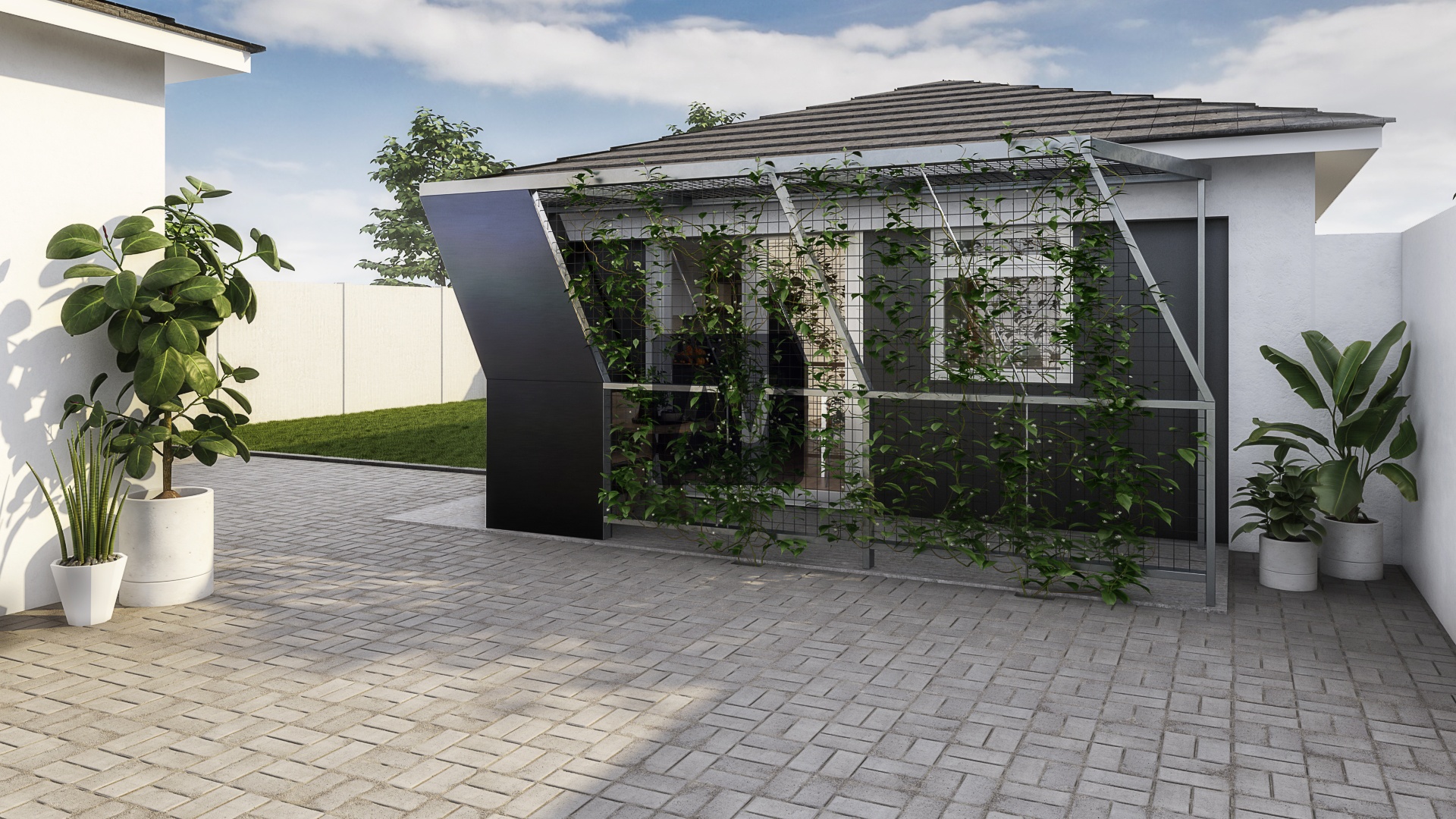
A former garage, now a legal accessory dwelling unit. Design and photo via Modative.
Somewhere in your city sits a garage that quietly became a home, built without a permit, and its owner has spent years afraid to call the building department. Under California's AB 2533, a local agency cannot deny a permit to legalize an unpermitted ADU or junior ADU built before January 1, 2020 over code violations, and cannot charge impact fees for it, unless a real health or safety hazard is at stake.
The short version:
- AB 2533 covers unpermitted ADUs and JADUs finished before January 1, 2020. A unit built later does not qualify, so the date is the whole ballgame.
- Your city cannot deny the legalization permit for building-code or ADU-standard violations, and cannot charge impact, connection, or capacity fees, unless a fix is needed to keep the building out of legally substandard territory.
- You can hire a licensed contractor for a confidential pre-inspection before you file, so you learn the repair list without putting the city on notice.
This is a walkthrough for the owner who already has the unit and wants it on the books, and for the tenant living in one who wants to know what legalization will and will not change. The law is AB 2533, signed in September 2024, which rewrote Section 66332 of the Government Code. It moved the amnesty cutoff from units built before 2018 to units built before 2020, and it added a duty on the city to tell you your rights.
From the text
Notwithstanding any other law, and except as otherwise provided in subdivision (b), a local agency shall not deny a permit for an unpermitted accessory dwelling unit or unpermitted junior accessory dwelling unit that was constructed before January 1, 2020, due to either of the following:
That is Government Code Section 66332(a) as AB 2533 wrote it; SB 543 renumbered the section as 66311.7 on January 1, 2026. The exception in subdivision (b) is the one that matters: a city can still require a fix when correcting the violation is necessary to keep the building from being legally substandard, which is the state's shorthand for a genuine health or safety problem. Bad wiring, no egress, and no working smoke alarms are fair game. An undersized closet is not.
The steps, in order
Confirm the date. Everything rests on the unit being finished before January 1, 2020. Old permits on the main house, dated photos, utility records, and satellite imagery all help establish it. If the unit went up in 2021, this law is not your path, and you are back in ordinary ADU permitting under the state's standard ministerial process.
Get a confidential pre-inspection. AB 2533 lets you hire a licensed contractor to inspect the unit privately, before you file anything. Do this. You want the repair list in hand and priced before the city is involved, so there are no surprises and nothing the city can hold over you. The bill bars the city from penalizing you for having the unpermitted unit once you apply.
Read the checklist the city now owes you. The new language requires every local agency to publish the list of conditions that make a building substandard and to tell homeowners the pre-inspection option exists. That checklist is your scope of work. If your city has not posted one, the state ADU handbook and the Health and Safety Code definition of substandard housing are the backstop.
File, fix, and finish. Submit the legalization permit, correct only what health and safety require, and take the unit to a certificate of occupancy. In Los Angeles, that filing runs through LADBS, which in July 2026 issued a dedicated AB 2533 bulletin, IB P/BC 2026-161, with a City of Los Angeles Substandard Checklist for the confidential pre-inspection, and revised its general ADU and JADU bulletin to match.
Where people get stuck
The date is the first wall. Owners who cannot document a pre-2020 finish date lose the amnesty and its fee waiver. The second wall is scope creep: a plan checker who treats "substandard" as "everything not to current code" is misreading the law, and you should push back, in writing, with the statute. The third is the certificate of occupancy question, which decides your tenant's future. A newly legal unit with its own certificate of occupancy can qualify for the new-construction exemptions we covered when we explained how a new LA ADU skips rent control for fifteen years. A conversion folded into the main house's history may not. The paperwork here is not a formality; it can set the rent rules for fifteen years.
The cross-street check. California's amnesty is unusually broad: any city, any pre-2020 unit, statewide. New York City's closest analog is narrower by design, because its basement and cellar legalization runs through Local Law 126 and the temporary residence pilot, limited to units that predate April 2024, in a short list of community districts, with automatic sprinklers due within two years, a path we mapped in our NYC basement coverage. Washington, under HB 1337, went the other way and simply told cities to allow two ADUs per lot going forward; it offers no statewide amnesty for the illegal unit already in the backyard, so a Seattle owner in that spot is still in normal permitting. If you are comparing regimes, California is the only one of the three that reaches backward to forgive what is already built.
The cost ledger
The money in AB 2533 is not the permit fee, which is priced like an ordinary ADU review. The money is what the city cannot add. Impact, connection, and capacity charges are off the table for a qualifying legalization. On a new build those charges can run into five figures, so waiving them is often the difference between legalizing and staying in the shadows. Budget instead for the repairs the checklist names: electrical, egress, and life-safety work, whatever your specific unit needs to clear the substandard bar.
Our read: AB 2533 is the rare housing law written for the owner who already broke the rules, and that is exactly the point, because the unit exists and the tenant already lives there. The weakness is administrative. The amnesty only works if cities actually publish the checklist they now owe the public, and a homeowner who does not know the option exists will keep paying a mortgage on a home that legally is not there.
If your legalization turns on a clean pre-inspection, A-du's services marketplace can line up a licensed contractor to walk the unit before you file a thing.
The next test is administrative: whether every city posts the substandard-conditions checklist the law requires, as Los Angeles now has, and how quickly the counters move once the applications land.
Elsewhere on the ADU beat
- San Diego's City Council folded a community enhancement fee into its bonus ADU program for units under 750 square feet, part of a broader reform package, Inside San Diego.
- New York City published proposed DOB and HPD rules to implement the accessory dwelling unit provisions of City of Yes, NYC Buildings.