Washington Lets You Sell the Backyard Cottage. The Land Stays Put.
Chris Koss, AIA|Published: September 7, 2026
Last updated: September 25, 2026
Washington's HB 1337 forces most cities to let a homeowner sell a backyard cottage as a condominium, separate from the house in front. The land stays with the original owner, and the open question is who lends on it.
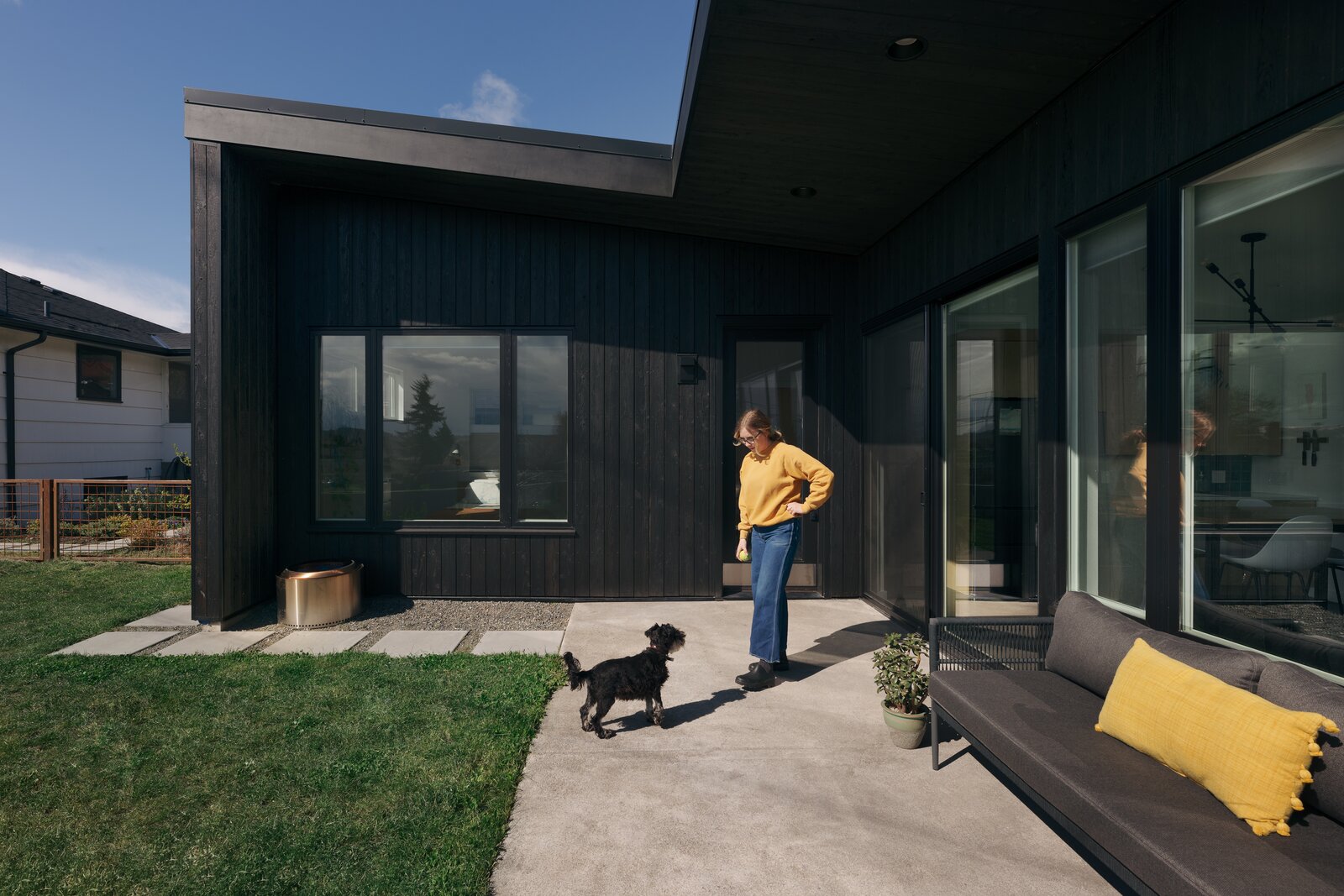
A Beacon Hill backyard cottage built from Seattle's city-sponsored plan set, photographed for a home tour. Dwell.
You built the backyard cottage. Now you want to sell it, not rent it, and without selling the house in front to do it. In Washington you can: the state's 2023 ADU law, HB 1337, forces most cities and counties to let a detached accessory dwelling unit be sold as its own condominium, apart from the primary home, and the Seattle couple above built theirs for about $212,000.
The short version:
- Inside urban growth areas, HB 1337 makes Washington cities and counties allow at least two ADUs per lot, drop owner-occupancy rules, and permit an ADU to be sold as a condominium separate from the main house.
- The land does not split. A buyer owns the cottage as a condominium unit; the original owner keeps the lot, recorded under the Washington Uniform Common Interest Ownership Act, chapter 64.90 RCW, which governs condominiums created since July 1, 2018.
- Seattle folded the rules into its municipal code (SMC 23.42.022) in 2025, and jurisdictions in King, Kitsap, Pierce, and Snohomish counties had to comply by the middle of that year, with the rest of the state on staggered deadlines running through mid-2027.
The condominium path is the part of HB 1337 that changes your balance sheet, not just your zoning. A rentable cottage is an income stream you manage forever. A sellable cottage is an asset you can cash out once, to a stranger, while keeping your own house and yard. That is a different decision, and it is worth walking through before you count on it.
Step one: confirm your city actually has to follow the law
HB 1337 binds cities and counties that plan under the Growth Management Act, and its ADU rules apply inside urban growth areas. That covers Seattle, Tacoma, Bellevue, Everett, Spokane and most of the populated map, but not every rural parcel. The same statute is the one we covered when Washington capped ADU impact fees at half the single-family charge and scrapped transit-area parking minimums. If your jurisdiction planned under the GMA, the condominium-sale right came with the same package. Start by reading your city's ADU code, not a builder's brochure.
Step two: build a unit that can stand on its own
Only a genuinely separate dwelling can become a separate condominium. In Seattle that means a detached accessory dwelling unit, a backyard cottage, capped at 1,000 square feet for up to two bedrooms and 1,200 square feet for three or more under the 2026 permanent code. The couple on Beacon Hill built theirs from Seattle's pre-approved catalog for roughly $212,000, moved into the cottage, and rented out the older house in front. That is the shape of a sellable unit: its own entrance, its own systems, its own address.
Step three: record the condominium
This is where the paperwork lives. To sell the cottage separately, you convert the property into a condominium under the Washington Uniform Common Interest Ownership Act, chapter 64.90 RCW; the older Condominium Act, chapter 64.34 RCW, does not apply to condominiums created on or after July 1, 2018 (RCW 64.90.090). HB 1337 separately bars a city from prohibiting the sale just because the unit began life as an ADU (RCW 36.70A.681(1)(k)). You commission a survey and a condominium map, record a declaration that carves the cottage out as its own unit, and set the shared rules for the parts you still hold in common, the lot itself, the driveway, the sewer lateral. The land stays yours. You are not subdividing the parcel; you are selling a defined volume of building on top of ground you keep an interest in.
Where people get stuck
The statute moved faster than the market around it. A detached ADU sold as a condominium is still a rare enough animal that a Washington lender may not have a loan product for the buyer, a title company may take longer than you expect, and an appraiser has few local comparables to point at. Homeowner associations, where they exist, add another layer of consent. None of this is a legal barrier; it is a friction tax, and it is why the first sellers in each city will do the hard part for everyone who follows. Our read: the condominium right is real, but until Washington lenders, title officers and appraisers treat a detached ADU-condo as ordinary collateral, the resale market it promises will stay mostly on paper. We expect the gap to close first in Seattle, where the pre-approved catalog already produces near-identical units that make an appraiser's job easier.
The cross-street check. Washington is not the only market opening this door, but it opened it the widest. San Francisco built its own condominium path first, and we covered how San Francisco lets owners sell an in-law unit as a condo, except a California unit sits under a rent-control and Costa-Hawkins regime that Washington does not have, and California still lets cities require owner-occupancy in ways HB 1337 forbids. New York, by contrast, has no separate-sale path at all: its basement program legalizes the tenancy and the safety upgrades, not the ownership, so a Queens homeowner cannot sell the cellar to anyone. If you are a first-time owner weighing whether to build a second unit you can eventually cash out, the state line matters as much as the lot line.
The cost ledger, honestly
The build is the big number, roughly $212,000 for the Beacon Hill cottage and often more today. The condominium conversion adds soft costs on top: the survey, the map, the legal work to draft and record the declaration, and title and lender fees the buyer will scrutinize. Set against that is the exit value, which is exactly the figure nobody in Washington can yet quote you with confidence, because the comparable sales are still being written. That is the whole trade in one line: a known cost now against an unproven price later. If the number you need is a reliable resale value, the honest answer today is that the law is ahead of the ledger.
If you are pricing a second unit before you count on selling it, A-du's build marketplace lets you compare what a detached cottage costs to build against local plans and bids, so the build math is settled before the resale math has to be.
Watch the first recorded ADU-condominium sales in Seattle and Tacoma; the price the first buyer pays is the number that turns this from a right into a market.
Elsewhere on the ADU beat
- San Diego's City Council advanced a package of ADU reforms, including a new community-enhancement fee on bonus units, via NBC 7 San Diego.
- The USDA moved to let its rural single-family guaranteed loans finance homes with income-producing ADUs, via the Federal Register.
- Colorado reopened its statewide ADU grant program for a third funding round, via the Colorado Division of Local Government.