LA County Finished 10,230 ADUs Last Year. It's Still 687,000 Short.
Chris Koss, AIA|Published: August 20, 2026
Last updated: September 25, 2026
USC's second SOLACHAN report tallies 10,230 accessory dwellings certified in LA County last year, 37.5% of the county's new housing. The 687,000-unit gap did not blink; ADUs are the whole story.
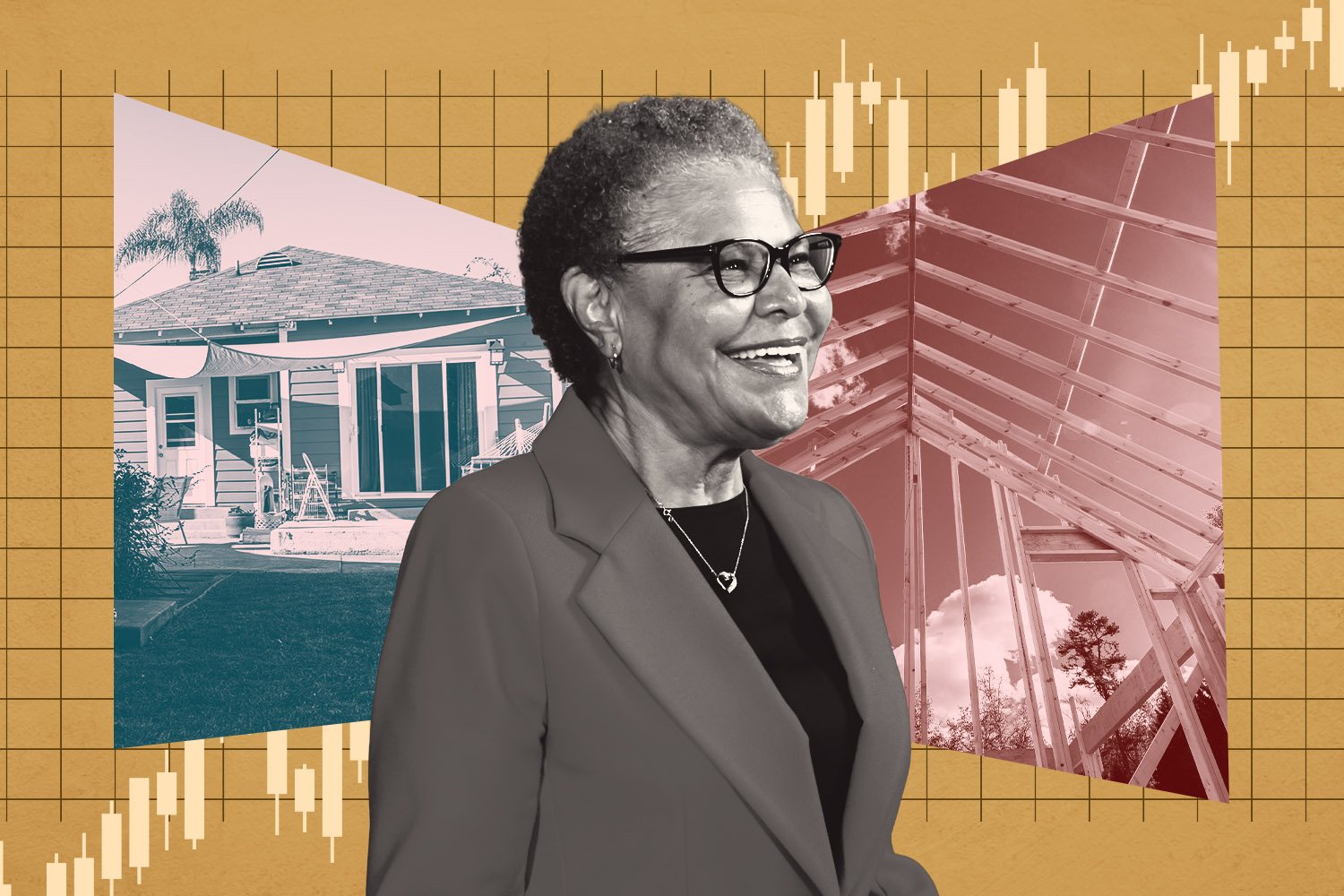
Photo via The Real Deal, on USC Lusk's 2026 State of Los Angeles County Housing and Neighborhoods report.
Ten thousand two hundred thirty backyard homes. That is the number USC's Lusk Center for Real Estate published this month, the count of accessory dwelling units certified for occupancy in Los Angeles County during 2025, and it lands with a familiar Angeleno feeling: a record that is also a shortfall. The second annual SOLACHAN report found that ADUs made up 37.5% of the 27,293 housing units the county certified last year, the highest share in the near-decade the researchers have been tracking, and the county remains roughly 687,000 homes behind its 2021 to 2029 state target.
The short version:
- LA County finished 10,230 ADUs in 2025, more than six times the 1,624 it finished in 2018.
- ADUs made up 37.5% of all housing units certified for occupancy last year, an all-time record share.
- The county has completed about 125,000 of the roughly 812,000 homes it is expected to plan for through 2029; ADUs are the fastest-moving line on that ledger and still not close to enough.
The ledger, line by line
Read the report as a spreadsheet and the picture sharpens. Total units certified fell from 28,498 in 2024 to 27,293 in 2025, a small dip. Inside that dip, ADUs rose. Everything else fell harder. In the City of Los Angeles proper, an ADU moved from permit to completion in about 18 months on average. A project of five or more units took roughly three years. That gap, one year of a construction-loan lock versus two, is the reason the ADU share keeps climbing while multifamily grinds.
Teardown activity also jumped, partly because of the Palisades and Eaton fires, so a share of 2025's new certificates were replacements rather than net additions. We covered the county's $3.8 million Eaton fire ADU grant program in July; a fire-rebuild ADU on an Altadena lot counts in this year's ADU column even though it is really housing lost and rebuilt, not housing added.
The composition matters. Jared Schachner, the report's research director, told The Real Deal that even a right-direction trend is "a drop in the bucket" against the scale of the gap. He is right, and one line from the study explains why: about 19% of new rental units completed in 2025 were affordable to low-income households, nearly twice the seven-year average, but 57% of county renters were rent-burdened in 2024 and 30% severely rent-burdened. New supply is landing. It is not landing where the pressure is.
Our read: 37.5% is remarkable and completely insufficient. A housing-production system where a single accessory unit does more work than a five-plex is not a functioning system; it is a workaround the market has fallen in love with because the alternative is worse. The fee mechanics are not getting lighter, either. On June 9, 2026, the City of Los Angeles raised its General Plan Maintenance Surcharge on City Planning fees from 7% to 10%. The version LADBS adds to building permits stayed at 7%, and either way it applies only inside the City of Los Angeles, one of the county's 88 cities.
Translate the numbers
A record of 10,230 units, spread across 365 days, is a completed backyard home every 51 minutes, day and night, all year, across a county of 88 cities and a large unincorporated core. That is the pace state ministerial approval, the LADBS Standard Plan catalog, and the county's parallel free plan set have collectively made possible. The 687,000-unit gap, at that pace, closes in roughly 67 years, which is not a plan.
The 18-month permit-to-completion figure is the one to internalize if you are pricing a build. It is not a promise. It is a countywide average that folds in the fast lots, the ones where the owner picked a pre-approved plan and the site had no drainage surprises, together with the slow ones. If you are shopping LA's free YOU-ADU plan or one of the other Standard Plans, you are betting the underside of that curve. If you are building custom on a hillside, budget the top.
The cross-street check. No other market on our beat is putting up a 37.5% number, and the comparisons are instructive. In San Diego County, ADUs and JADUs made up a smaller but rising share of the county's new housing, and the City of San Diego's Bonus Program is the closest analog to what LA has done at the plan-catalog level, minus the LA-scale volume. In New York City, ADU filings opened in DOB NOW: Build on September 30, 2025, and the Regional Plan Association has found only about 12% of one- and two-family lots actually qualify under City of Yes, so a 2025 ADU count for NYC is close to a rounding error. In Washington, HB 1337 only obliged Puget Sound cities to allow two ADUs per lot in the last 18 months; Seattle's numbers are meaningful, but the state's total is still catching up. Nobody has LA's math. Nobody has LA's shortfall either.
What this changes for the reader on the lot
If you are a first-time ADU client on a single-family LA lot, this report is the closest thing you will get to a permission slip. The county's housing production model now assumes your build. The 18-month clock, the pre-approved plan pipeline, the fee stack: all of it is calibrated to the version of you who does not make the news because the process worked. If you are a household weighing whether to sink cash-out refi money into a 750-square-foot detached unit, the yield math is now the least uncertain part of your decision, because the county needs the unit. The uncertain part is the fee count on your specific permit and the site conditions on your specific lot.
A-du-curious homeowners can read the report the same way. This is not a fringe path anymore. It is the county's largest single line of new housing.
Ready to start? A-du's permit fee calculator will price your specific LA parcel against the current LADBS and school-fee schedule, including the City of Los Angeles General Plan Maintenance Surcharge.
Next year's number is the one to watch. If the 37.5% share holds while total production keeps drifting down, LA's ADU program is not a supply solution; it is a metric of everything else stalling out.
Elsewhere on the ADU beat
- The Regional Plan Association's ongoing analysis argues only about 12% of NYC's one- and two-family lots actually qualify to add an accessory dwelling under City of Yes, Regional Plan Association.
- Seattle's ADUniverse gallery expansion, with new pre-approved DADU plan sets under $1,000, is set to launch in November after October pre-approval, Seattle SDCI ADUniverse.