SF Added 223 ADUs in 2025. That Was the Fourth Drop in a Row.
Chris Koss, AIA|Published: November 20, 2026
San Francisco added or legalized 223 ADUs in 2025, down from 330 in 2021, a fourth yearly drop. The city's own table shows where the units went missing: apartment buildings, not houses, despite 2025 reforms.
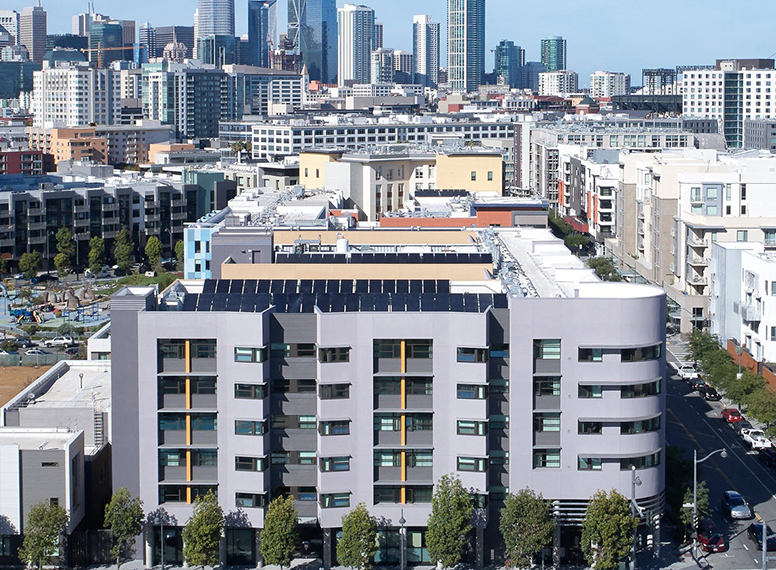
Photo: new housing in San Francisco, the image the Planning Department uses for its annual Housing Inventory. SF Planning.
San Francisco spent 2025 making it easier to build an in-law unit, and its own count went the other way. The Planning Department's 2025 Housing Inventory reports that 223 accessory dwelling units were added or legalized in 2025, down from 330 in 2021: the fourth straight yearly decline, and a drop of 32 percent.
The short version:
- San Francisco added or legalized 223 ADUs in 2025, after 330 in 2021, 300 in 2022, 266 in 2023 and 235 in 2024, according to the city's 2025 Housing Inventory.
- Most of the loss came from apartment buildings: ADUs in buildings of 5 to 19 units fell from 139 in 2021 to 59 in 2025, while buildings of 2 to 4 units held between 105 and 133 every year.
- 201 of the 223 units counted in 2025 qualified as affordable under a regional affordability analysis, even though none of them carries an income restriction.
The number, line by line
The Housing Inventory is SF Planning's annual census of every unit the city gains or loses. For ADUs it counts two things together: in-law units built from scratch and existing unwarranted units brought into the legal stock. The report says so plainly.
"In 2025, 223 ADUs were added to the housing stock. This represents the total of all ADUs completed as well as units added to the housing stock through the legalization program." San Francisco Housing Inventory 2025, Section 2.6, p. 21
| Year | ADUs added (completed or legalized) | Change from prior year |
|---|---|---|
| 2021 | 330 | n/a |
| 2022 | 300 | down 30 |
| 2023 | 266 | down 34 |
| 2024 | 235 | down 31 |
| 2025 | 223 | down 12 |
| Five-year total | 1,354 |
Put to reader scale: 223 units a year is about four a week, in a city the same report puts at roughly 422,958 dwelling units. That is one new or newly legal in-law for every 1,900 or so homes. The slide is slowing. It has not stopped.
Where the units went missing
Table 10 of the inventory sorts the same ADUs by the type of building they landed in. Here is the first year against the last.
| Building type | 2021 | 2025 | Change |
|---|---|---|---|
| Single family | 7 | 14 | up 7 |
| 2 to 4 units | 133 | 111 | down 22 |
| 5 to 9 units | 53 | 24 | down 29 |
| 10 to 19 units | 86 | 35 | down 51 |
| 20 or more units | 51 | 39 | down 12 |
| Total | 330 | 223 | down 107 |
Buildings of 5 to 19 units account for 80 of the 107 lost units. The 2-to-4-unit column, where San Francisco's flats and small row-house buildings live, barely moved across five years. One caution on reading the single-family row: the table sorts by building type, and it does not say whether a house that gains an in-law is filed as single family or as a two-unit building. Do not read 14 as the number of homeowners who built one.
Why apartment buildings matter: adding a unit to an existing multifamily building in San Francisco usually runs through the local Waiver Program under Planning Code Section 207(c)(4). The city waives density, rear-yard, exposure and open-space standards, and in exchange the new unit falls under San Francisco rent control. If you own a small apartment building, that trade is the whole decision. A ground-floor storage room turned into a studio can pencil out or not depending on whether its rent can ever reset to market.
What the city changed, and what it did not
The 2025 reforms went mostly to the other door. Ordinance No. 222-25 reworked the state-mandated ADU program to conform to state law, removing any appeal to the Board of Appeals and increasing size limits for certain detached, new-construction ADUs on a lot containing a single-family dwelling. That is real help for a homeowner with a backyard. A faster counter is good news for whoever is standing at it.
The same year brought the condo-sale path, and as we covered when that ordinance passed, it only reaches new detached units whose permit applications were submitted on or after May 1, 2025. Legalizations, the other half of the inventory count, still run into the city's 7-foot-6-inch ceiling rule, the six inches we flagged in September as the line between a legal in-law and a seven-figure fix.
Our read: San Francisco's 2025 changes were aimed at the single-family lot, while the units the city has been losing sit inside apartment buildings of 5 to 19 units, so we expect the 2026 count to look a lot like 2025's unless the Waiver Program trade gets cheaper for small-building owners.
The tenant side of 223
If you're a tenant, these numbers describe most of the in-law stock you will tour. The inventory says 201 of the 223 units added or legalized in 2025 qualified as affordable under a regional analysis by the Metropolitan Transportation Commission, while noting that none is income restricted. Smaller, usually cheaper, and not deed restricted. Before you sign, ask whether the unit was permitted under the Waiver Program, because that is what puts it under rent control; the SF Rent Board handles the questions that follow.
The cross-street check. Los Angeles County added more than 10,000 ADUs in 2025, Planetizen reported, more than 40 times San Francisco's count in the same year. New York City has the opposite problem from both: the Regional Plan Association found that only about 12 percent of one- and two-family lots qualify for an ADU under City of Yes, so eligibility, not demand, sets its ceiling. The open question for San Francisco is whether its ceiling is the 25-foot lot or the apartment-building trade; the building-type table points at the second.
The decision this changes
First-time ADU clients on a single-family lot should read the citywide decline as noise for their own project. Your path got bigger and harder to appeal in 2025. Small-building owners should do the opposite: run the Waiver and No-Waiver numbers side by side before you pay for drawings, because that choice, not the design, sets what the unit earns for the next decade.
Before you call anyone, A-du's build marketplace lists pre-approved ADU plans from city and county catalogs and design firms, with an estimated build cost for each.
The 2026 Housing Inventory lands next spring, and the 10-to-19-unit column is the one to watch.
Elsewhere on the ADU beat
- Portland's three-year fee waiver for new housing has not produced a big jump in construction so far, OPB reports.
- Twentynine Palms sent its draft ADU rules back to the Planning Commission after a new state law made them out of date, Desert Trumpet reports.
- Montgomery County, Maryland, sent a bill dropping its ADU owner-occupancy rule to the county executive after a 10-1 council vote, Bethesda Magazine reports.
Thinking about an ADU?
Will an ADU fit your lot?
Enter your address to see pre-approved plans ranked for your lot, with build-cost ranges. Then request a free test fit on the plan you like.
The ranking is a quick estimate from county records. A test fit checks it.