HOA vs. ADU in California: AB 956 No Longer Covers Condo Owners
Chris Koss, AIA|Published: June 1, 2026
Last updated: October 1, 2026
A San Diego judge ruled in April that California's ADU law doesn't protect condo-owners from HOA bans. AB 956 was written to close that gap, but the version Governor Newsom signed on September 29, 2026, dropped its condo provision.
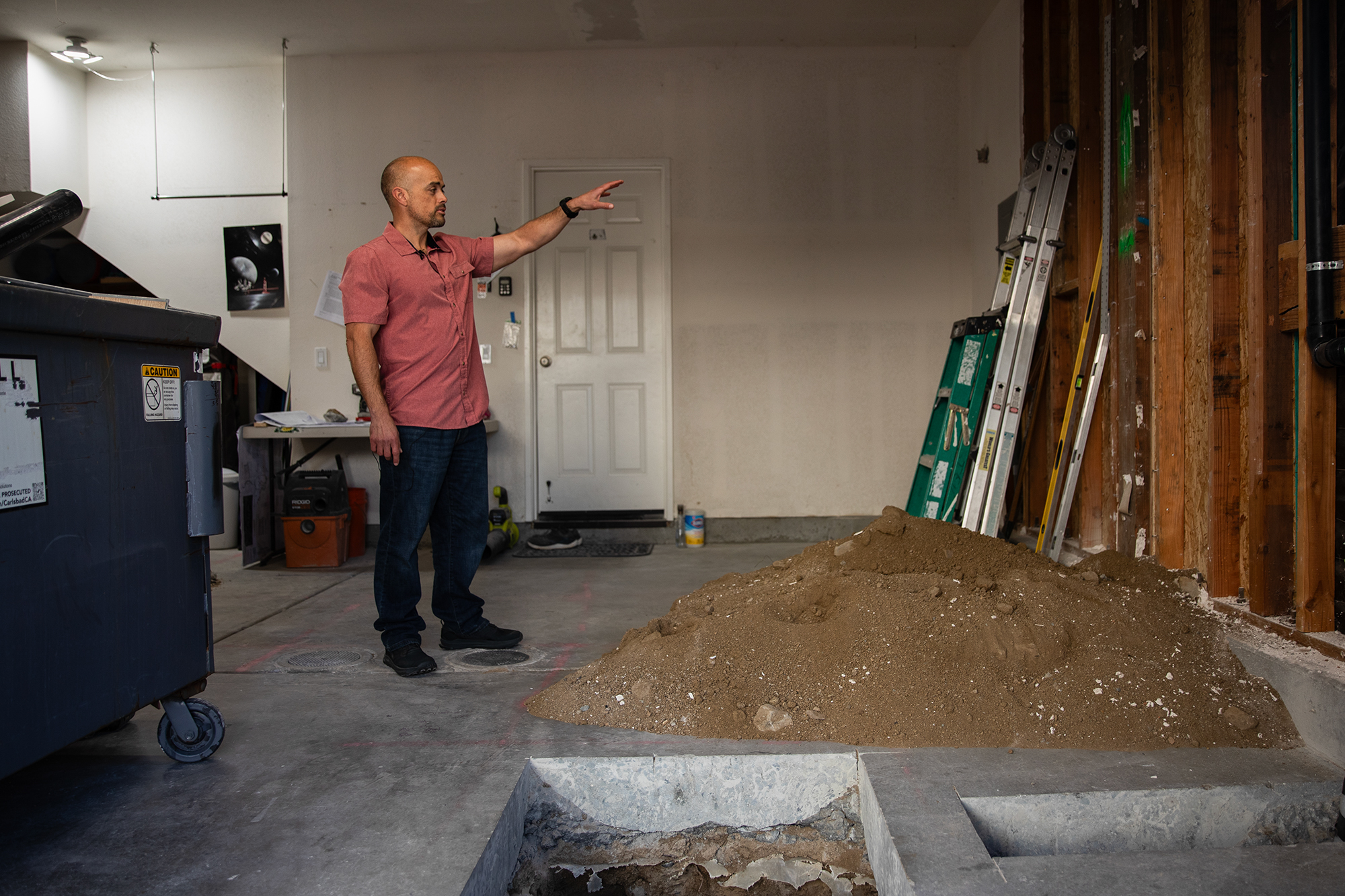
The dispute at Mystic Point Homeowners Association in Carlsbad became a state-level test of California's ADU protection laws. CalMatters.
A San Diego County judge ruled in April that California's main HOA protection law for ADU builders does not cover condo-owners. The ruling ended a year-long fight by Adam Hardesty, a Carlsbad homeowner, to convert his garage into a rental unit over the objections of his homeowners association. It also exposed two specific statutory gaps that let the HOA win. AB 956, amended in the California Senate on May 27, 2026, addressed both gaps by name. Later Senate amendments on August 12, 2026 dropped the condo fix, so the law Governor Newsom signed on September 29, 2026, addresses only the zoning gap. It does not extend the planned-development protection to condominium projects like Hardesty's, even though more than one-third of California's residents live in areas governed by homeowners associations, according to CalMatters.
What the court actually ruled
The 2019 law at the center of the case is AB 670, which made void and unenforceable any HOA restriction that effectively prohibits ADU construction on a lot in a "planned development" zoned for single-family residential use. For most suburban HOA neighborhoods built as individually owned lots with shared rules, this protection works: the HOA restriction simply cannot stand against a state-compliant ADU application.
Hardesty is a condo-owner. His development, Mystic Point in Carlsbad, is organized as a condominium project under California's Davis-Stirling Common Interest Development Act, not as a planned development. Judge Victor Torres of San Diego County Superior Court ruled that the legislature's specific use of "planned development" in AB 670 was intentional and did not extend to condominium projects. If the legislature had intended to cover condos, Torres wrote, it could have easily made that language more explicit. It did not.
The second issue is zoning language. AB 670 applies to lots "zoned for single-family residential use." Mystic Point allows townhomes and small condos alongside single-family homes, so Torres ruled it does not qualify under that narrow reading either. Hardesty had been backed by a California Housing and Community Development department planner who believed state law was on his side. By the time the case concluded, he and his wife had spent more than $100,000 in combined construction and legal costs, according to CalMatters reporting by Ben Christopher.
What AB 956 changes
Assembly Member Sharon Quirk-Silva introduced AB 956 in February 2025, with co-authors Assembly Members Carrillo and Wicks. The California Senate amended it on May 27, 2026, in language that responds directly to the two points Torres cited. Governor Newsom signed it on September 29, 2026 (Chapter 791, Statutes of 2026), and it takes effect January 1, 2027. Here is what the signed law does, and what it no longer does:
Condo coverage, dropped. The May 27 version expanded the "void and unenforceable" provision from planned developments to "any common interest development," the broader legal category that includes condominium projects like Mystic Point. Senate amendments on August 12, 2026 restored the "planned development" limit, so the law as signed does not reach condominium projects like Mystic Point.
Zoning language. The bill changes "zoned for single-family residential use" to "zoned to allow single-family residential use." That is the exact phrase Torres said was missing from the current law. A mixed-zoning lot in a planned development that permits single-family homes alongside attached townhomes will qualify under the revised language starting January 1, 2027, where it does not qualify today.
Two detached ADUs. The law also increases from one to two the number of detached, new-construction ADUs that a local agency must ministerially approve on a lot with a proposed or existing single-family home, and it does not require a city to approve a junior ADU on a lot where two detached new-construction ADUs have been built. This is a separate provision from the HOA restriction question, but it is part of the same law and takes effect with it on January 1, 2027.
Who this affects and who should be paying attention
If you are a homeowner planning an ADU and you live under HOA rules, the first practical question is whether your development is organized as a planned development or a condominium project. That distinction is not obvious from the street. Planned developments are typically subdivisions where each owner holds fee title to their individual lot. Condominium projects are ones where owners hold title to airspace or units, with the association controlling the land. The governing documents your attorney reviewed at closing should name the form.
First-time ADU clients in HOA-governed communities should pull those documents before spending money on architectural drawings. If your development is a condominium project, current California law gives you weaker protection against HOA interference than it gives a neighbor in a planned development on the next block. AB 956 was designed to close that gap, but the version signed into law does not. A real estate or construction law attorney experienced in California ADU cases is worth a consultation now if your HOA has already issued a denial or a warning letter, since AB 956 does not take effect until January 1, 2027, and current law governs until then.
The state's housing regulators and the attorney general's office have historically not taken enforcement action against HOAs the way they do against local governments that reject ministerially-approved applications. AB 956 does not change that enforcement posture. Even with the bill signed, an owner who receives an HOA denial would likely still face private litigation rather than automatic state intervention.
What happens next
The bill cleared the Senate on August 25, 2026, the Assembly concurred on August 27, and it was presented to the Governor on September 4, 2026. Governor Newsom signed it on September 29, 2026, and it takes effect January 1, 2027. Before then, cities and counties with local ADU ordinances will need to update any HOA-related guidance and their rules for a second detached ADU, and associations will need to review governing documents with counsel. The chaptered text is on leginfo. The state has not announced any companion enforcement mechanism to accompany the new language.
If you are evaluating an ADU project in an HOA community and want to find California-licensed professionals experienced in permit and HOA law, A-du's services marketplace is a useful starting point.