LA Low-Rise Ordinance: SB 79, Transit Zones, and Your ADU Plans
Chris Koss, AIA|Published: June 19, 2026
Last updated: September 25, 2026
The LA City Council voted 13-0 on June 3 to advance the Low-Rise Ordinance, capping SB 79 density at 4 stories near transit. With the state law effective July 1, here is what ADU owners near Metro lines face.
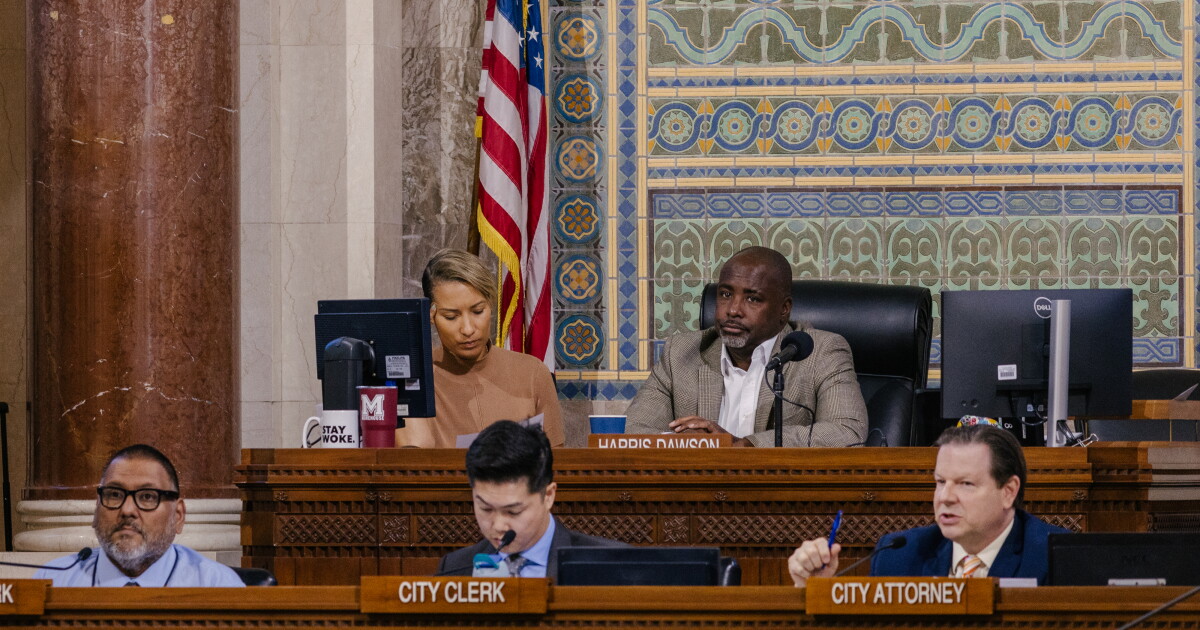
LA City Council members at the June 3, 2026 session where the Low-Rise Ordinance advanced 13-0. Photo via LAist.
The Los Angeles City Council voted 13-0 on June 3, 2026 to advance a Low-Rise Ordinance that caps new construction at four stories near transit stops, creating a local alternative to SB 79, which takes effect statewide on July 1. If you are permitting an ADU on a single-family lot within half a mile of an LA Metro line, this zoning shift matters to your project timeline and your neighborhood's construction calendar.
What SB 79 allows starting July 1
Governor Newsom signed SB 79, the Abundant and Affordable Homes Near Transit Act, on October 10, 2025. The law overrides local zoning for qualifying residential projects near major transit stops in eight California counties: Los Angeles, Orange, San Diego, San Francisco, Alameda, San Mateo, Santa Clara, and Sacramento. These are the counties with more than 15 passenger rail stations.
Height limits under SB 79: Within a quarter mile of a Tier 1 stop (heavy rail or very high frequency commuter rail), cities cannot cap height below 75 feet, roughly seven stories, and projects within 200 feet of a station entrance get 20 more feet, which is where the nine-story figure comes from. Near light rail stops the quarter-mile floor is 65 feet. Between a quarter and a half mile out, the limit drops to five or six stories. Projects must include at least five dwelling units and meet a minimum density of 30 units per acre to qualify for the state density override.
Under the law, a developer could propose a six-story apartment building on a Silver Lake block currently zoned for single-family homes, and the local zoning would not stop them. An analysis by the advocacy group Streets for All estimated that SB 79 will eventually zone for nearly 1.5 million new homes in the City of LA, a measure of legal capacity, not of what will actually be built.
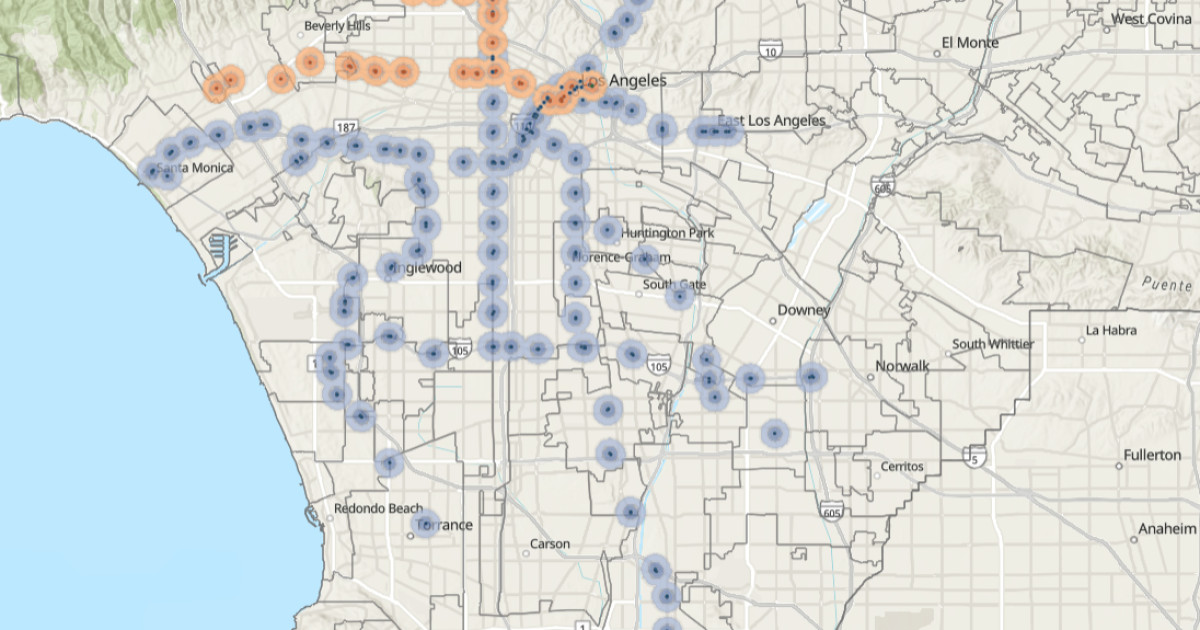
What LA's Low-Rise Ordinance does instead
SB 79 gives cities a window to delay full implementation until roughly 2030, if they adopt a local alternative approved by the state's Department of Housing and Community Development. On June 3, 2026, the LA City Council voted 13-0 to advance two paired ordinances that together use this window.
The Low-Rise Ordinance allows buildings of up to four stories in dozens of neighborhoods near transit corridors, extending into areas currently limited to single-family or low-density residential zoning. The intent is to allow missing-middle housing types (duplexes, triplexes, courtyard buildings, small apartment buildings) close to transit, rather than the taller towers SB 79 would otherwise permit.
The Phased Implementation Ordinance is the legal delay mechanism. It holds off SB 79's taller height allowances in most of the city until around 2030, giving LA time to finalize a broader housing plan. If LA falls behind on that plan, SB 79's taller limits kick in automatically.
After the June 3 vote, both ordinances still needed a final full-council vote before going to Mayor Karen Bass for signature. Mayor Bass had earlier asked Governor Newsom to veto SB 79, arguing the state should not override LA's local planning process. Newsom declined. LA City Planning's SB 79 resource page is the right place to track final adoption timing.
What this actually means for ADU builders near transit
If you are a homeowner building or planning an ADU within half a mile of an LA Metro line, here is the honest picture.
Your ADU rights do not change. California's ADU statutes are entirely separate from SB 79's transit-oriented density provisions. Ministerial ADU approval under state law still applies regardless of what SB 79 does to surrounding zoning. An ADU application to LADBS is processed under the ADU code, not the new transit-zone rules.
The comparison you're making changes. If you own a single-family property near a Metro B, D, or A line station, there is now a new option on the table: a four-unit or larger building under the Low-Rise Ordinance. That is a different financial calculation than a 750 SF detached ADU. A detached ADU near transit might net roughly $2,200 to $2,800 per month in rental income in a corridor like Highland Park or Culver City (depending on size and finishes). A small apartment building on the same lot could generate more, with a larger capital requirement and longer construction timeline.
Construction demand near transit will increase. ADU builders who work in transit-rich neighborhoods, including the Metro Expo corridor, Metro A line communities in the eastern San Gabriel Valley, and the B and D lines through Hollywood and the Westside, will soon compete with larger residential projects for the same electricians, framing crews, and concrete subs. If you are permitting an ADU in one of these corridors and your contractor is available now, that availability is worth acting on.
What to watch before July 1
The timing is tight. SB 79 takes effect in 12 days, on July 1, 2026. The Low-Rise Ordinance and Phased Implementation Ordinance still need a final council vote and Mayor Bass's signature, and whether they are fully adopted before July 1 is uncertain as of this writing; LA City Planning is the authoritative source on timing. (Update, September 2026: the City Council adopted both ordinances on June 23, 2026, and they took effect on June 30, 2026, one day before SB 79.)
For ADU builders, this uncertainty does not change your path. ADU permits issued under state law are not affected by SB 79 or the Low-Rise Ordinance. The complexity is mostly for homeowners still deciding whether an ADU, a Low-Rise project, or waiting for the broader 2030 plan makes more sense for their specific property.
A-du's permit fee calculator covers LADBS and LA County permit costs for ADUs, which is the right starting point before bringing in a land-use attorney or designer for the Low-Rise path.