Your SF Apartment Building Can Add ADUs. For Five-Plus Units, 25% Is the Floor.
Chris Koss, AIA|Published: July 21, 2026
Last updated: September 25, 2026
California law makes San Francisco approve at least one ADU inside an existing apartment building, and up to 25 percent of its units, and the city's own program lets buildings of five or more units go further. The catch: on the Waiver track, those new units are rent controlled for good.
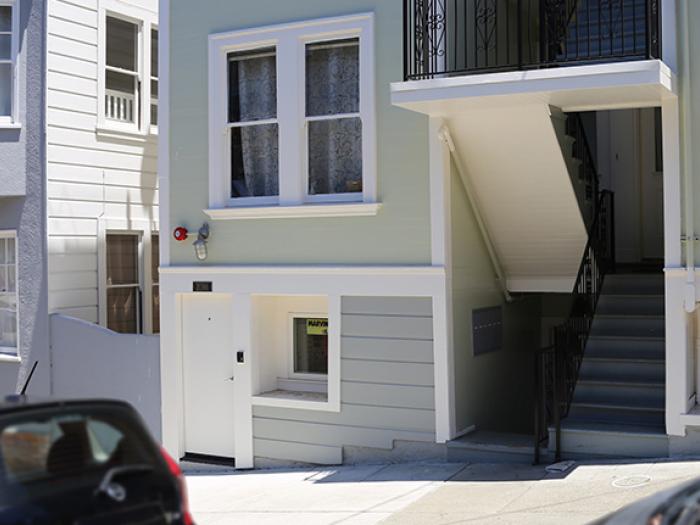
A ground-floor garage converted into an accessory dwelling unit. San Francisco Planning.
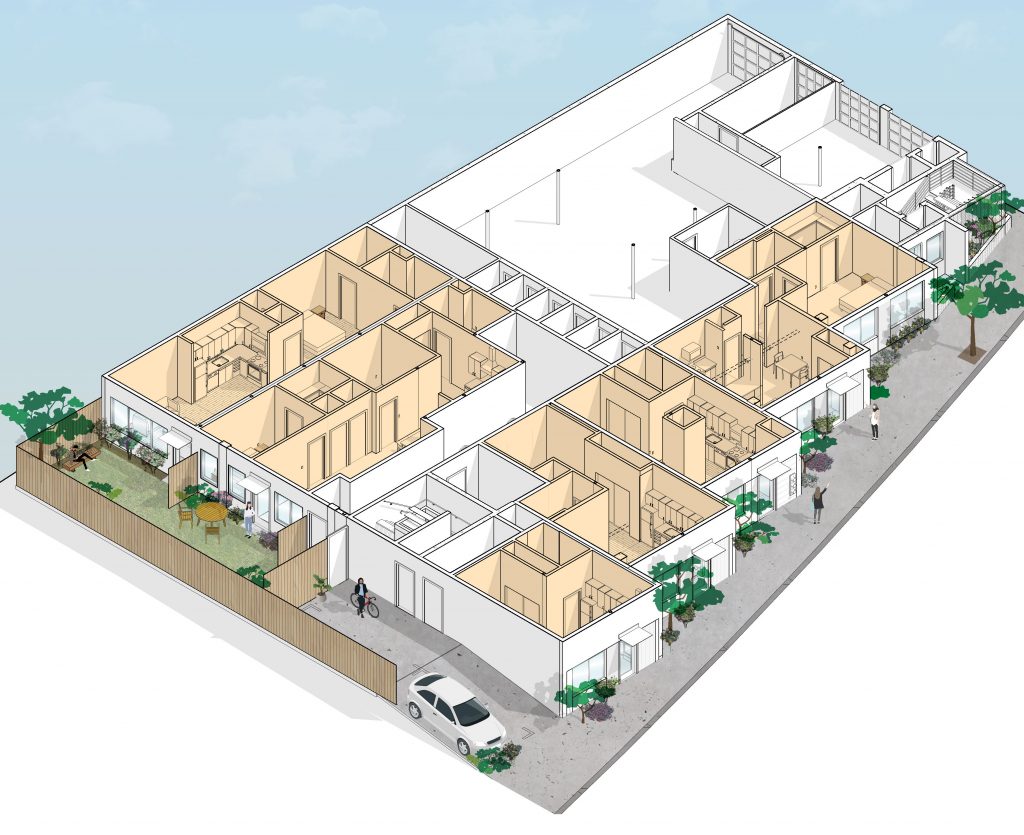
The apartment building you already own is the cheapest lot in San Francisco you will ever build on, because you do not have to buy it. State law now forces the city to approve at least one accessory dwelling unit inside an existing multifamily building, and up to 25 percent of its units. For an eight-unit building on a Sunset block, that is two new homes carved out of the garage, the boiler room, or the storage cage nobody has opened since 2019.
The short version:
- California Government Code Section 66323 requires San Francisco to ministerially approve ADUs inside an existing apartment building: at least one, and up to 25 percent of the existing units. For a building of five or more units, that is only a floor: SF's own Local Program sets no cap on interior ADUs there.
- On top of the interior conversions, a lot with an existing multifamily building can add up to eight detached ADUs, capped at the number of units already on the lot.
- Run the conversion through SF's Waiver Program and the new unit is rent controlled for good. Run it through the No-Waiver state track and it is not. The two paths sit on the same building.
Most San Francisco owners still picture an ADU as a backyard cottage behind a single-family house. That is the version the rest of the country builds. It is not the version that matters most here, in a city where two-, three-, and four-unit buildings line entire districts and the ground floor is a garage that stores one car and a decade of boxes.
From the text
The multifamily allowance is not a San Francisco courtesy. It is a state command, and the operative sentence is short.
A local agency shall allow at least one accessory dwelling unit within an existing multifamily dwelling and shall allow up to 25 percent of the existing multifamily dwelling units.
Cal. Gov. Code Section 66323(a)(3)(B), via California Legislative Information. The conversions have to come from space that was never livable to begin with: the statute names storage rooms, boiler rooms, passageways, attics, basements, and garages. You are not allowed to evict a tenant to make the room. You are allowed to turn the parts of the building that hold mops and bicycles into homes that hold people.
The detached math is separate and generous. Under Section 66323(a)(4), a lot with an existing multifamily building can carry up to eight detached ADUs, so long as you do not exceed the number of units already standing. A four-unit building, four detached units. In practice the back lot runs out of room long before the code does, but the ceiling is real.
San Francisco's own program goes further for bigger buildings. Under the city's Local Program, a lot with five or more existing units can add an unlimited number of ADUs inside the building, plus one detached ADU; a lot with four or fewer gets one ADU plus one detached ADU. So for a building of five or more units, the state's 25 percent is a floor, not a ceiling. The catch is the track those extra units have to use.
Who wins, and the catch that scares them off
If you own a two-to-four-unit building with a deep garage, the arithmetic is the friendliest in the ADU world. A firm like OpenScope Studio, which has designed multifamily ADUs in San Francisco since 2015, makes the case plainly: a unit added out of dead ground-floor space usually costs less than the value it adds to the building, especially when you fold the work into seismic or electrical upgrades you were already facing. You own the land, the roof, the foundation, and the sewer lateral. You are paying for a kitchen, a bath, and egress.
Then comes the word that stops the deal. Rent control. San Francisco runs two ADU tracks, and the difference is not paperwork, it is the rest of the unit's life. The Waiver Program, which we walked through when we explained how one word decides whether an SF in-law is rent controlled, hands you exceptions to rear-yard, open-space, density, and parking rules. In exchange, on a lot that already has rental units, which describes nearly every apartment building, the city records a Costa-Hawkins regulatory agreement and the new ADU is subject to San Francisco rent control, permanently. The No-Waiver track builds to the plain state standard, claims none of those exceptions, and stays outside rent control, though the Rent Ordinance's eviction protections can still reach the tenant.
For a garage conversion in a building that fills its lot, the waivers are often the only way the unit pencils at all, which means the owners who most need the exceptions are exactly the ones who inherit the rent control. The yield gap between the two tracks is real, and on a converted ground floor the choice is frequently made for you by the shape of your lot.
Our read: the multifamily conversion is the most underused ADU play in San Francisco, and the Waiver rent-control trade is why. Owners who could add a unit or two by right hesitate because the only track their lot allows locks that income into rent control for good, and the same trade gates the bigger prize: past the state's 25 percent, a building of five or more units can keep adding interior ADUs only through the Local Program. The city built a genuine opening and then priced the toll in a currency small landlords guard hardest.
What tenants should know
If you are a renter looking at one of these ground-floor units, the permit history is the whole story. A unit approved under the Waiver Program carries rent control from day one, which caps your annual increase and hands you the Rent Board as a backstop. A No-Waiver unit does not, so your rent can move with the market at renewal even though your eviction protections may not. Ask the landlord which track the ADU was built under, and ask to see the Costa-Hawkins agreement if they claim it is rent controlled. The answer is a public fact, not a favor.
The cross-street check. The 25 percent conversion right comes from state law, so a Los Angeles fourplex owner reads the same Section 66323 and gets the same interior allowance. What LA does not do is trade waivers for rent control the way San Francisco does; in LA a new ADU's rent status turns on whether it earns its own certificate of occupancy, the test we laid out for LA owners, not on which permit counter you used. New York City is the sharp contrast: under City of Yes, ADUs are authorized only on the lots of one- and two-family homes. An NYC apartment-building owner cannot add an ADU under the program at all, which makes San Francisco's open door to multifamily conversions the more generous regime by a wide margin.
What to watch
Two things move next. The first is whether San Francisco's condo-sale ordinance ever reaches these converted units, because the ability to sell an ADU separately changes the whole cost-benefit calculation for a small landlord; today most Local Program conversions are excluded from separate sale. The second is uptake. If the Waiver rent-control trade keeps conversions rare, expect pressure at the Board of Supervisors to sweeten the No-Waiver path so the units that pencil are not the ones that give up the most.
If you are weighing a conversion, A-du's build marketplace can line up an architect who has run the Waiver-versus-No-Waiver decision on a building like yours before you commit to either.
The garage is the cheapest square footage you own. The only question left is what it costs you to keep it a garage.
Elsewhere on the ADU beat
- San Francisco moved to let owners sell new in-law units as separate condos, a change that could reshape the multifamily math, Mission Local.
- California apartment owners statewide are converting carports, storage, and laundry rooms into entry-level units under the new multifamily rules, Building Design+Construction.