Your SF Landlord Wants to Add an ADU. You Have 30 Days.
Chris Koss, AIA|Published: August 17, 2026
When a San Francisco owner adds an ADU under the city's Local Program, every tenant gets a sworn notice first and a 30-day window to object at the Rent Board. Here is what the paperwork protects, and what it leaves out.

A San Francisco renovation from Dwell's roundup of the city's remodels. Dwell.
A notice goes up in your building's entryway: the owner wants an accessory dwelling unit in the garage, and buried in the fine print is the storage cage where you keep your bike. In San Francisco, an owner adding an ADU under the city's Local Program must hand every tenant a sworn notice at least 15 calendar days before filing with Planning, and you get 30 days to object at the Rent Board.
The short version:
- Under San Francisco's Local ADU Program, the owner must serve every unit a Notice of Addition of ADUs plus a declaration signed under penalty of perjury, and file both with the Rent Board, before the Planning Department will even accept the permit application.
- You get 30 calendar days from the day you are served to file a Tenant Objection and Request for Hearing. Miss it and the declaration moves to Planning unchallenged.
- The protection covers housing services like storage, parking, and laundry. It does not cover your rent, which turns on a separate question.
What the rule requires
The rule turns on two documents, not one. The first is the Notice of Addition of ADU(s), which describes the project. The second is a declaration, signed under penalty of perjury, in which the owner states whether the work will remove or reduce any tenant housing services. Both have to be posted in an accessible common area and mailed or delivered to every unit in the building, including unauthorized units and vacant ones, at least 15 calendar days before the owner files the ADU application. If you rent in the building, you get served. That is the design.
The requirement attaches to the city's Local Program, the track San Francisco runs under Planning Code Section 207(c)(4). It is the same waiver track we walked through when we covered whether a San Francisco in-law is rent controlled: the city waives certain zoning standards, and in exchange the new unit carries rent control. The other route, the state program, runs under different rules that SF Planning lays out in its Planning Director Bulletin No. 3. The tenant-notice step lives on the local track.
Both the Notice and the Declaration must be provided to tenants and filed with the Rent Board before the owner's ADU permit application can be filed with the Planning Department.
Who wins, and who loses
The tenant who reads the declaration wins. The notice only tells you a project is coming; the declaration is where the owner commits to something under oath, stating whether you will lose services. If it swears nothing changes and your laundry room later disappears, that sworn statement becomes the owner's problem, not yours. So the reader who walks the garage, the storage area, the parking, and the yard, and checks the plan against what they actually use, is the reader the rule was built for.
The tenant who lets the clock run loses. If you disagree with the declaration, you file a Tenant Objection and Request for Hearing form with the Rent Board within 30 calendar days of being served; if the 30th day is a weekend or a legal holiday, you get the next business day. You can file by email at rentboard@sfgov.org, by mail, or in person at 25 Van Ness Avenue. File nothing and, after 30 days, the Rent Board forwards the owner's declaration to Planning and the permit moves. File on time and the Rent Board opens a review, aiming to send Planning a final written determination within 90 calendar days. Thirty days is roughly the span of a single contractor's bid, so the notice is a deadline the day it appears, not the week you get around to it.
The owner loses the quiet option. The protection is Rent Ordinance Section 37.2(r), which bars removing or reducing certain housing services, among them storage, parking, and laundry, without just cause. Planning will not approve the Local Program ADU unless the Rent Board confirms the work does not strip those services, or the owner shows a just cause, or you gave express written consent to give them up. That last clause is the one to watch. If a leasing agent asks you to sign away the parking space to help the project along, that signature is the ballgame. Read before you sign, first-time renters especially.
The cross-street check. San Francisco is unusual in front-loading a tenant veto point before the permit is even filed. Los Angeles runs the opposite way: there is no pre-application ADU objection process, and a sitting tenant's protection turns instead on the unit's certificate of occupancy and whether the RSO or AB 1482 applies, which we mapped in our piece on the LA new-construction rent test. New York takes yet another tack: its basement legalization pilot centers on the sitting tenant's right of first return if the work forces a temporary move. Three cities, three theories of who the ADU rules protect, and only San Francisco hands the current tenant a form to file before a shovel moves.
What to watch
Keep the scope honest. This rule protects your housing services, not your rent. The Rent Board hearing is about whether your storage, parking, or laundry survives the project, not about what you pay. Whether the new ADU will be rent controlled, and whether your own tenancy's protections shift, run on the separate rent-control question. Our read: the 30-day window is real protection, but it guards your parking space, not your lease, and most tenants who see an ADU notice worry about the wrong one. Know which fight you are actually in before you spend the 30 days.
If you would rather move than fight over a storage cage, A-du's rental map lists ADUs you can filter by permit status, so you can look for a unit whose paperwork is already clean.
Watch the objection numbers as San Francisco's garage conversions pick up: how often tenants actually file, and how often the Rent Board sides with them, will tell you whether this notice is a real veto or a formality with a stamp.
Elsewhere on the ADU beat
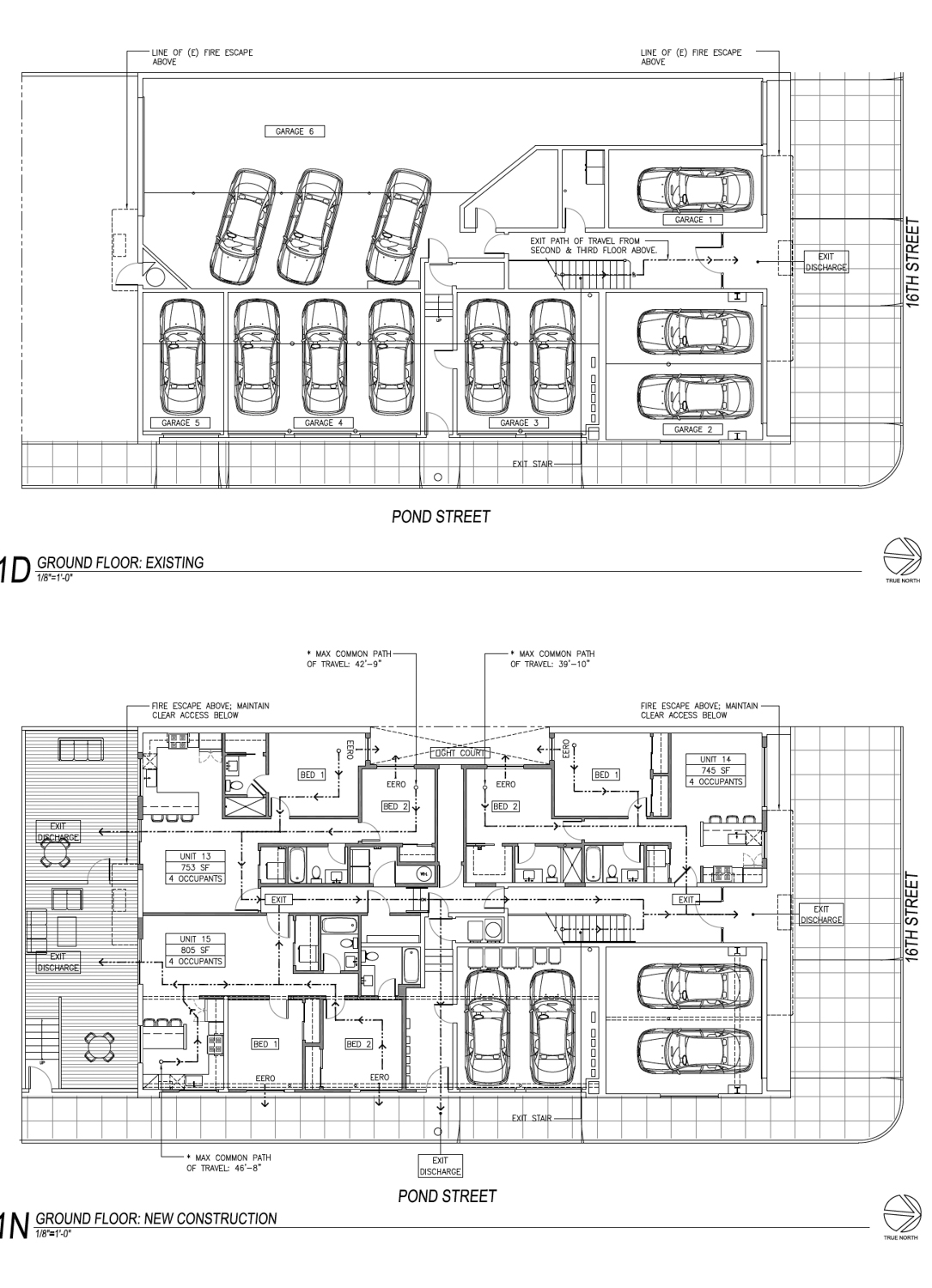
- A garage at 3571 16th Street is slated to become new homes, the exact conversion this notice governs, via San Francisco YIMBY.
- Seattle is calling for new designs to expand its pre-approved backyard-cottage catalog for a late-2026 gallery, via the City of Seattle.