SF's Waiver ADU Is Easier to Build, and Usually Rent-Controlled.
Chris Koss, AIA|Published: July 15, 2026
Last updated: September 25, 2026
San Francisco lets you build a bigger ADU on a tight lot, but where the property already has rental units, the price is permanent rent control. The Waiver track trades floor area for a capped rent; the No-Waiver track keeps your unit at market.
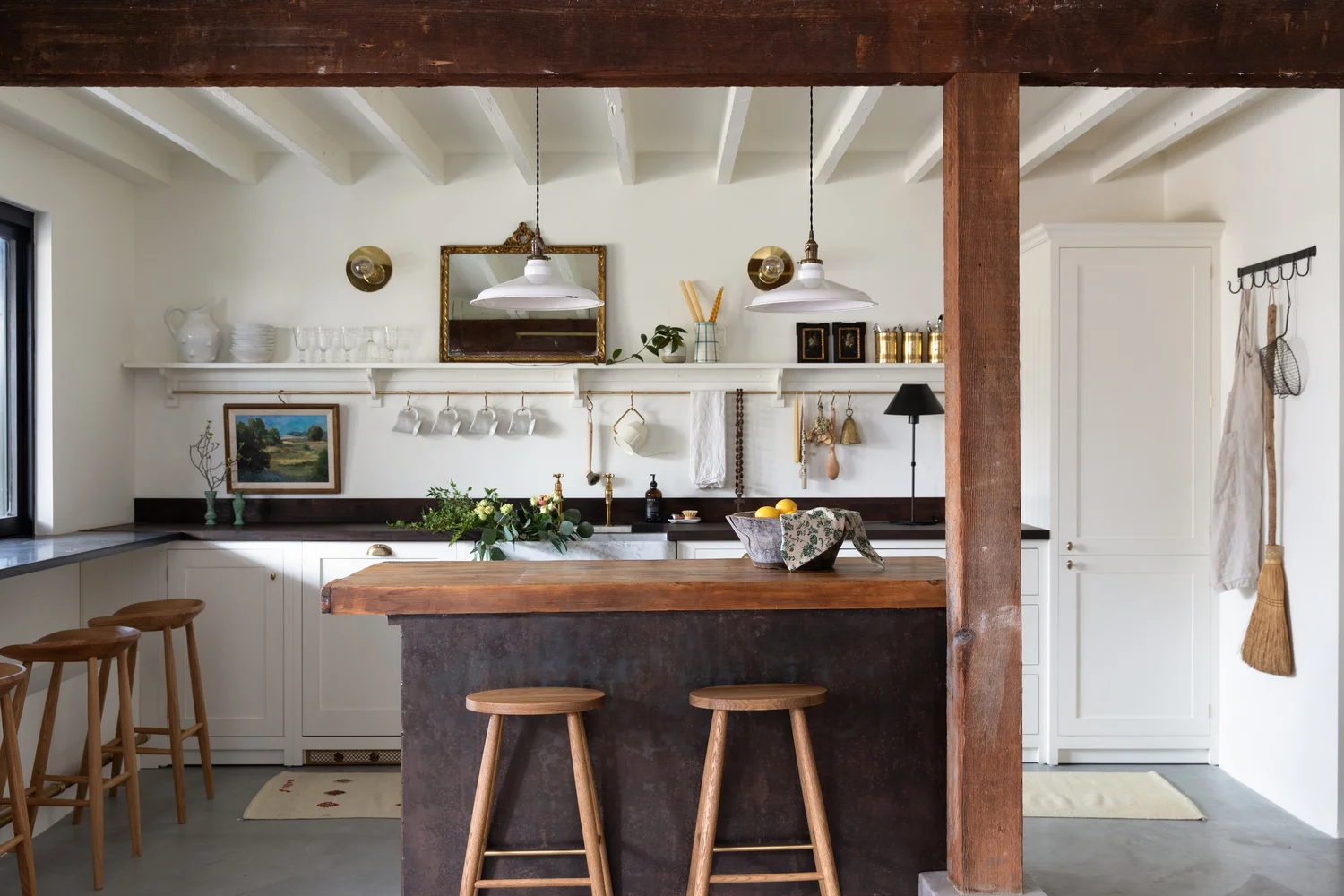
An Outer Sunset garage conversion, 900 square feet, by Jack Hotho Architecture + Design, interior by Innen. A kitchen and gathering space where a garage used to be.
In San Francisco you can build a larger accessory unit than the state minimums allow, on a lot that would otherwise be too tight, on one condition that applies whenever the lot already has a rental unit: the new unit stays rent controlled for as long as it stands. That is the bargain at the center of SF's Waiver Program, and it is a financial decision dressed up as a zoning one. The other track, the No-Waiver state program, keeps your ADU out of rent control but holds you to every objective standard. Same backyard, two very different balance sheets.
The short version:
- The Waiver Program waives density, rear-yard, exposure, and open-space rules for an ADU inside an existing building, and on a lot that already has rental units, the price is a recorded Costa-Hawkins agreement that places the unit under SF rent control.
- The No-Waiver state program asks for no such trade: a new ADU with its own certificate of occupancy is generally exempt from rent control, so you set and raise rent at market.
- Over a long tenancy the gap compounds. A rent-controlled unit's increases are capped in the low single digits each year while the market keeps moving.
The number that actually moves
Set the permit fee aside for a moment. The line item that decides this is rent growth over the years you hold the unit, and the two tracks treat it in opposite ways. Under the No-Waiver program, codified at Planning Code Section 207.2, a brand-new ADU with its own certificate of occupancy is new construction, and new construction is exempt from local price control under the Costa-Hawkins Rental Housing Act. Under the Waiver Program at Planning Code Section 207.1, the city trades those same waivers for your signature on an agreement that makes the unit subject to the Rent Ordinance. You are volunteering into rent control to get the extra envelope. Planning's agreement template ties that trade to lots that contain a rental unit when you file, while its FAQ says Local Program ADUs are subject to rent control without that qualifier, so if your lot has no rental unit today, get Planning's answer in writing before you design around it.
| No-Waiver (state program) | Waiver (local program) | |
|---|---|---|
| Planning Code | Section 207.2 | Section 207.1 |
| What the city relaxes | Nothing; you meet every standard | Density, rear yard, exposure, open space |
| Rent control | Exempt as new construction | Subject to the SF Rent Ordinance by recorded agreement on lots with rental units |
| Yearly increase, sitting tenant | Market | Capped at the Rent Board allowable increase |
| On a voluntary move-out | Re-rent at market | Reset to market once, then capped again |
| Just-cause eviction | May still apply | Applies |
| Why you would pick it | Higher long-run yield | The lot cannot yield a compliant unit otherwise |
Put a dollar on it. The Rent Board sets the annual cap each year at 60 percent of Bay Area inflation. For March 2026 through February 2027 it is 1.6 percent. A rent-controlled unit that starts at $3,200 a month and rises 1.6 percent a year reaches about $3,750 after ten years. The market-rate unit next door answers to no such ceiling. Every dollar the market climbs above your capped rent is income you do not collect, every month, for as long as that tenant stays. Costa-Hawkins lets you reset a controlled unit to market once it goes vacant, so the haircut is worst with the good tenant who never leaves, which is the tenant most owners say they want.
Who each track is really for
If you are a first-time ADU client with a standard lot and a single-family house, the No-Waiver track is usually the honest default. You give up nothing, you keep the unit out of rent control, and you price it to the market for the life of the building. The Waiver Program earns its keep in the cases the state standards cannot reach: an ADU carved into an existing multifamily building, a rear-yard that a compliant unit would blow through, an exposure or open-space rule that a tight SoMa or Mission lot simply fails. For those owners the waiver is not a lever they pull for extra yield. It is the only door into building at all, and the rent-control string is the price of admission.

The cross-street check. This trade is unique to San Francisco. In Los Angeles, an ADU's rent-control status is decided by its certificate of occupancy, not by any waiver you elect: a new detached unit with its own CO is generally outside the RSO and picks up AB 1482's fifteen-year new-construction exemption, as we covered when we walked the LA certificate-of-occupancy test. An LA owner never chooses rent control in exchange for floor area; the two things are not on the same table. New York is different again: whether a legalized basement or backyard unit is rent stabilized turns on the building and the legalization path, not on an owner ticking a box at the counter. Only in SF does the permit clerk hand you the pen and let you decide, at the moment of approval, whether the unit you are about to build will ever be free of rent control.
The decision this changes
The track also decides your exit, and more bluntly than rent control does. A year ago the city began letting owners sell some new ADUs as condominiums, which we covered when SF opened the condo-sale door that LA still keeps shut. A Waiver unit generally cannot use that door at all: the Local Program allows a condo split only in a building undergoing a mandatory or voluntary seismic retrofit, or one that was entirely condominiums as of July 11, 2013 with no disqualifying evictions since 1996. The No-Waiver door is narrow too: one detached ADU that does not convert existing space, added to a single-family home or an all-condo building on a lot with four or fewer existing units, with a permit application submitted on or after May 1, 2025. So if a future sale matters to you, design a detached No-Waiver unit from the start; most existing units on either track cannot be sold separately at all.
Our read: for a buy-and-hold owner who can meet the state standards, the No-Waiver track is worth more than the square footage a waiver buys. Where the agreement attaches, rent control is a permanent haircut; the extra envelope is a one-time convenience, and convenience rarely outweighs a discount that renews every year for decades. The exception is real and common in SF's older housing stock: if your lot or building cannot produce a compliant unit without the waivers, the waiver is not a choice, it is the only path, and a rent-controlled unit beats no unit at all.
If you are pricing either track before you commit, A-du's rental map shows what comparable accessory units are actually asking across the western neighborhoods, which is the number your whole model hangs on.
The condo-sale ordinance is barely a year old and, by design, leaves nearly every Waiver-track unit out. Whether the city ever widens that door is the question worth watching.
Elsewhere on the ADU beat
- SF Planning refreshed its state ADU program guidance in a June update to Planning Director Bulletin No. 3, worth a read if you are filing a No-Waiver unit this year.
- LA County Planning is weighing a draft 2026 ADU ordinance amendment that would limit ADUs on certain subdivided lots in unincorporated areas, still in evaluation with no hearing scheduled.
- New York State's Plus One ADU program closed its latest intake in June after drawing thousands of responses, and is now screening sites for eligibility.