Your NYC Basement Can Stay Rented. The Sprinkler Clock Is 2 Years.
Chris Koss, AIA|Published: August 21, 2026
Last updated: September 25, 2026
New York's basement pilot lets a pre-2024 unit stay rented while you legalize it over ten years. The catch is the required sprinkler system, due early, which redesigns a finished basement more than any permit does.
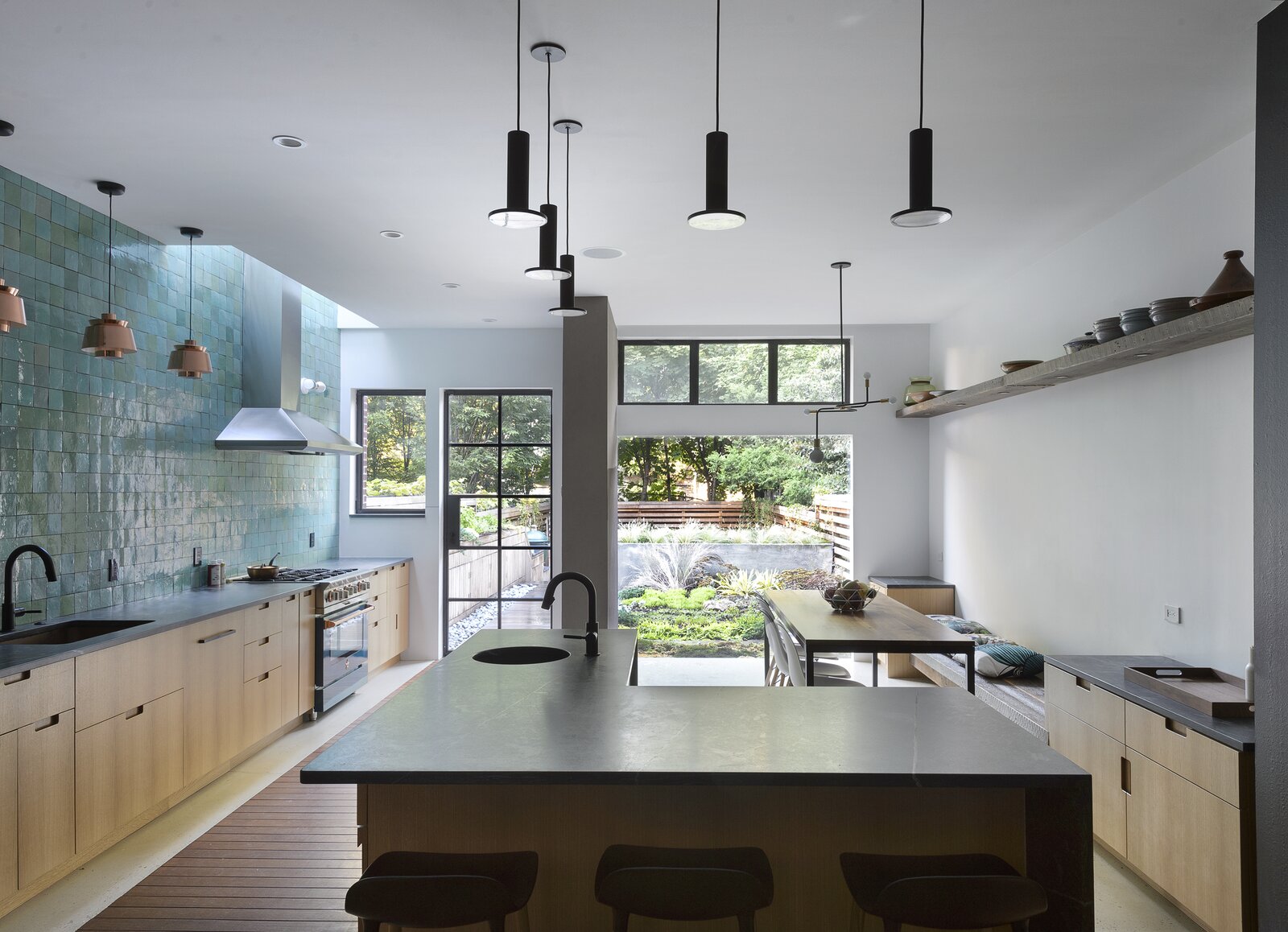
The garden floor of an 1885 Prospect Heights brownstone, turned into the home's brightest room by Bowerbird Architects. Dwell.
Your basement holds a tenant and a code violation at the same time, and New York is finally offering to fix the second without evicting the first. Under Local Law 126 of 2024, a basement or cellar apartment that existed before April 20, 2024 can stay occupied while you legalize it over a ten-year timeline, but the required safety kit, sprinklers first, is what actually redesigns your finished space.
The short version:
- The pilot lets a pre-April-2024 basement or cellar unit in a designated community district stay rented while you bring it to code on a ten-year clock. Lots in flood-prone zones are excluded.
- The safety package is not a menu: automatic sprinklers, flood water sensors, smoke and gas alarms, central heating, code egress, and a wall separating the unit from the boiler.
- The legalization track is not open yet. DOB is still finalizing the rules, and once it does, owners have until April 20, 2029 to file.
Start with the milestone that moves walls
Most coverage of the basement pilot leads with the application. Start with the sprinklers instead, because that is the milestone that decides your ceiling, your layout, and your budget. The city's Department of Buildings and HPD published the draft rules in November 2025, and they are explicit that a legalized unit has to carry a real fire-and-flood safety system, not a box of smoke detectors.
These safety features include, but are not limited to, smoke alarms, gas alarms, central heating, access to appropriate egress, and adequate wall separation between the apartment and any boiler equipment.
NYC HPD and DOB, proposed basement legalization rules, November 10, 2025
Read past the alarms to the two words that cost real money: sprinklers and flood water sensors. Reporting on the draft rules puts the automatic sprinkler deadline at two years after a unit enters the program, which sounds generous until you remember what a sprinkler line does to a finished basement. It needs a water supply sized for it, a route across the ceiling, and heads spaced to code in every room. In a seven-foot cellar, none of that hides easily.
Designing a sprinkler line into a seven-foot ceiling
If you are the homeowner finishing this unit, the sprinkler system is a design problem before it is a plumbing one. A residential system can run concealed heads with flush cover plates, so the ceiling reads clean, but the branch lines still have to cross the joist bays, and a cellar that started at seven feet does not have inches to give to a dropped soffit. The moves that work: run the mains in a single chase along one wall, use sidewall heads to skip a room's center, and settle the sprinkler layout before you frame anything, not after the drywall is up.
The egress is the other wall-mover. The unit needs a code-compliant way out, which in most cellars means enlarging a window well or cutting a new one, the same daylight move we walked through in our piece on making a basement not feel like a basement. Do it once, and the window that satisfies the fire code is also the one that makes the room worth renting.
Sensors, alarms, and the boiler wall
The rest of the package is cheaper and less invasive, which is exactly why it gets deferred and then forgotten. Flood water sensors are required because this pilot exists in the shadow of Hurricane Ida, which killed eleven New Yorkers in basement apartments in 2021. Smoke and carbon monoxide alarms, plus gas alarms where the unit has gas service, have to meet the Building Code's alarm sections, and the smoke and carbon monoxide alarms are due within three months of the ATR; ask your architect whether yours need to be hard-wired and interconnected. And the boiler needs a rated wall between it and the living space, which in a mechanical room you shared with the tenant may cost you a closet. We covered the paperwork side of all this when we walked through legalizing a basement under Local Law 126; the physical build is where the ten-year clock actually ticks.
The cross-street check. This whole retrofit exists because New York is legalizing units that were built without permits. A homeowner in Los Angeles or San Diego building a new detached ADU skips the entire drama: the unit goes up to current code once, is approved ministerially, and under California state law is not even required to carry fire sprinklers unless the primary house already has them, per the state's HCD ADU handbook. There is no ten-year clock because there is nothing to legalize. The New York owner is paying, in disruption, for the decades the unit spent off the books, a cost California's newly built ADUs never see. Washington's HB 1337 readers putting up a new backyard cottage are in the same easier boat.
Where people get stuck
Three places. Flood maps come first. Canarsie, Coney Island, and the Rockaways sit outside the pilot's community districts altogether, but inside the pilot area the flood-risk exclusion can still knock a lot out before the tape measure comes out, for example on low-lying waterfront blocks of Bronx Community District 10, which takes in City Island and Throgs Neck. The seven-foot ceiling can fail the sprinkler-plus-egress math, and raising a cellar floor or ceiling is a structural project, not a finish one. And the water service to an older one-family house may be too small to feed a sprinkler system, which turns a two-year milestone into a street cut and a new tap.
Our read: the two-year sprinkler milestone, not the application, is the real gate. Egress and alarms are a permit and a weekend; an automatic sprinkler system tapped into your water service is the one upgrade you cannot stage inside a finished ceiling without opening it back up. We expect the sprinkler deadline, not the paperwork, to decide how many of these units actually convert.
A basement legalization is a licensed-architect-and-sprinkler-fitter job long before it is a decorating one, and A-du's services marketplace is where you line up the pros who have already done one under Local Law 127.
The rules that govern all of this are still in draft. When DOB promulgates them, the two-year clock stops being theoretical, and the first cohort of owners finds out whether ten years was ever enough time to make an old basement safe.
Elsewhere on the ADU beat
- Dezeen rounds up ten American ADUs and what their compact footprints teach about urban infill, at Dezeen.
- Boston parked a fully built ADU on City Hall Plaza to nudge homeowners off the fence, reports GBH.
- San Diego's council voted to roll back its ADU bonus incentives, setting up a fight with state housing regulators, via KPBS.