Everett Pre-Approved 3 ADU Plans. Edmonds Still Has Zero.
Chris Koss, AIA|Published: November 27, 2026
Everett offers 3 pre-approved ADU plans with a three-month permit goal, Snohomish County lists 9, and Edmonds has none. The catch in Everett: move a single window and you lose the fast track.
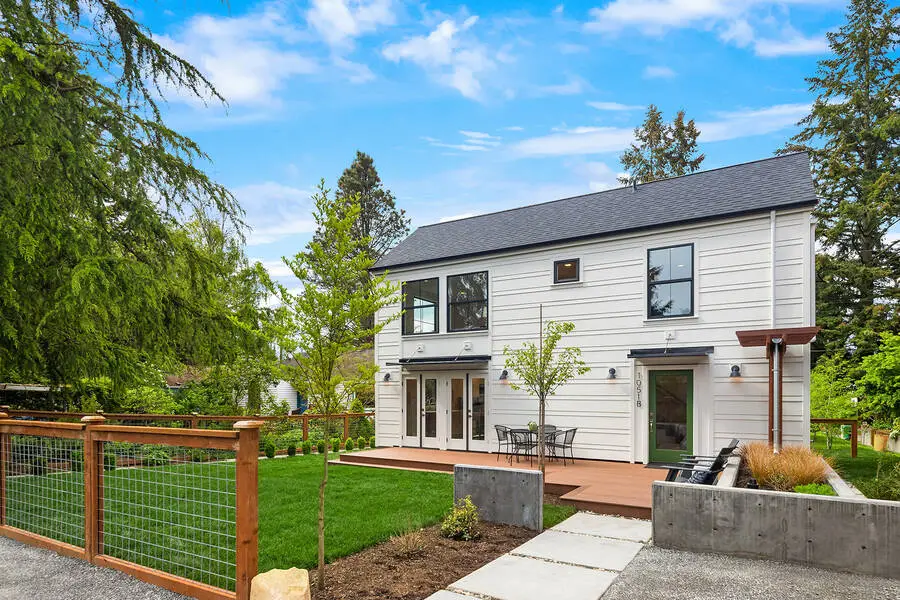
One of the three pre-approved ADU designs now offered in Everett, courtesy of the City of Everett and Fivedot Architects. The Everett Herald.
You own a house in Snohomish County with a deep backyard, and you have heard that the city now hands out ADU plans someone else already got approved. Here is what is actually on the shelf: Everett offers 3 pre-approved detached ADU designs from 820 to 1,000 square feet, unincorporated Snohomish County lists 9, and Edmonds launched its program in July 2026 with a catalog that still holds zero plans.
The short version:
- Everett's 3 pre-approved detached ADU (DADU) designs run 820 to 1,000 square feet, cost roughly $1,500 to license from the designer, and come with a city goal of issuing the permit in three months.
- Snohomish County's own catalog lists 9 plans, all by Haas Architects, from a 507-square-foot studio to a 1,052-square-foot two-bedroom.
- In Everett, changing a pre-approved plan at all, even moving a window, sends the project back to a standard building permit review.
Step 1: Figure out whose catalog you are shopping
This is the step people skip, and it decides everything after it. A pre-approved plan is approved by one permit counter, for that counter's jurisdiction. If your lot is inside Everett city limits, Everett's three designs are your menu. If it is in Edmonds, the menu is Edmonds' catalog. If your lot sits in unincorporated Snohomish County, the county's Planning and Development Services catalog applies. Three catalogs, three counters, one county.
The legal floor under all of them is the same. Washington's HB 1337 requires cities planning under the Growth Management Act to allow two ADUs per lot inside urban growth areas, and Everett adopted relaxed rules in 2023 allowing two ADUs on each qualifying lot. The catalogs are the local layer on top: how fast a given city will let you use what the state already allows.
Step 2: Pick a plan from what actually exists
Everett. The city unveiled three designs on June 23, 2026, all detached units between 820 and 1,000 square feet, the Herald reported. Units under 1,200 square feet carry no parking mandate in Everett. Sabrina Good, the city's permit services manager, said design alone can take up to a year; the catalog "completely eliminates that design phase."
Unincorporated Snohomish County. The county catalog is the deepest of the three: nine Haas Architects plans. The smallest is the Amelia, a 507-square-foot studio over a 411-square-foot garage. The Violet is a 730-square-foot one-bedroom. The Willow fits two bedrooms into 794 square feet. The Sif tops out at 1,052 square feet with two bedrooms and one and a half baths. The county says it is still accepting new plans for review.
Edmonds. The city launched its program in July with a cap of $1,000 on what a designer may charge for a catalog plan, and Edmonds DADUs can reach 1,000 or 1,200 square feet depending on zoning. As of today, the city's program page still reads: "there are currently no plans in the catalog." Demand is not the problem. Edmonds saw 3 DADU applications in 2024 and 40 in 2025, and building official Ted Corey told the Herald many of those 40 used the same designs.
Step 3: License the plan, then hire for the site work
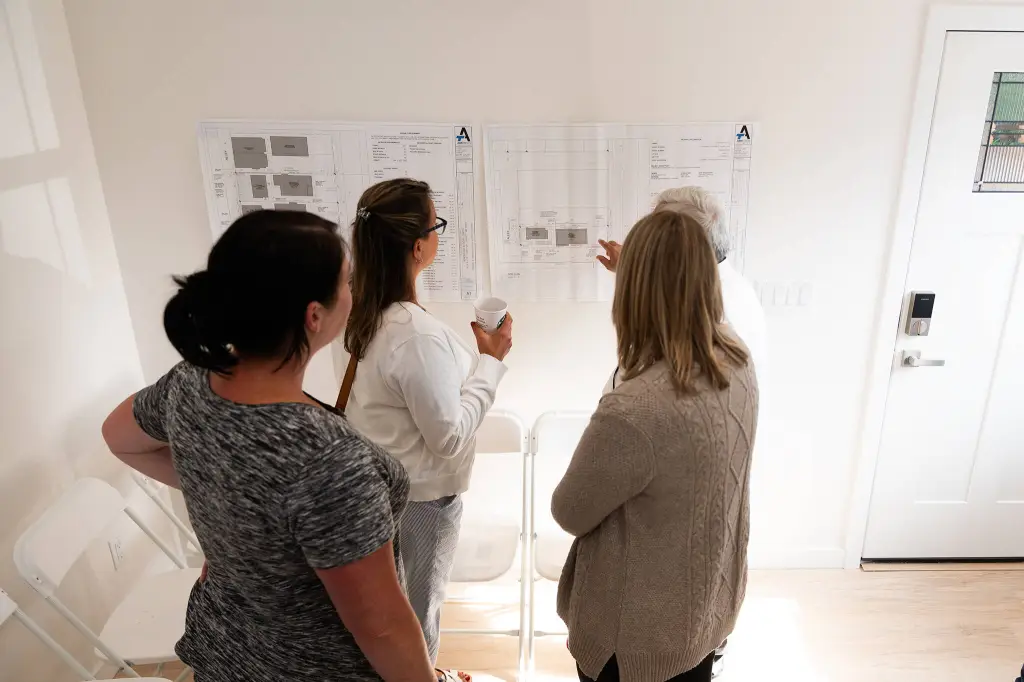
A catalog plan is not free and it is not a permit. In Everett you pay the designer a licensing fee, usually around $1,500, and work with that designer to prepare the site-specific permit set. In the county, you pay "any applicable licensing fees to the designer" and file a building permit with the plan. What the catalog removes is the review of the building itself. What it leaves is everything about your lot: the site plan, utilities, drainage, and where the unit sits.
For first-time ADU clients, translate the license fee this way: $1,500 is the cost of skipping a design phase the city says can run a year. That is cheap. It is also the smallest number you will see on this project.
Where people get stuck
The rule that catches people is the one about changes. According to the city, even slight changes to an Everett pre-approved design, moving a window, changing the size of a door or adjusting a wall, push the project into the standard building permit process. You lose the head start the plan was supposed to buy.
Our read: the $1,500 license is not the real price of a pre-approved plan. The real price is that you cannot move a window. If your lot has a view, a neighbor's bedroom, or a big cedar exactly where the glazing lands, a catalog plan may cost you more time than a custom design, so walk the lot with the floor plan in hand before you license anything.
The second sticking point is the clock. Mayor Cassie Franklin's stated goal is a permit in three months for a pre-approved plan. Ismail Mohammad, the local developer who built the north Everett unit the city toured, told the Herald permits have sometimes stretched to a year or more. The city says it began prioritizing housing, ADUs especially, in its review queue in June and added intake checks so incomplete plan sets get flagged up front. Three months is a target, not a statute.
Is it working?
The numbers point the right way. Everett approved 64 ADUs from 2021 through 2023, then 89 in 2024 and 2025 combined after its code changes. In just the first six months of 2026 it approved 51, already the highest single-year count since the city began tracking in 2020. The city's comprehensive plan assumes about 2,500 ADUs through 2044, so it needs that pace to keep climbing. Seattle offers the long-run evidence: in the years after it released pre-approved designs in 2020, permitting for those plans averaged nearly 40 percent faster than for designs without pre-approval, according to a 2023 city report the Herald cited. We toured Seattle's newest batch when the city picked 15 pre-approved plans in September.
The cross-street check. Los Angeles shows what a mature catalog looks like: the LADBS Standard Plan program holds more than 90 pre-approved designs from 200 to 1,200 square feet, including a free city-provided 455-square-foot plan. Snohomish County's three catalogs together hold 12. New York City sits at the other extreme: it pre-reviewed 11 backyard designs, yet a licensed architect is still required for most filings, as we flagged in our look at the ADU for You fine print. Everett lands in between. Its plan saves you the design phase, but the site set is still a professional's job.
The cost ledger
| Item | Everett | Snohomish County | Edmonds |
|---|---|---|---|
| Plans in catalog | 3 | 9 | 0 |
| Size range | 820 to 1,000 sq ft | 507 to 1,052 sq ft | Up to 1,000 or 1,200 sq ft by zone |
| Plan license | Usually around $1,500 | Set by designer | Capped at $1,000 |
| Permit goal | 3 months | Not stated | Not stated |
| Changes allowed | None without standard review | Not stated | Not stated |
If you are weighing a catalog plan in California or New York instead, A-du's build marketplace lists pre-approved ADU plans from city and county catalogs and design firms, with an estimated build cost for each.
Watch Edmonds next: the first plan that lands in its empty catalog will tell you whether a $1,000 cap is enough to get designers to show up.
Elsewhere on the ADU beat
- Portland's citywide fee waiver for new housing has not sped construction much, a new city report finds, and it could forgo roughly $51 million, OPB.
- Issaquah became the first Washington city to let architects self-certify backyard cottage plans, The Urbanist.
- Pew finds ADU laws can meaningfully boost housing supply, but many local ordinances still carry restrictive provisions, Pew Charitable Trusts.