In San Diego County, Your ADU Can Now Be Sold as a Condo
Chris Koss, AIA|Published: May 30, 2026
Last updated: September 25, 2026
San Diego County's Board of Supervisors unanimously adopted an AB 1033 ordinance on March 4, 2026, letting homeowners in unincorporated areas sell their ADU separately as a condominium starting April 4.
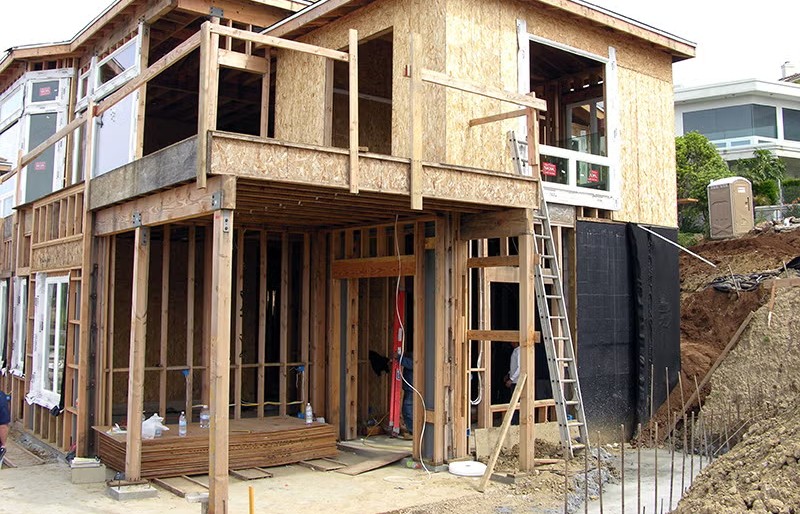
An ADU under construction in San Diego County. Times of San Diego.
If you own an ADU in unincorporated San Diego County, you can now sell it separately from your house. On March 4, 2026, the San Diego County Board of Supervisors voted unanimously to adopt an ordinance implementing Assembly Bill 1033, which the Governor signed in October 2023 and which became effective statewide January 1, 2024. The San Diego County ordinance, which took effect April 4, 2026, brings to unincorporated county land the condominium conversion pathway that AB 1033 authorized local agencies to create, and that San Jose, San Francisco and the City of San Diego had already adopted.
What AB 1033 changed and what the ordinance allows
Before AB 1033, California's Planning and Zoning Law generally prohibited selling an ADU separately from the primary residence. The only prior exception applied to properties built by qualified nonprofit corporations under tenancy-in-common agreements. AB 1033, authored by Assemblymember Phil Ting, amended Government Code Section 65852.2 to let local agencies adopt ordinances allowing a primary dwelling and its ADU to be separately conveyed as condominiums. San Diego County adopted that authority on March 4, 2026, covering unincorporated areas of the county.
The conversion is not automatic. Property owners who want to sell their ADU separately must file a Tentative Parcel Map or Tentative Map application, set up separate Assessor's Parcel Numbers (APNs) for each unit, and complete condominium documentation. Properties in the coastal zone also need a Coastal Development Permit. AB 462, which took effect October 10, 2025, put a 60-day clock on coastal development permits for building an ADU, but that clock is written for the unit itself, not for the map that splits it off for sale, so do not count on it to shorten a condo conversion.
One firm limit: junior ADUs (JADUs) are not eligible. In California law, JADUs and ADUs are distinct defined categories, and AB 1033 applies only to ADUs. If you are mid-permit on a JADU conversion in San Diego County with separate-sale plans down the road, that product category does not qualify under the current ordinance.
The numbers for homeowners in coastal San Diego
Build cost vs. sale price. One caveat first: Pacific Beach and La Jolla are inside the City of San Diego, so the county ordinance does not reach them. The City adopted its own AB 1033 rules in 2025 (Ordinance O-21989), but inside the Coastal Overlay Zone they take effect only once the California Coastal Commission certifies them. With that in mind, ADUs in coastal San Diego communities cost roughly $250,000 to build and could sell as condominiums in the $450,000 to $500,000 range, according to estimates published by Pacific Beach Builder. After conversion costs and transaction expenses, the builder's math puts the profit at approximately $175,000 to $225,000 on a typical coastal build. Pacific Beach sits at a $1.3 million median home price; La Jolla is around $2.4 million. The ADU condo pathway would offer a sub-$500,000 entry point for buyers who cannot clear those thresholds for a primary home.
Hold or sell. Pacific Beach ADUs currently rent for $2,000 to $3,500 per month and add an estimated 15 to 30 percent to the primary home's appraised value, per Redfin's 2026 market data cited by Pacific Beach Builder. The decision between selling and holding comes down to your capital position. If you financed the build with a HELOC and need to retire that debt, selling the ADU condo, once the pathway is in effect where your property sits, is a concrete exit. If you have no capital pressure, the rental income is predictable and the property continues to appreciate on both units.
What tenants in unincorporated San Diego County should watch
If you are a tenant currently renting an ADU in unincorporated San Diego County, the board's March 4 vote produced a directly relevant timeline. Supervisors directed county staff to return within 120 days, by approximately July 2, 2026, with "options that focus on ways to support first-time homeowners and giving existing tenants in ADUs the first chance at purchasing the unit," according to the county's Land Use and Environment Group. No purchase right existed under the ordinance as adopted in March. But the political direction was explicit. Supervisor Monica Montgomery Steppe said she is "trying to avoid" a scenario where investors buy up ADUs at scale.
If you rent an ADU in this area and ownership is a goal, the 120-day reporting period is the window to watch. The county could produce a first-right-of-refusal mechanism, a tenant-preference purchase option, or nothing binding at all. (Update, September 2026: on August 19, 2026 the Board adopted a right of first refusal for an existing tenant or another condo owner on the same lot, plus an owner-occupancy affidavit for buyers and a public posting period for each sale listing, all effective September 18, 2026.)
What this means for ADU builders elsewhere in California
AB 1033 authorized the option; it did not mandate implementation statewide. Every California city and county has to adopt its own local ordinance before the separate-sale pathway opens for their residents. A handful of cities have acted; most jurisdictions have not. San Diego County was not first, but its August additions (a right of first refusal, an owner-occupancy affidavit and a public posting period for each sale) give other counties a model to study for keeping these units with tenants and owner-occupants rather than investors.
If you are planning an ADU anywhere in California and long-term sale flexibility matters, it is worth a call to your local planning department to ask whether a local AB 1033 ordinance is in effect or under development. The state framework is in place; local implementation is still city-by-city.
For homeowners still in the pre-permit planning stage, A-du's permit fee calculator can show you what permit costs look like across California jurisdictions before you commit to a site.