In Oceanside, a $732K ADU Became a Home the Family Can't Sell
Chris Koss, AIA|Published: August 19, 2026
Last updated: October 1, 2026
Outbid repeatedly on the coast, an Oceanside couple spent about $732,000 turning a garage on his parents' lot into a two-level home. California law lets the finished ADU be rented, but not sold on its own unless Oceanside adopts a condo ordinance.
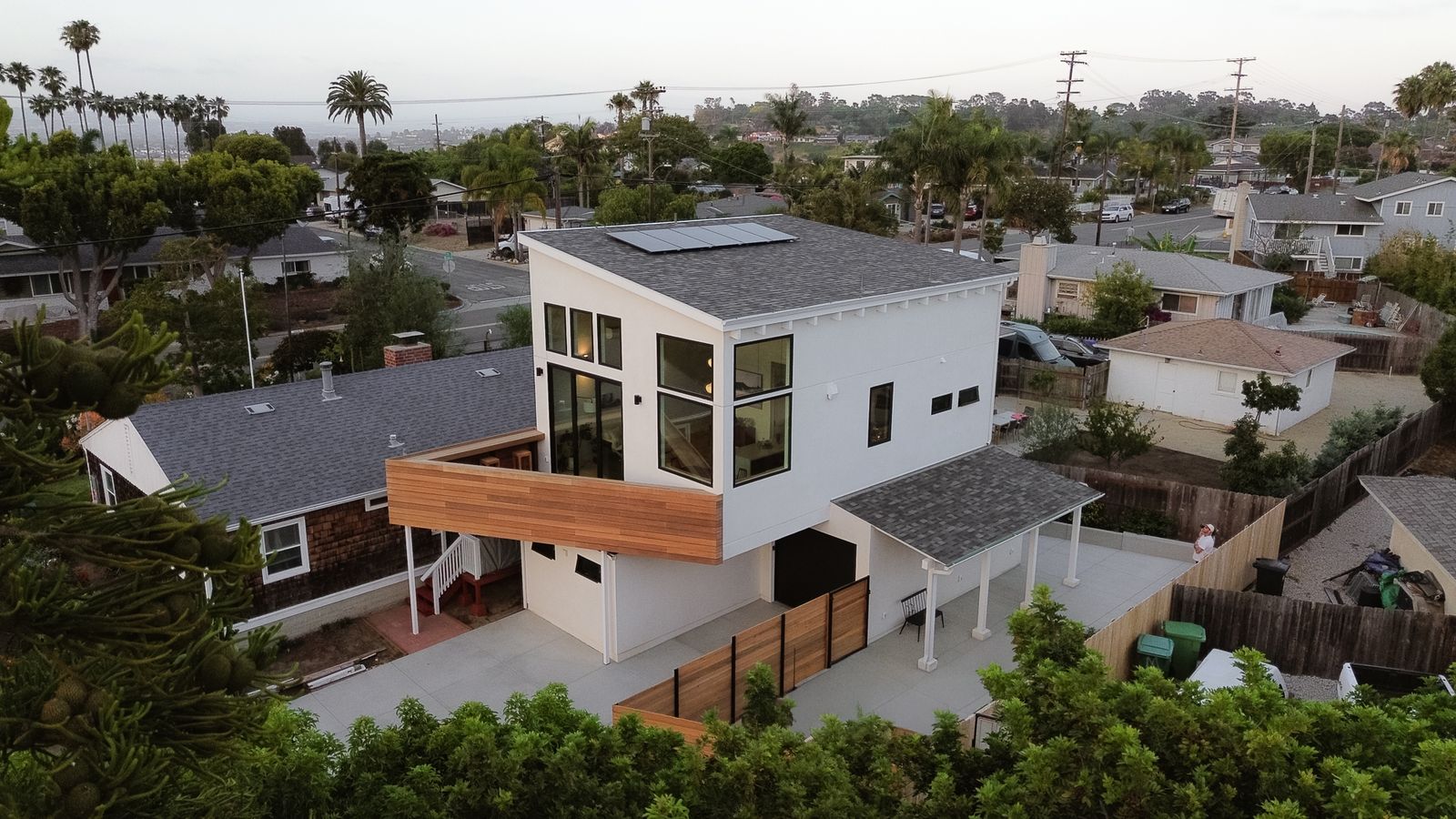
The red balau deck on the Barrahs' Oceanside ADU, a finish picked to hold the budget down. Dwell.
Sarah and Brant Barrah lost bidding war after bidding war on the Southern California coast, until his father and stepmother offered them something stranger than a house: a garage in the Oceanside backyard. The couple spent roughly $732,000 turning it into a soaring two-level home, and under California law that finished accessory dwelling unit can be rented on its own but cannot be sold on its own unless Oceanside adopts an AB 1033 condominium ordinance.
The short version:
- The Barrahs converted a garage on family land in Oceanside into a two-level ADU for about $732,000, their first home after years of losing coastal bidding wars.
- California Government Code Section 66314 lets an ADU be rented separately from the main house but bars selling it separately, unless the city adopts an AB 1033 condominium ordinance.
- We found no record that Oceanside has adopted one. San Diego County has, but only for unincorporated areas, so unless Oceanside acts, the Barrahs' unit cannot be split off and sold.
The decision problem: outbid, then offered a garage
The Barrahs' problem is the one every priced-out coastal buyer knows. You save, you bid, you lose to cash, and eventually you stop looking. What broke the loop was not a listing but a relative with land. Brant's father and stepmother had a lot in Oceanside and an underused garage, and they proposed the couple build there. That one offer turned an impossible purchase into a buildable project, which is the quiet story behind a large share of California's ADU boom: the land is the hard part, and family is how a lot of first-time builders get past it.
If you are a first-time buyer eyeing a relative's lot as your only realistic way onto the coast, the Barrahs' math is worth studying, because the same rules that made their build possible also shaped what they ended up owning.
What $732,000 buys on a garage footprint
Starting from an existing garage is not nostalgia. It is a code advantage. State law says no setback is required for a structure rebuilt in the same location and to the same dimensions as an existing one, so a garage conversion inherits its own footprint instead of surrendering the four-foot side and rear setbacks a fresh detached unit has to give up. On a tight coastal lot, those few feet are the difference between a real second bedroom and a hallway.
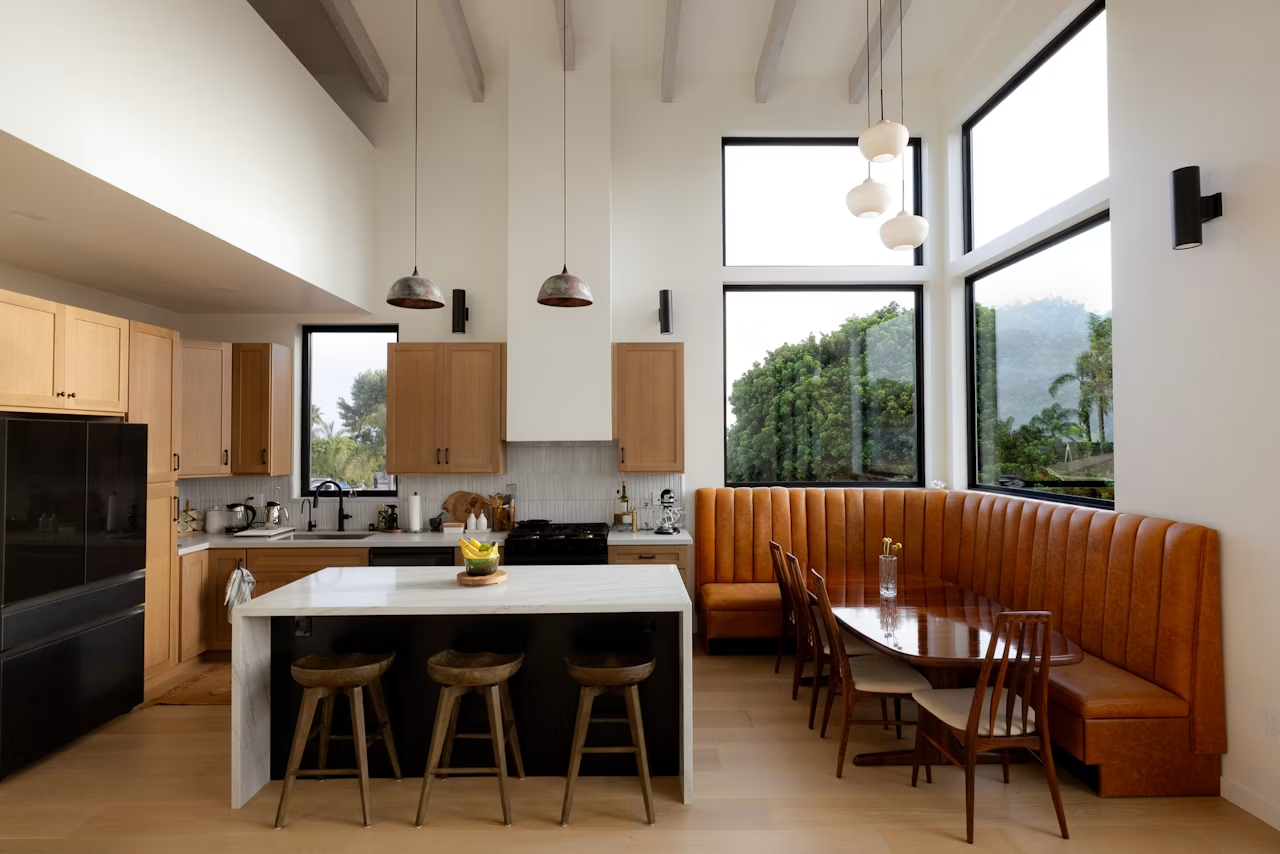
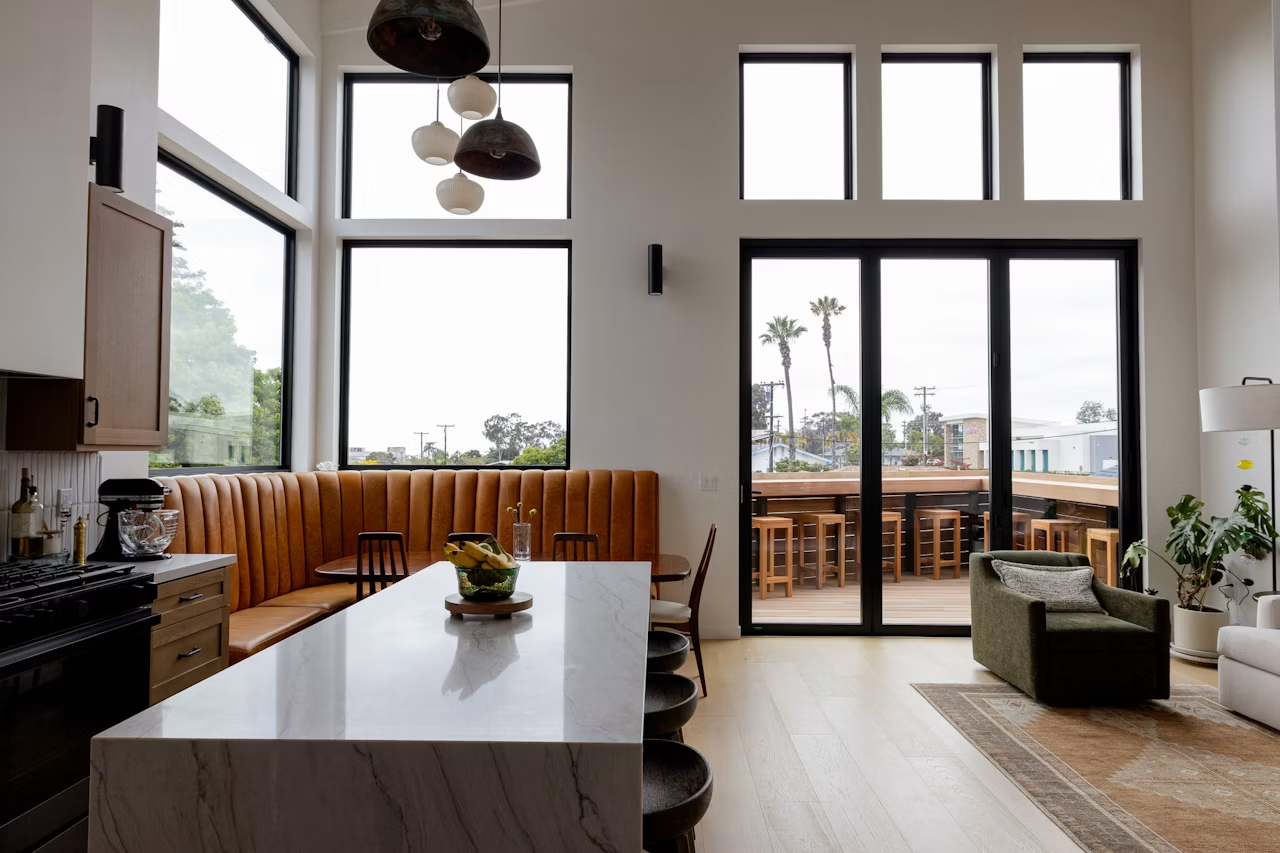
The budget shows the same discipline. The exterior skips pricier finishes like vertical siding, a deliberate move to keep costs down, and leans on a red balau deck to carry the warmth instead. That is the whole trick of a compact build on the coast: spend where a body touches the house, save where only the assessor and the neighbors look. For the furnishing-minded owner, a two-level plan buys the kind of privacy a single-story backyard studio never can, at the cost of a staircase you will carry groceries up for the next thirty years.
From the text: rent it, but do not sell it
Here is the sentence that defines what the Barrahs actually own. California's ADU statute, recently renumbered by the Legislature's 2024 recodification bill, SB 477, is blunt about it:
The accessory dwelling unit may be rented separate from the primary residence, but shall not be sold or otherwise conveyed separate from the primary residence.
That is Government Code Section 66314, and the carve-out sitting right in front of it matters as much as the rule. The unit can be split off and sold only where a city or county has adopted an AB 1033 condominium ordinance under the statute's Article 4. Without that local ordinance, a $732,000 investment is legally a room on someone else's parcel, not a deed of its own.
Can the Barrahs ever own it outright?
Not in Oceanside, not yet. The cross-street check. The exit on this exact build changes at the city line. As we reported when San Diego County opened the door to selling an ADU as a condo, that ordinance reaches only unincorporated county land, which leaves incorporated cities like Oceanside out entirely. Cross the state to San Francisco and the answer flips: the same reversal San Francisco embraced in 2025 and Los Angeles still has not would let a new in-law unit on a small lot be sold on its own. Three of our markets, three different answers to the one question a family keeps asking: is this thing we built actually ours to sell?
Where the Barrahs landed
They landed on the coast, which was the whole point, in a home built to their taste rather than won in a bidding war. That is not a small thing in a market that had told them no for years. But it arrives with the asterisk the statute writes into every ADU on family land.
Our read: the Barrahs got the better end of this deal, but only because the alternative was no coast at all. An ADU you cannot sell separately is a home with a ceiling on it, and until more cities adopt AB 1033, that ceiling is the quiet cost of the cheapest way onto the California coast.
If you are weighing whether your own family lot could carry a build like this one, A-du's build marketplace lets you compare pre-approved plans and their estimated build costs before you commit a dollar.
The bigger question is whether Oceanside follows San Diego County and lets units like this one be sold on their own someday. Until it does, a $732,000 home on the coast still carries an asterisk: it is a place to live, not yet a thing to sell.
Elsewhere on the ADU beat
- New York City's basement conversion program is drawing the most interest in Southeast Queens and on Staten Island, Gothamist reports.
- Seattle eased its accessory dwelling rules just ahead of Washington's state deadline, per The Urbanist.
- A Los Angeles City Council motion would let homeowners sell ADUs separately, a path LA has not yet opened, via LAist.