Washington Cities Must Allow Two ADUs Per Lot, No Owner Required
Chris Koss, AIA|Published: July 24, 2026
HB 1337 forces Washington cities in growth areas to allow two ADUs on a single-family lot, bans owner-occupancy rules, and caps ADU impact fees at half what the main house pays. Seattle already rewrote its code.
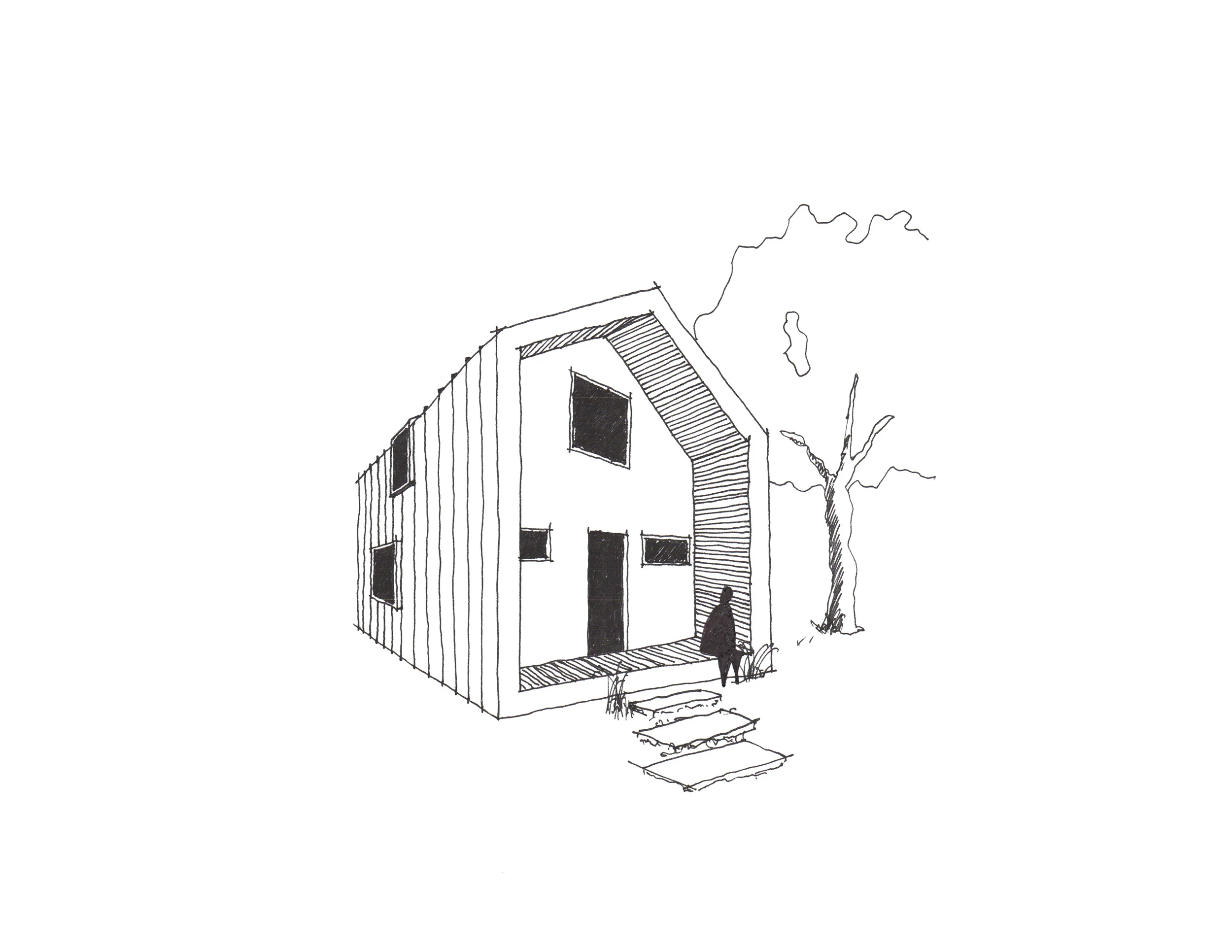
A detached accessory dwelling unit by WC Studio architects, one of the Washington backyard cottages HB 1337 now protects. WC Studio architects.
For years a Washington homeowner who wanted a backyard cottage hit the same two walls: the city allowed only one accessory unit, and it wanted the owner living on site, which quietly killed the rental math. Both walls are gone. Under House Bill 1337, every city and county planning under the Growth Management Act must now allow at least two accessory dwelling units on a single-family lot inside an urban growth area, may not force the owner to live on the property, and may not charge ADU impact fees above 50 percent of what the main house would pay.
The short version:
- Two ADUs are allowed by right on single-family lots inside an urban growth area, in any mix: one attached and one detached, two attached, or two detached.
- Owner-occupancy rules are banned, so a homeowner can rent out both the house and the ADU and live somewhere else entirely.
- ADU impact fees are capped at half the principal unit's, a city cannot cap floor area below 1,000 square feet, and an existing garage can convert even if it breaks today's setback rules.
This is the debut of Washington on A-du Insights, and it is worth saying plainly at the top: none of California's ADU law reaches here. Washington runs its own regime, written into the Growth Management Act, and if you are a first-time ADU client in Seattle, Tacoma, or Spokane, the rules below are the ones that govern your lot.
What the law actually hands you
HB 1337 does not politely suggest. It strips a specific list of tools out of every planning city's hands. The operative sentence is short:
The city or county must allow at least two accessory dwelling units on all lots that are located in all zoning districts within an urban growth area that allow for single-family homes. RCW 36.70A.681(1)(c).
The same section bars owner-occupancy conditions, caps impact fees at 50 percent of the principal unit, forbids any gross floor area limit under 1,000 square feet, protects a roof height of at least 24 feet, and requires cities to allow garage conversions even where they violate current setback or lot-coverage code. It also blocks off-street parking mandates within a half-mile of major transit. A city keeps real design authority, but it cannot use design review to make an ADU harder to build than the main house.
How you actually build one
Confirm the lot. The mandate runs to lots inside an urban growth area, in a jurisdiction planning under the Growth Management Act. That covers the Puget Sound metros and most incorporated cities. If your parcel is rural county land outside a growth area, the state floor does not apply and you are back to local rules.
Pick the configuration. Two detached cottages, one attached plus one detached, or two attached units all qualify. If you have an old detached garage, the conversion path is the cheapest way in, because the statute forces the city to allow it even if the garage sits on a line that current code would reject.
Check whether your city rewrote its code. Seattle adopted Ordinance 127211 in 2025 to fold HB 1337 into its own rules, and its pre-approved DADU plans clear a permit in as little as two to six weeks. Cities that have not finished adopting compliant code do not get a reprieve: the state requirements apply directly once the deadline passes, so a slow permit counter cannot quietly reinstate a one-unit cap.
Where people get stuck
The biggest trap is assuming the state floor means your city has a clean, ready process. Adoption is uneven, and a city that is still drafting its ordinance may hand you a counter that has not caught up to the law it is bound by. The second trap is the transit-parking rule: it removes the off-street parking mandate near frequent transit, but it does not remove your neighbors, your driveway, or the reality of street parking on a Ballard block. The third is design review. A city cannot single out ADUs for extra aesthetic hoops, yet it can still apply the same standards it applies to your house, and in a historic district those are not trivial.
The cross-street check. This is where Washington reads differently from the markets A-du Insights usually covers. California also grants ADUs ministerially, as we detailed when we walked through how California's ministerial approval works in practice, but California layers a metro regime on top: Los Angeles rent-stabilization exposure, San Francisco's Waiver versus No-Waiver rent-control fork, and an owner-occupancy carve-out that still bites junior ADUs. Washington has no such second layer, and it went further on one point California is adopting only city by city, the right to sell an ADU as a condominium, which so far in California means places like San Diego County under AB 1033. New York City is the sharpest contrast of all: there, a licensed architect is required for almost every filing and the Regional Plan Association found only about 12 percent of one- and two-family lots even qualify. Washington's two-by-right rule looks generous next to a 12 percent eligibility rate.
The cost ledger
The 50 percent impact-fee cap is the line that moves a budget. Impact fees are the per-unit charges a city levies for the load a new home puts on roads, parks, and schools, and they scale with the home. Suppose your city assesses 20,000 dollars in impact fees on the principal house. The statute caps your ADU at 10,000 dollars, a swing that is roughly the price of a modest kitchen in a compact unit. Pair that with the pre-approved DADU path in Seattle, which trades custom design time for a permit measured in weeks, and the fixed costs of the second unit start to look like a real number rather than a deterrent.
Our read: HB 1337 is more aggressive than California's statewide baseline on the two levers owners feel most, a second unit by right and no owner-occupancy, but the win is only as real as your city's adopted code. Until every jurisdiction finishes rewriting its rules, the gap between what the statute promises and what the permit counter delivers is where Washington ADU projects will live or die.
If you are sizing up a backyard cottage in Washington, A-du's build marketplace is where plan sets, permit help, and vetted builders come together on one lot.
The next thing to watch is Bellevue and the cities still finishing their ordinances, plus Washington's permanent middle-housing rules, which will decide how much more than two units a single lot can eventually hold.
Elsewhere on the ADU beat
- Seattle extended its call for new pre-approved ADU and middle-housing designs to July 15, 2026, refreshing the ADUniverse gallery, via Seattle OPCD.
- San Diego's City Council adopted a package of reforms scaling back its ADU Bonus Program and adding a new Community Enhancement Fee, via Inside San Diego.
- Oregon's HB 2138 makes it easier to site ADUs alongside middle housing, with provisions phasing in through 2027, via Oregon Legislature.