Washington Caps ADU Impact Fees at Half, Scraps Transit Parking
Chris Koss, AIA|Published: August 13, 2026
Last updated: October 1, 2026
Washington's HB 1337 bars a city from charging an ADU more than half the impact fees a main house pays, and forbids off-street parking rules within a half-mile of major transit. Here is what it saves you.
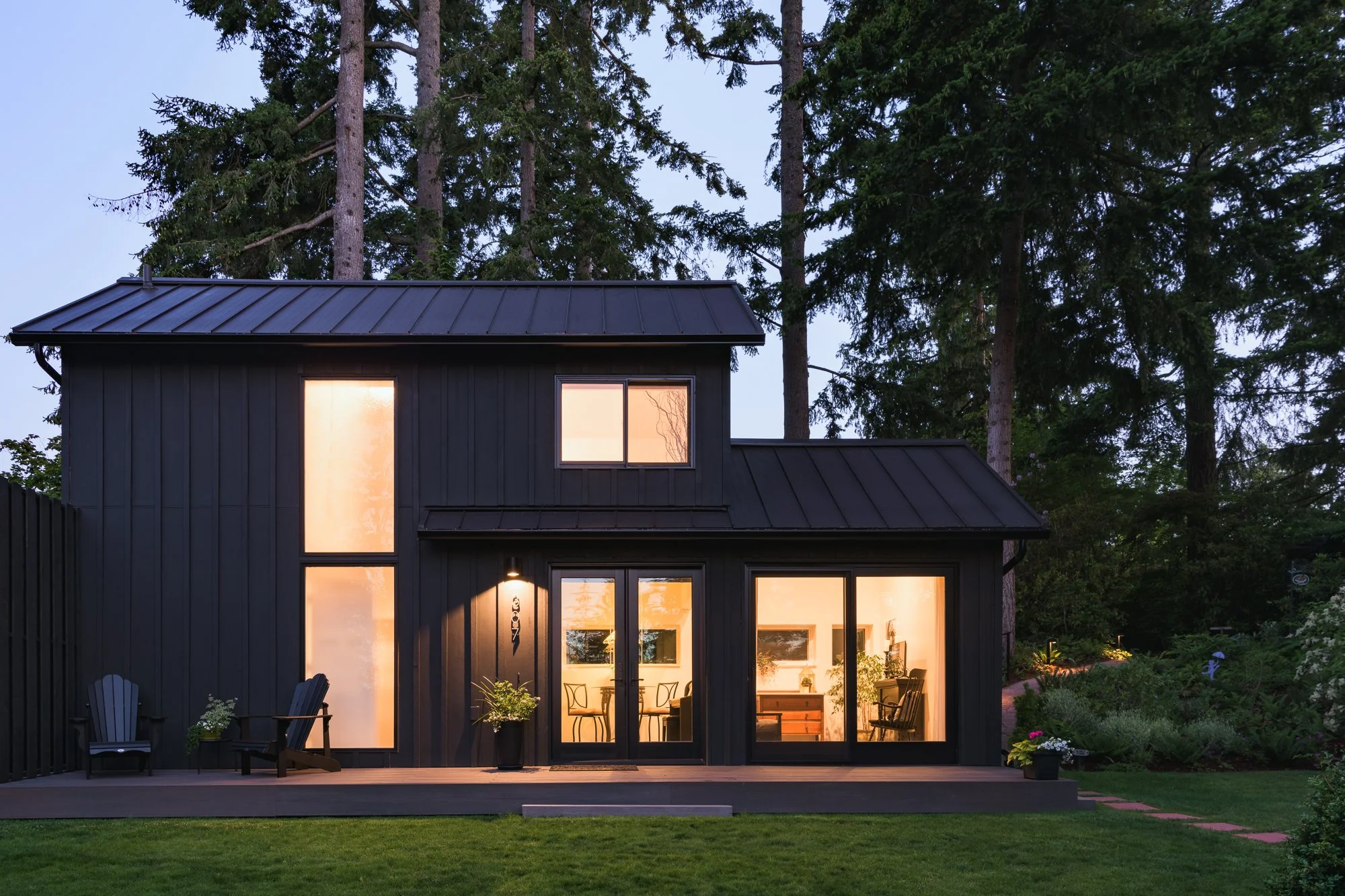
A backyard cottage by CAST architecture, one of the firms whose designs sit in Seattle's pre-approved catalog. CAST architecture.
Washington did not ask its cities to be generous with backyard cottages. It ordered them to be, and then it put numbers on the order. Under the statewide ADU law, a city may not bill your accessory dwelling unit more than half the impact fees it would charge the main house, and it may not force you to pour a single off-street parking space if you build within a half-mile of a major transit stop.
The short version:
- Washington caps ADU impact fees at 50 percent of what the principal home would owe (RCW 36.70A.681), so if a city charges the main house $20,000 in impact fees, the ADU cannot be billed more than $10,000.
- No off-street parking may be required for an ADU within a half-mile walking distance of a major transit stop, and never more than one space on lots under 6,000 square feet.
- The same statute bars owner-occupancy conditions and public street improvements, so you cannot be forced to live on-site or rebuild the curb to get a permit.
From the text
The cap is not buried in guidance. It is a flat prohibition in the code:
"The city or county may not assess impact fees on the construction of accessory dwelling units that are greater than 50 percent of the impact fees that would be imposed on the principal unit." (RCW 36.70A.681(1)(a))
The parking rule is written the same blunt way. A jurisdiction may not "require off-street parking as a condition of permitting development of accessory dwelling units within one-half mile walking distance of a major transit stop." No hearing, no variance, no discretion. If your lot qualifies, the standard simply does not apply.
What actually changed
HB 1337, passed in 2023, made every city and county planning under the Growth Management Act allow at least two ADUs on lots that permit single-family homes, and it stripped the levers local governments used to make that permission hollow. We covered the two-per-lot mandate when it landed; the fee and parking caps are the fine print that decides whether the second unit pencils.
Here is the reader translation. An impact fee capped at half is still a real bill, and the dollar depends entirely on your city's principal-unit schedule, which is why the cap is a percentage and not a number. The parking rule is the one that quietly saves the most. A required off-street space is not free. It eats the yard you wanted for the cottage, and on a tight lot it can be the difference between a buildable ADU and a driveway with ambitions.
Who wins, who loses
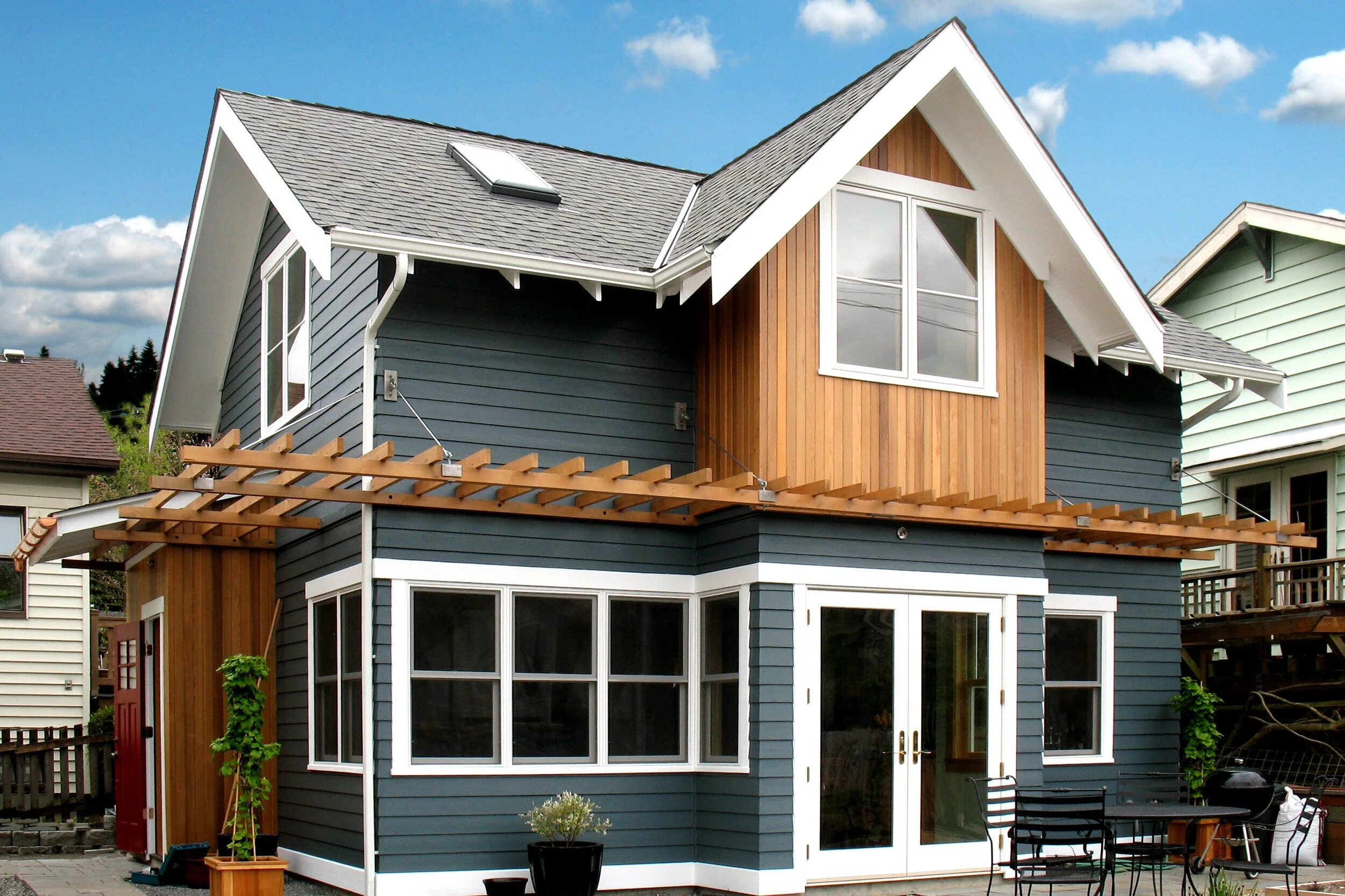
If you are a Washington homeowner planning a rental cottage, you win twice: a smaller fee bill, and, near transit, no obligation to sacrifice land or budget to parking. Seattle sweetens it further with a pre-approved DADU catalog that trims permit review to a few weeks and saves roughly $1,500 in fees on its own, per the city's backyard cottage program. The city that comes out behind is the one that treated impact fees as an ADU deterrent, because HB 1337 takes that tool away.
Our read: the parking clause saves more real money than the fee cap does. A half-off fee is still a charge, but a parking space you do not have to build is land, concrete, and design freedom you keep. Cities will settle on the 50 percent ceiling as their new floor, and homeowners who assumed the cap meant cheap should budget for half of a number that was never small.
The cross-street check. This is where Washington diverges hard from its neighbors. California fully exempts ADUs of 750 square feet or less from impact fees, which beats Washington's half-off for small units, but it leaves larger ADUs exposed, a gap that SB 1117, signed in September 2026, narrows starting January 1, 2027, by charging fees only on the area above 750 square feet on lots with up to two ADUs. Oregon took the incentive route instead of the mandate route: Portland waived System Development Charges outright for years, a subsidy worth tens of thousands, then scaled it back, so an Oregon owner's fee question is "is the waiver still on?" rather than "what is the cap?" Washington is the only one of the three that wrote a hard statewide percentage into the code and told cities to live with it.
What to watch
The parking rule has an escape hatch. A city can ask the state Department of Commerce to certify, with an empirical study, that applying the limits would be less safe than its normal parking rules. Few will clear that bar, but watch which ones try. And the cap governs impact fees, not every line on the permit stack, so utility connection charges, plan review, and school fees can still add up. If you are pricing a Washington ADU, price the whole stack, not just the fee the statute happened to cap.
Curious what your own city's numbers look like before you commit? A-du's permit fee calculator breaks a build down line by line, so the capped fee and the uncapped ones sit side by side.
The next test is adoption: HB 1337 compliance is now tied to each jurisdiction's periodic comprehensive-plan update (a 2025 law, SSB 5558, dropped the original six-month grace period), and the cities still catching up are where the gap between the statute and the permit counter is widest.
Elsewhere on the ADU beat
- Seattle is expanding its pre-approved DADU catalog, with new designs due to be announced this month (as of September 2026, the city has named 15 designs, usable starting January 2027), Seattle OPCD.
- Fairfax City, Virginia voted to allow detached ADUs by right, with the mayor breaking the tie, FFXnow.
- New York City's Buildings and Housing agencies advanced proposed rules to implement City of Yes ancillary dwelling units, NYC Buildings.