Washington Capped Rent at 9.683%. New ADUs Are Exempt for 12 Years.
Chris Koss, AIA|Published: August 9, 2026
Last updated: September 25, 2026
Washington's new 9.683 percent rent cap made headlines, but the state exempts any home built in the last 12 years, so most newly built ADUs are not covered. Here is how a renter can check before signing.
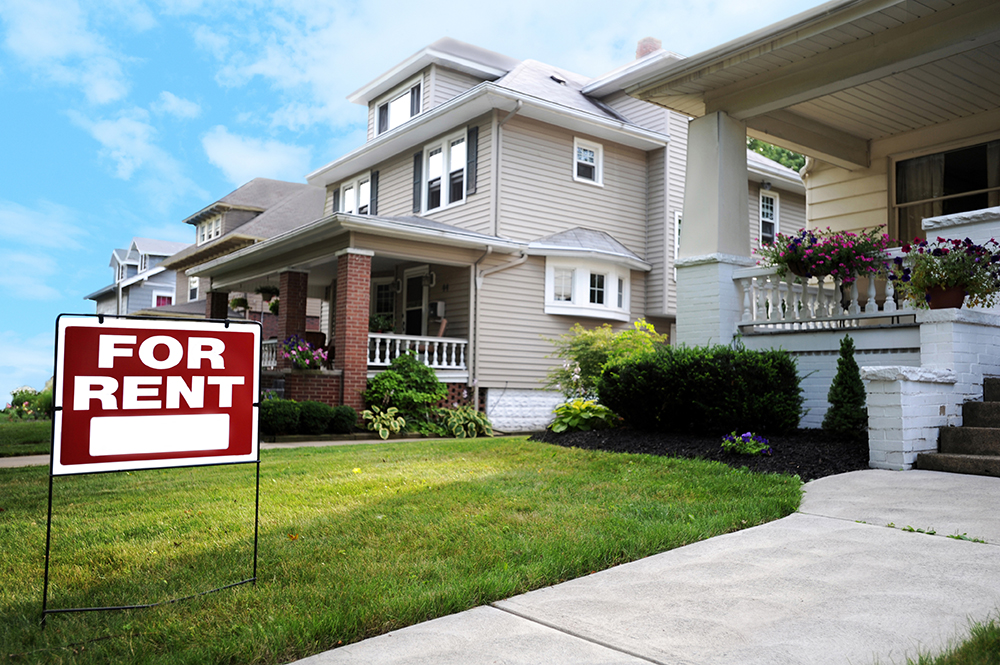
A rental listing sign, the everyday face of a market Washington just tried to slow. Washington State Department of Commerce.
You found a backyard cottage in Beacon Hill, signed a lease, and read the headline that Washington now caps rent increases at 9.683 percent for 2026. Here is the part the headline skips: if your unit is a newly built accessory dwelling unit, that cap almost certainly does not apply to you. Under state law, a home whose first certificate of occupancy was issued within the last 12 years is exempt from the cap, and nearly every ADU on the market is younger than that.
The short version:
- Washington's 2026 rent cap is 9.683 percent, the lesser of 7 percent plus Seattle CPI or 10 percent, in effect January 1 through December 31, 2026. (As of September 2026, Commerce has set the 2027 cap at 10 percent.)
- A dwelling with a certificate of occupancy issued 12 or fewer years ago is exempt, so most newly built ADUs are not covered.
- If the owner lives on the property and rents no more than two units, an attached or detached ADU is exempt too, and that exemption is closed to corporate landlords.
Washington's rent stabilization law, House Bill 1217, was signed in May 2025 and took effect immediately; 9.683 percent is the cap for the 2026 calendar year. It changed the rules for most renters in the state. It changed them least for the newest slice of the rental market, which is the slice HB 1337 just opened up by letting owners build and rent two ADUs per lot with no requirement to live on site. If you are the tenant of one of those units, here is how to find out where you actually stand.
Step one: find the certificate of occupancy date
The single fact that decides your protection is the age of the unit. The exemption is written plainly:
"Rent increases are not limited by RCW 59.18.700 for any of the following types of tenancies: (a) A tenancy in a dwelling unit for which the first certificate of occupancy was issued 12 or less years before the date of the notice of the rent increase." RCW 59.18.710(1)(a)
An ADU is new construction by definition. A backyard cottage finished in 2024 will not cross the 12-year line until 2036. Ask the owner for the unit's certificate of occupancy and read the issue date. If it falls inside the last 12 years, the 9.683 percent number is a ceiling for your neighbors, not for you.
Step two: does the owner live on the property?
Even if the unit were older, a second exemption reaches straight into ADU territory. The law exempts a single-family owner-occupied residence "including a residence in which the owner-occupant rents or leases no more than two units or bedrooms including, but not limited to, an attached or detached accessory dwelling unit" (RCW 59.18.710(1)(f)). If the owner lives in the front house and rents you the cottage out back, the cap does not bind them. HB 1337 removed the requirement that owners live on site, so plenty of ADUs now belong to someone who lives elsewhere. Those units lose the owner-occupied exemption, but they usually keep the new-construction one, which lands you in the same place.
Step three: ask who owns it
There is one line that runs the other way, and tenants should know it. The owner-occupied exemptions do not apply when the owner is a corporation, a real estate investment trust, or an LLC with a corporate member. If a corporate landlord owns the single-family house you rent, the owner-occupied carve-out is off the table for them. The new-construction exemption, though, carries no such limit. A corporate owner of a three-year-old ADU is still exempt through the unit's twelfth year.
The cross-street check. Every West Coast rent cap has the same hole, and ADUs fall through all three. Washington exempts new construction for 12 years. Oregon's statewide cap under Senate Bill 608, which we covered when we explained why Portland's rent cap often skips ADU renters, exempts a unit for its first 15 years. California's Tenant Protection Act does the same for 15 years, which is exactly why a new Los Angeles ADU skips rent control for a decade and a half. Three states, three caps, one shared assumption: the newest housing needs room to pencil out, and an ADU is almost always the newest housing on the lot. Washington's window is the shortest of the three, which is the one piece of good news for a Washington ADU tenant.
What actually protects you
Exempt from the cap is not the same as unprotected, but the protection is narrower than the headline suggests. The first-year rent freeze in RCW 59.18.700 carves out units exempt under RCW 59.18.710, so it does not bind a new-construction-exempt ADU. What holds your rent in place is your lease: under RCW 59.18.140(3)(a), a landlord must give you at least 90 days' written notice of any increase, and no increase can take effect before the term of your rental agreement ends. If a landlord who is not exempt raises rent above the cap without stating a valid exemption in writing, you can demand they cure it and, failing that, terminate the lease with 20 days of notice and no fees (RCW 59.18.700(3)). Separately, RCW 59.18.700(4)(b) bars a landlord from charging more than a 5 percent difference in rent based on whether you sign month to month or for a fixed term. Whether that parity rule reaches a unit exempt under RCW 59.18.710 is not settled: the exemption section frees tenancies from the law's limits on rent increases, the parity rule is written as a separate requirement, and the statute does not say either way. Treat it as a possible protection, not a sure one, and check with the Attorney General's office before relying on it. Read the exemption claim on any increase notice; the law requires the landlord to put the facts in writing.
The cost of the gap
Run the arithmetic on a round example. Say your ADU rent is $2,000 a month. Under the cap, the most it could climb in a year is about $194 a month, roughly $2,300 across the year. Because your new ADU is exempt, there is no statutory ceiling at all, and the increase is whatever the market and your lease allow. That difference is the whole reason to read your certificate of occupancy before you sign, not after the notice arrives.
Our read: for at least the next decade, the 9.683 percent number does almost nothing for the typical Washington ADU renter. The protection that matters is the one you negotiate into the lease, plus the 90-day notice rule and the ban on raising rent before your lease term ends, both of which survive the exemptions. For an exempt unit, a longer fixed term is the closest thing to a rent cap you can get. Treat the cap as a headline about the wider market, not a shield on your own front door.
If your rent goes up and you want to check your standing, three official resources are free: the Washington Department of Commerce HB 1217 resource center, the Washington Attorney General's landlord-tenant page, and the exemption text itself at RCW 59.18.710.
The next number is already out: in July, Commerce set the 2027 cap at 10 percent, the statutory ceiling, after June's Seattle inflation reading. The percentage can move every year. The 12-year exemption sitting underneath it will not.
Elsewhere on the ADU beat
- San Diego's City Council adopted a 25-part package of ADU reforms, tightening the Bonus Program again, per Inside San Diego.
- A Los Angeles City Council motion would let homeowners sell ADUs separately, not just rent them, reports LAist.
- New York City reopened ADU financing with pre-approved plans and grants for homeowners, covered by The MortgagePoint.