This 800-Square-Foot Seattle DADU Was Built to Rent, in 2017
Chris Koss, AIA|Published: August 22, 2026
Last updated: September 25, 2026
Seattle overhauled its ADU rules in 2019, dropping owner-occupancy and letting one lot hold two rentals. A Central District architect saw it coming: an 800-square-foot backyard cottage, built in 2017 purely to rent out.
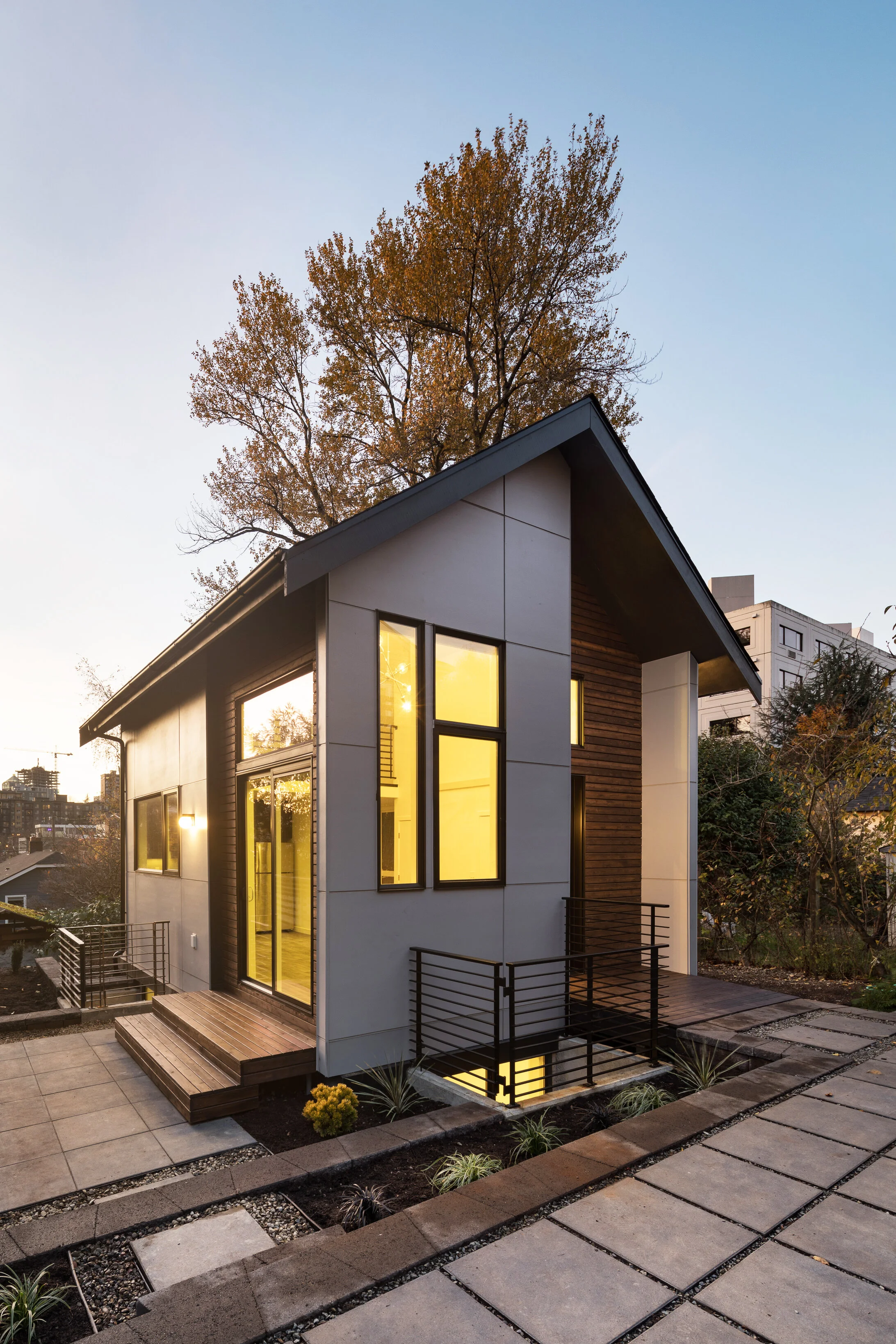
Photographs of the 335 DADU in Seattle's Central District. b9 architects.
In 2017, on a narrow single-family lot in Seattle's Central District, an architect built a two-story backyard cottage with one job: pay rent. It is a detached accessory dwelling unit of 800 square feet, and it went up two years before Seattle formally scrapped its owner-occupancy rule and a full six years before Washington told the rest of the state to allow the same thing.
The short version:
- Seattle overhauled its ADU rules in 2019, dropping the owner-occupancy requirement and letting one lot hold two accessory units. The rest of Washington is only now catching up under House Bill 1337.
- b9 architects' 335 DADU, completed in 2017, packs 800 square feet onto a lot too small to spread out, so the plan goes vertical: living space up top, two bedrooms set partly below grade with window wells for daylight.
- It was designed as an investment rental, not a guest room. That purpose is exactly what Washington's 2023 law now protects statewide.
The project
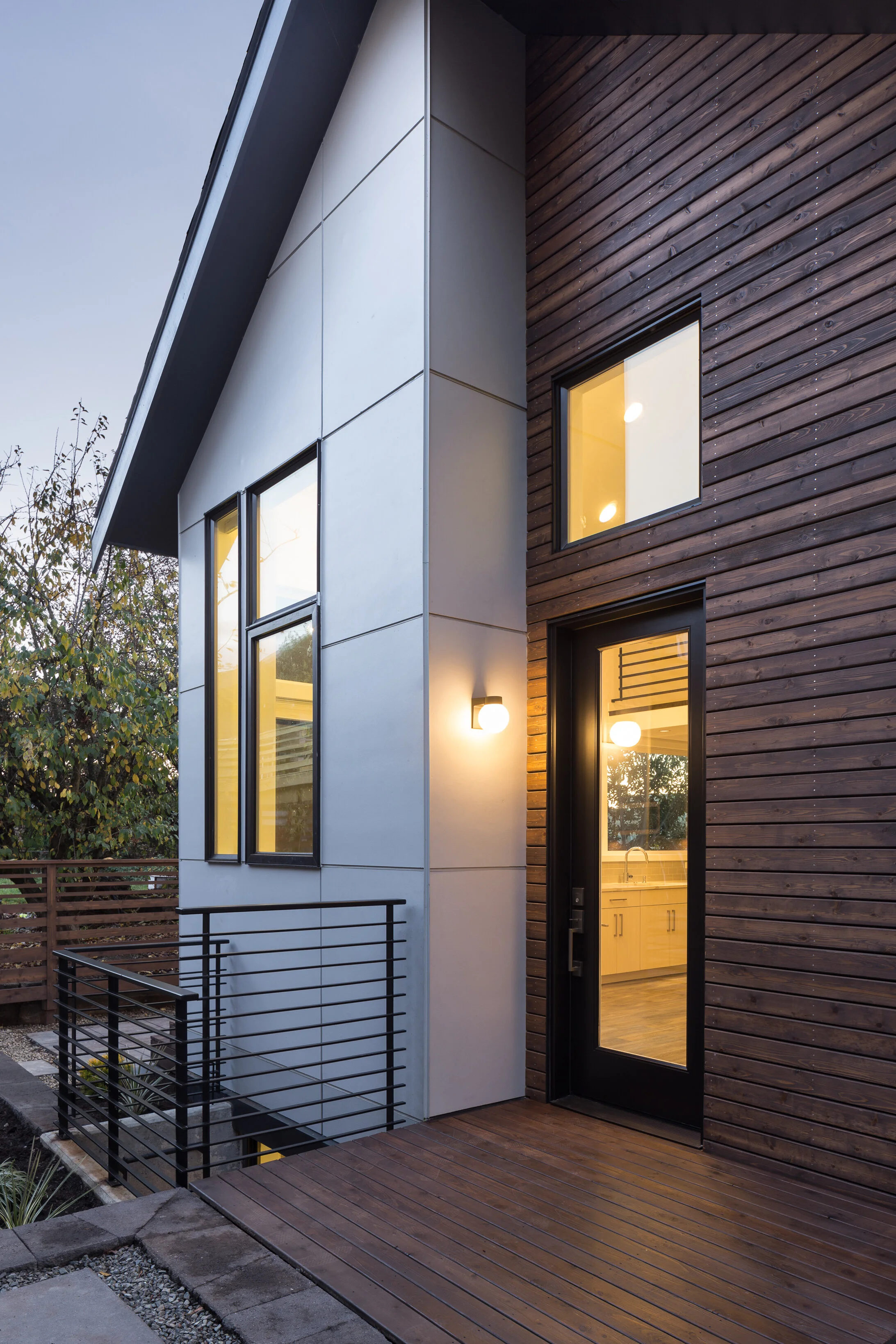
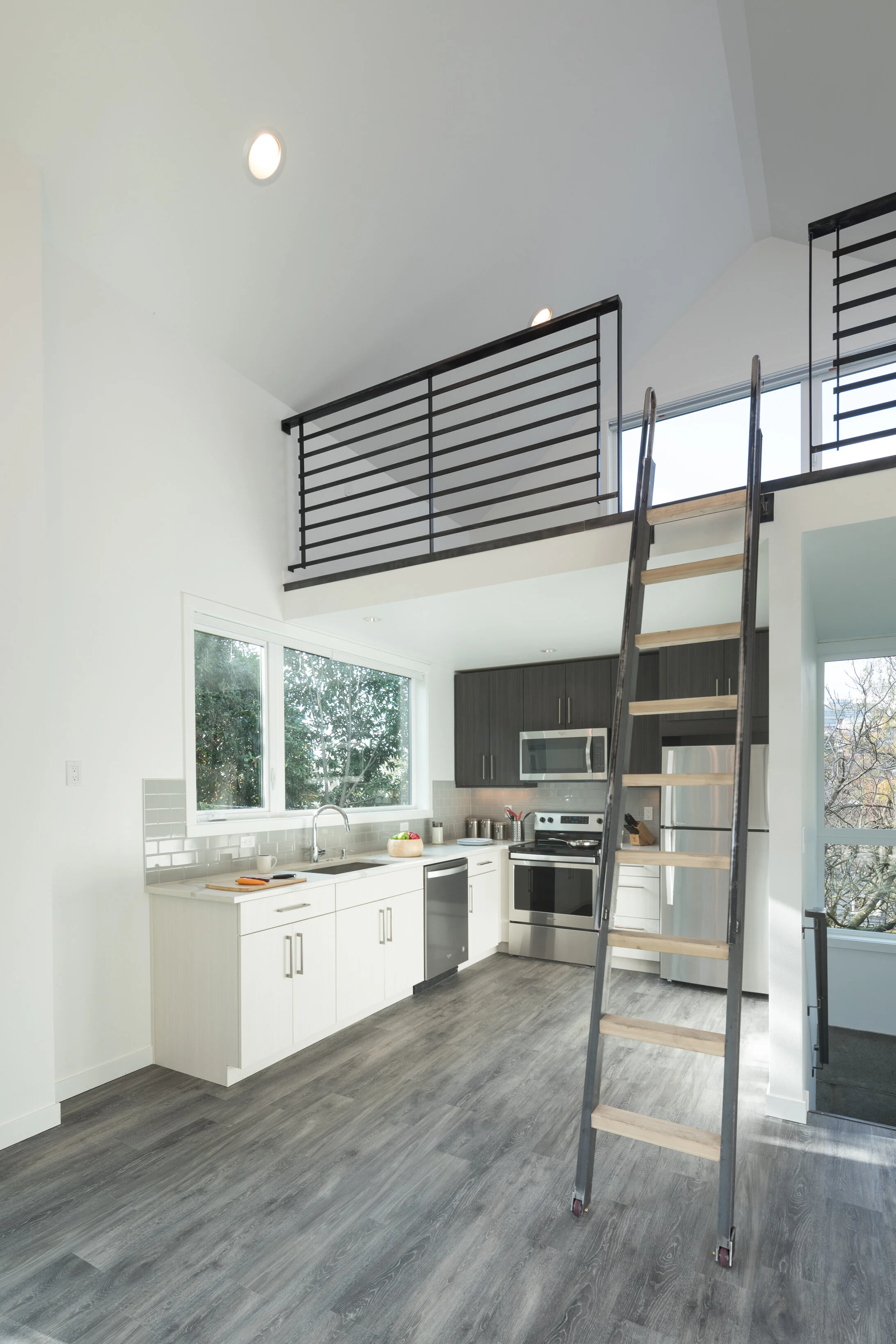
The lot set the terms before the architects drew a line. Seattle's municipal code caps how much of a rear yard a detached unit can cover, and on a small parcel that ceiling arrives fast. So b9 built up instead of out. The 335 DADU is two stories and 800 square feet in total, two bedrooms and a bath below, a single vaulted living and kitchen volume above that follows the gabled roofline to buy back the ceiling height a small footprint takes away.
The firm is candid about the brief. This was built specifically as an investment rental to get the most out of a small single-family lot, and the design decisions follow from that one sentence. Every choice serves rentable square footage and daylight, the two things a small unit actually sells. The project later appeared on the 2019 AIA Seattle ADU Tour. (b9 has not published a construction cost for the unit, so we are not going to invent one.)
The constraint, and the fix
Here is the move worth stealing. When lot coverage pushes the bedrooms downstairs, the daylight problem gets worse, not better, because a below-grade room reads as a basement the second a tenant walks in. b9's answer was window wells: excavated light pockets along the lower bedrooms that pull daylight down to a floor that would otherwise feel buried. The result is two bedrooms that count as real, sleepable rooms instead of storage, which on an 800-square-foot unit is the whole difference between a one-bedroom and a two-bedroom on the listing.
If you are furnishing a unit shaped like this, the plan is telling you where the money goes: light and vertical circulation. Spend on the stair and the glazing. The rest can be modest.
The cross-street check. The reason a 2017 rental cottage is worth your attention in 2026 is what it would take to build the same thing elsewhere. In Seattle, and now across Washington under HB 1337, which we covered when the two-ADU mandate landed, you can rent out both the house and the backyard unit with nobody required to live on site. In New York City, the new City of Yes rules run the other way: owner-occupancy is required, so you or a family member has to live in the primary home or the ADU, and the Regional Plan Association found only about 12 percent of one- and two-family lots even qualify. California lands closer to Seattle than to New York: it also dropped owner-occupancy for ADUs, and the state's housing department, in a review letter to Los Angeles, reads Government Code 66323 to let a single-family lot hold a converted ADU, a new detached ADU and a junior ADU, in any order. The catch is that the converted unit has to come from space inside the house or an existing accessory structure such as a garage, so a second freestanding rental depends on what is already standing in your yard. Same backyard, three different answers to the question of whether a stranger can pay you to live in it.
What it means for your lot
If you are a Seattle homeowner weighing a backyard rental, the 335 DADU is a nine-year-old proof of concept for the plan you can now build faster than ever, often with a permit in two to six weeks if you start from Seattle's pre-approved DADU catalog, the transition we walked through last month. First-time ADU clients tend to assume a two-bedroom needs a bigger footprint. This unit says it needs a smarter section instead. Go up, put the bedrooms where the light can still reach them, and let the roofline do the work a flat ceiling cannot.
Our read: Seattle's head start is the argument for HB 1337, not a footnote to it. The rest of Washington is now permitting a backyard-rental economy that Seattle spent the better part of a decade proving out, on lots exactly like this one, while everyone else waited for the state to agree.
If you are ready to price out a DADU on your own lot, A-du's build marketplace matches you with designers and builders who have done the vertical-on-a-small-lot version before.
The next test is whether the rest of Washington can copy Seattle's backyard pipeline as quickly as it copied Seattle's law.
Elsewhere on the ADU beat
- Seattle extended its call for new pre-approved ADU and middle-housing designs, pushing the ADUniverse submission deadline to July 15, 2026, per Seattle OPCD.
- San Diego's City Council adopted a package of reforms to its ADU density-bonus program, including a Community Enhancement Fee on smaller bonus units, reports Inside San Diego.
- LADBS revised its accessory dwelling unit information bulletin, P/BC 2026-150, to align Los Angeles permitting with current state law, per LADBS.