Selling a San Diego County ADU Condo? Your Tenant Gets First Dibs
Chris Koss, AIA|Published: September 30, 2026
San Diego County now makes ADU condo sellers list for 30 days to owner-occupants, then give a tenant or neighboring owner 30 days to match. Here is the full path, step by step, and what it costs you in time.
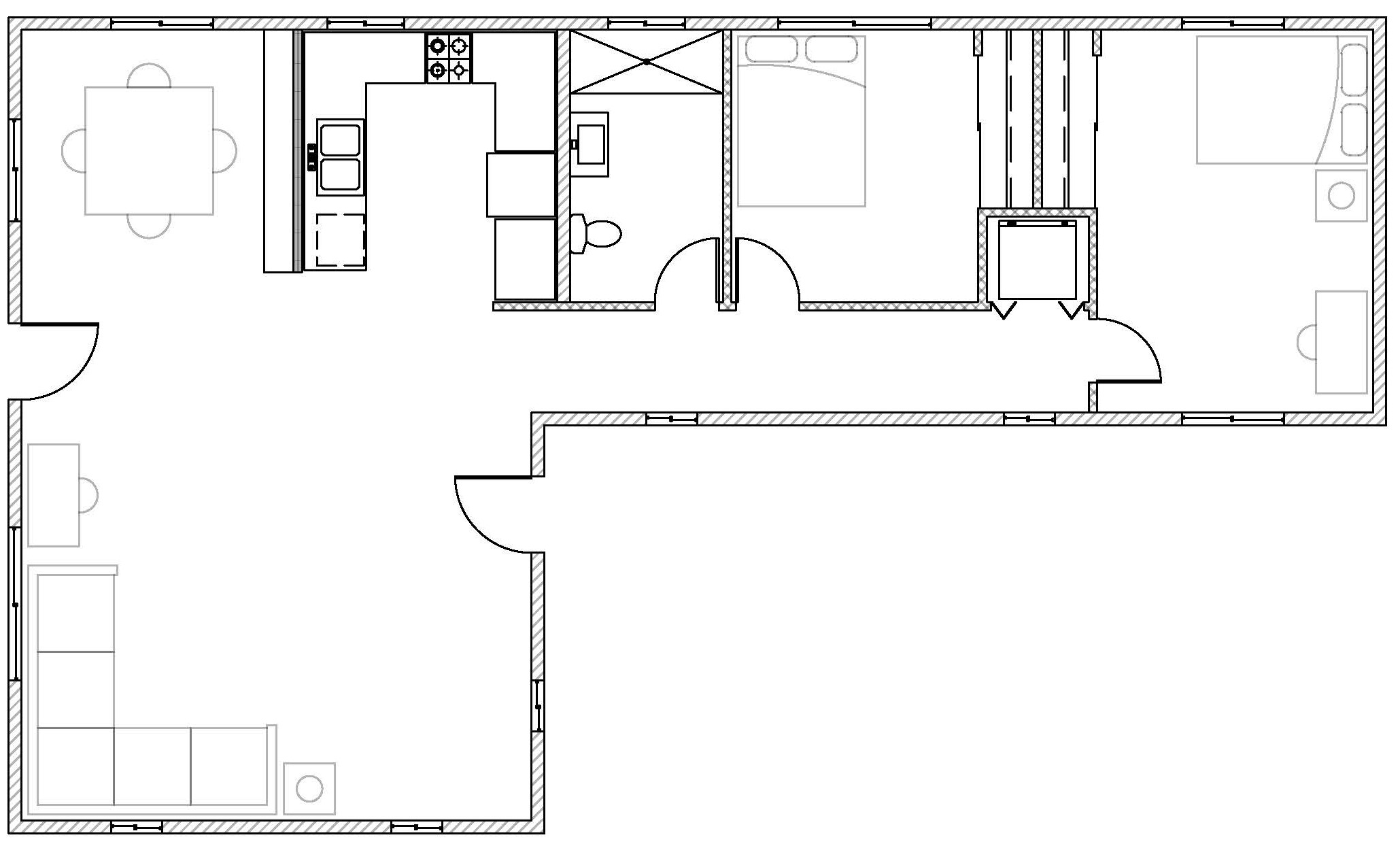
Floor plan of Plan B, a 1,200-square-foot, two-bedroom design the County offers for use as an ADU in unincorporated areas. County of San Diego Planning & Development Services.
You built the ADU, you split it into a condo, and you found a buyer. In unincorporated San Diego County, as of September 18, 2026, you now have to offer the unit to your own tenant first: every ADU condo sale must clear a 30-day public listing period for owner-occupants and then a 30-day right of first refusal for the tenant or neighboring condo owner, and the buyer must sign an affidavit promising to live there for at least a year.
The short version:
- The County Board of Supervisors voted unanimously on August 19, 2026, to add three sale rules for ADU condominiums in unincorporated San Diego County, effective September 18, 2026: a right of first refusal, an owner-occupancy affidavit, and a public posting period.
- A seller must list the unit for at least 30 days on two or more MLS-fed real estate websites, marked for owner-occupant buyers, and then give the right-of-first-refusal holder 30 days to match the chosen offer.
- The buyer signs a notarized affidavit, recorded with the County Recorder, that they or a family member will live in the ADU as a primary residence for at least one year from the purchase date.
The County opted into California's ADU condominium law, AB 1033, back in March. That ordinance (No. 10986, in effect since April 4, 2026) answered whether you can sell an ADU separately. The August amendment answers how, and to whom. If you are a homeowner who built with a sale in mind, here is the path now, step by step.
Step one: get the condo to exist
None of the new sale rules touch you until there is a condominium to sell, and that part has not changed. The County's separate-sale checklist, revised September 18, is a subdivision process, not a permit. You need a finaled building permit for the ADU, written consent from any lender on the property, sign-off from an existing HOA if there is one, proof you notified every utility, a condominium plan from a licensed surveyor or civil engineer, and CC&Rs that create a homeowners association for the lot. Then you file a Tentative Parcel Map (four or fewer units) or Tentative Map (five or more).
Two limits matter early. Junior ADUs cannot be sold separately; they stay part of the main house. And the condo map does not add units: a single-family lot still tops out at one primary home and up to two ADUs. A tentative approval expires after three years if the final map is not recorded, and the condo plan will not record until the ADU passes final inspection and has a certificate of occupancy.
Lender consent is the step that stalls people. Your mortgage covers the whole lot, and you are asking the bank to let part of its collateral walk away. Start that conversation before you pay a surveyor.
Step two: set up the right of first refusal
This is the new part. The County's project page puts it plainly:
"Each condominium unit owner on a lot must establish a ROFR contract with an existing tenant or another condo owner on the same lot. The holder of the ROFR contract will have the right to purchase if they are able to match a future purchase offer." (County of San Diego, ADU Zoning Ordinance Amendment)
The checklist fills in the mechanics. The holder must be an active rent-paying tenant or a condo owner on the same lot. The right lasts only while that tenancy or ownership lasts, and you re-establish it with a new occupant when the old holder leaves. The contract is notarized and filed with the County Recorder, which puts an encumbrance on title so every future owner inherits the process. A holder can sign a one-time waiver or terminate the agreement. If nobody on the property wants the right, the PDS Director can grant an exception.
If you are the tenant. This is a real option, not a courtesy. If you rent the main house or the ADU on a lot with ADU condos, you can be the person who gets to match any offer the owner picks. Read the contract before you sign it, and know that it ends when your tenancy does.
Step three: the 60-day sale clock
When you list, the rules stack in sequence. First, the unit goes on at least two publicly accessible real estate websites that pull from the MLS for a minimum of 30 days, with a disclosure that the ADU is being offered to buyers who will live in it or house a family member. Only after that window closes can you pick an offer and send written notice to the right-of-first-refusal holder, who then has 30 days to sign a matching sales agreement. If they pass, you proceed with your buyer.
That is at least 60 days between listing and a signed deal with an outside buyer, before escrow even starts. Translated: two full months of carrying the mortgage, taxes, and HOA dues on a unit you have already decided to sell. The Director can waive the posting period if the seller explains in writing why it is an undue burden, but plan as if you will not get the waiver.
The buyer then signs the owner-occupancy affidavit, promising under penalty of perjury to occupy the unit as a principal residence for no less than one year from the date of sale. It is recorded with the County Recorder and copied to the HOA.
The cross-street check. While San Diego County was layering on these rules, Los Angeles was still deciding whether to allow ADU condos at all: as we covered on Monday, LA's draft ordinance, up for a hearing on October 1, would opt in with lender consent and a safety inspection, and whether it adds owner-occupancy terms like San Diego County's is a question to watch at that hearing. Washington went the opposite direction entirely. Its statewide law, HB 1337, requires most cities to allow ADU condo sales and bars owner-occupancy rules on ADUs, as we walked through in September. And note the geography inside San Diego itself: all of this applies only in the unincorporated county. If your lot is inside the City of San Diego or another city, that city's rules govern, and the checklist tells you to call its planning department.
Where people get stuck
Assuming the old tenant is the only candidate. The holder can also be another condo owner on the lot. If you sell the ADU and keep the house, you and your buyer may end up holding rights against each other.
Forgetting the encumbrance. Because the contract is recorded, a title company will see it. A sale that skips the notice step is not a shortcut; it is a cloud on title.
Treating the affidavit as the buyer's problem. Your pool of buyers is now owner-occupants and their families, at least for the first year. An investor who wanted a rental is effectively out, unless a family member will live there.
Our read: the County has built an owner-occupant program on paper, but the Board itself is not yet sure it can police it. At the August 19 hearing it asked staff to report back within 180 days on whether the new criteria can be enforced, whether deed restrictions are needed, and whether ADUs should be allowed to grow larger. The 60-day clock is certain; the enforcement is not. Budget for the first and watch the second.
If the math on a two-month sale window pushes you toward keeping the unit and renting it instead, A-du's rental map lists permit-verified ADU rentals, San Diego included, so you can see what the unit would earn before you decide to sell it.
The staff report back to the Board is due by mid-February 2027, and a public webinar comes before it; that is when a loose rule could become a deed restriction.