Your California ADU Builder Can Ask for $1,000 Down. Not a Penny More.
Chris Koss, AIA|Published: October 21, 2026
Prosecutors say Anchored Tiny Homes billed ADU customers $1,046,433 for work never done. California already caps a builder's deposit at $1,000; here is how to pay by stage and never ahead of the work.
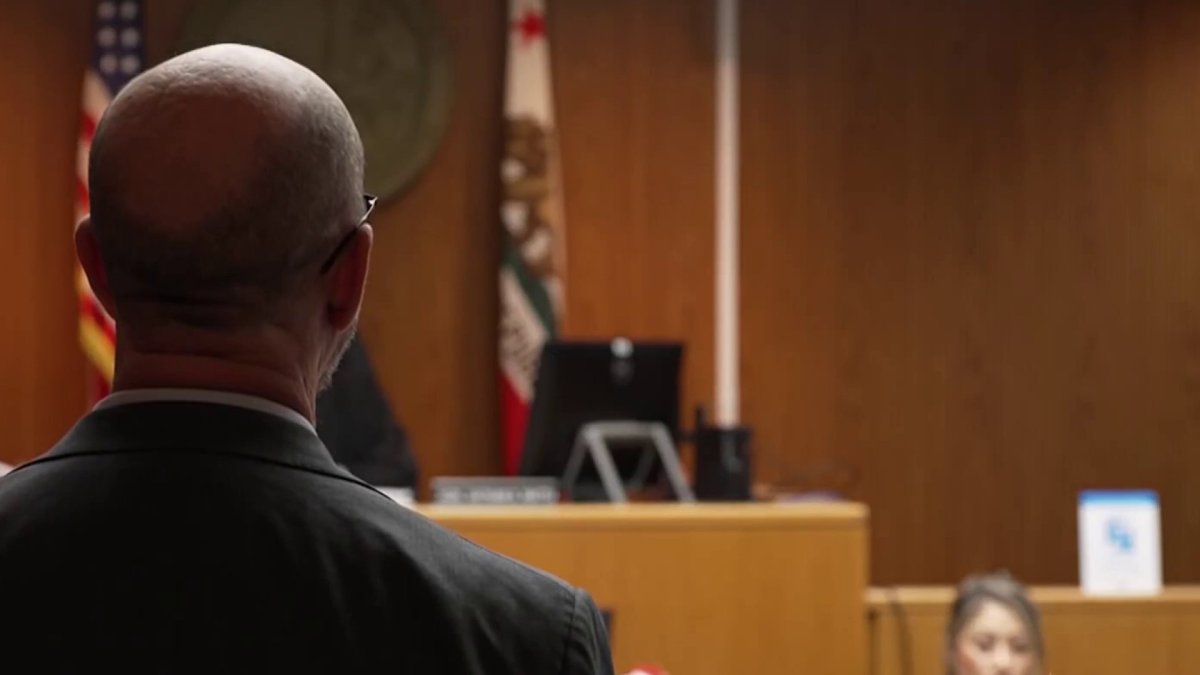
A courtroom image from NBC Bay Area's October 14 report on the Anchored Tiny Homes case. NBC Bay Area.
Two brothers who sold Californians backyard homes are now charged with 35 felonies, and prosecutors allege they billed customers $1,046,433 for work they never did and materials they never delivered. The rule written to stop exactly that is already in state law: an ADU builder in California may take a down payment of no more than $1,000 or 10 percent of the contract, whichever is less, and every payment after that cannot run ahead of the work in the ground.
The short version:
- On October 20, 2026, the Contractors State License Board announced that Colton and Austin Paulhus, the brothers behind Anchored Tiny Homes, each face 33 counts of diversion of construction funds, one count of conspiracy, and one count of employee wage theft, after more than 200 complaints across 18 California counties.
- California treats building an ADU as home improvement, so the contract must be in writing, the down payment is capped at $1,000, and progress payments must match work completed or materials delivered.
- You can cancel a signed ADU contract within three days, five if you are 65 or older, and seven in disaster zones.
What the case alleges
The charges are allegations; neither brother has entered a plea. According to the CSLB release, the complaints described abandoned ADU projects, unpaid subcontractors, payments taken in advance of work that was often never performed, and homeowner money that never reached the homeowner's project. CSLB revoked the company's license in November 2024, kept receiving complaints after that, and began referring cases to the Sacramento County District Attorney. A settlement conference set for last week has been continued to January 12, 2027.
NBC Bay Area reports that the felony complaint says the pair diverted more than $600,000 from the company "for expenses and activity unrelated to company projects." The billed figure, $1,046,433, is about 11.7 times the entire construction cost of the $89,430 Highland Park ADU we line-itemed in September. That is a lot of backyards.
The payment rules, step by step
None of what follows is new. That is the point. CSLB's own Fast Facts sheet on building an ADU spells out how a first-time ADU client should pay a builder, and the October 20 release repeats the core of it:
"Down payments should never exceed $1,000 or 10 percent of the project’s total cost, whichever is less. Any additional payments cannot exceed the value of the work performed or material delivered."
Contractors State License Board, press release CSLB #26-02, October 20, 2026.
Step 1: check the license class. CSLB says a B General Building contractor can build or install an ADU and subcontract the trades. A C-47 General Manufactured Housing contractor can install an ADU only if it is a manufactured home built off site. An electrician or plumber alone generally cannot run the whole job. Look the license up at cslb.ca.gov before the first meeting, not after the third.
Step 2: get the contract in writing. The Fast Facts sheet lists what it must carry: scope of work, timeline, payment schedule, materials and finishes, the contractor's license number, and notice of your cancellation rights. A verbal promise about the cabinet line is not a promise.
Step 3: cap the deposit. On any contract above $10,000, 10 percent is more than $1,000, so on an ADU-sized contract $1,000 is your ceiling. The statute behind it is Business and Professions Code Section 7159.5.
Step 4: pay by stage, never ahead. CSLB publishes a sample progress schedule. Here it is applied to an $89,430 contract, purely as a worked example (the Highland Park owner was his own general contractor, so he paid no one on this schedule):
| Stage (CSLB sample) | Share | On $89,430 |
|---|---|---|
| Mobilization | 5% | $4,471.50 |
| Demolition, site prep | 10% | $8,943.00 |
| Foundation | 10% | $8,943.00 |
| Framing | 15% | $13,414.50 |
| Rough MEP | 15% | $13,414.50 |
| Roof, exterior wrap | 15% | $13,414.50 |
| Insulation, drywall | 10% | $8,943.00 |
| Flooring, tile, cabinets | 10% | $8,943.00 |
| Finish MEP, finish carpentry | 5% | $4,471.50 |
| Final inspection | 3% | $2,682.90 |
| Keys, after the punch list | 2% | $1,788.60 |
Where people get stuck
The template is not the bill. The sample schedule is a shape, not a price list. On the Highland Park build, the concrete slab alone cost $14,200, well above the 10 percent foundation line in the table. A real schedule should follow the real costs. The test stays the same: after each check clears, have you paid for more than what is standing in your yard?
"Plans and permits" money up front. CSLB flags requests to pay for plans or permits before work starts. Ask for an accounting, call the architect or engineer to confirm they were paid, and check permit costs with your city or county building department yourself. Do not pay a contractor for plans unless you know the contractor has already paid for them.
Change orders by text message. Get every change in writing. A change order is a contract amendment, and it is the easiest place for a schedule to drift ahead of the work.
Our read: the payment law did not fail here; homeowners did not know it existed, and a builder who asks for a large deposit is betting that you don't. The $1,000 cap only protects you if you enforce it at signing, and the person most likely to tell you about it is not the person asking for the check. Diversion of construction funds is a crime under Penal Code Section 484b, but a criminal case is a slow way to get your money back. The schedule is the fast way.
The cross-street check. California writes a hard dollar ceiling on deposits into its contractor law, and the same rule applies whether you build in Los Angeles, San Francisco, or San Diego. Whether a Seattle or Portland builder faces an equivalent cap is a question to put to Washington's Department of Labor and Industries or Oregon's Construction Contractors Board before you sign, not after. In New York City, where Plus One financing of up to $395,000 runs through a public program (as we laid out in our NYC financing ledger), the useful question is who releases each draw, and on whose inspection.
If you paid a builder who stopped showing up
These are the official places to start:
- File a complaint with the Contractors State License Board, or call CSLB at 800-321-2752.
- Check any contractor's license status before the next payment.
- Read CSLB's ADU Fast Facts before you sign anything new.
The Paulhus brothers are due back in court on January 12, 2027; the next contract you sign is due a $1,000 deposit, at most.
Elsewhere on the ADU beat
- Sonoma County supervisors voted October 6 to lift the zoning exclusion that barred ADUs on nearly 4,000 unincorporated parcels, effective November 5, Hoodline.
- Montgomery County, Maryland, Executive Marc Elrich vowed to veto a bill that would drop the county's ADU owner-occupancy rule and waive some fees, Bethesda Magazine.
- New Maryland and Virginia laws aim to make ADUs easier to build, with Maryland jurisdictions now required to allow them alongside single-family homes, Axios.