NYC's $395,000 ADU Deal: Repay the Loan or Cap the Rent
Chris Koss, AIA|Published: October 12, 2026
New York's Plus One ADU program pairs a $175,000 state grant with a $220,000 city loan. Repay it at 5 percent, or have it forgiven and cap the rent for 15 years. Intake closed June 12.
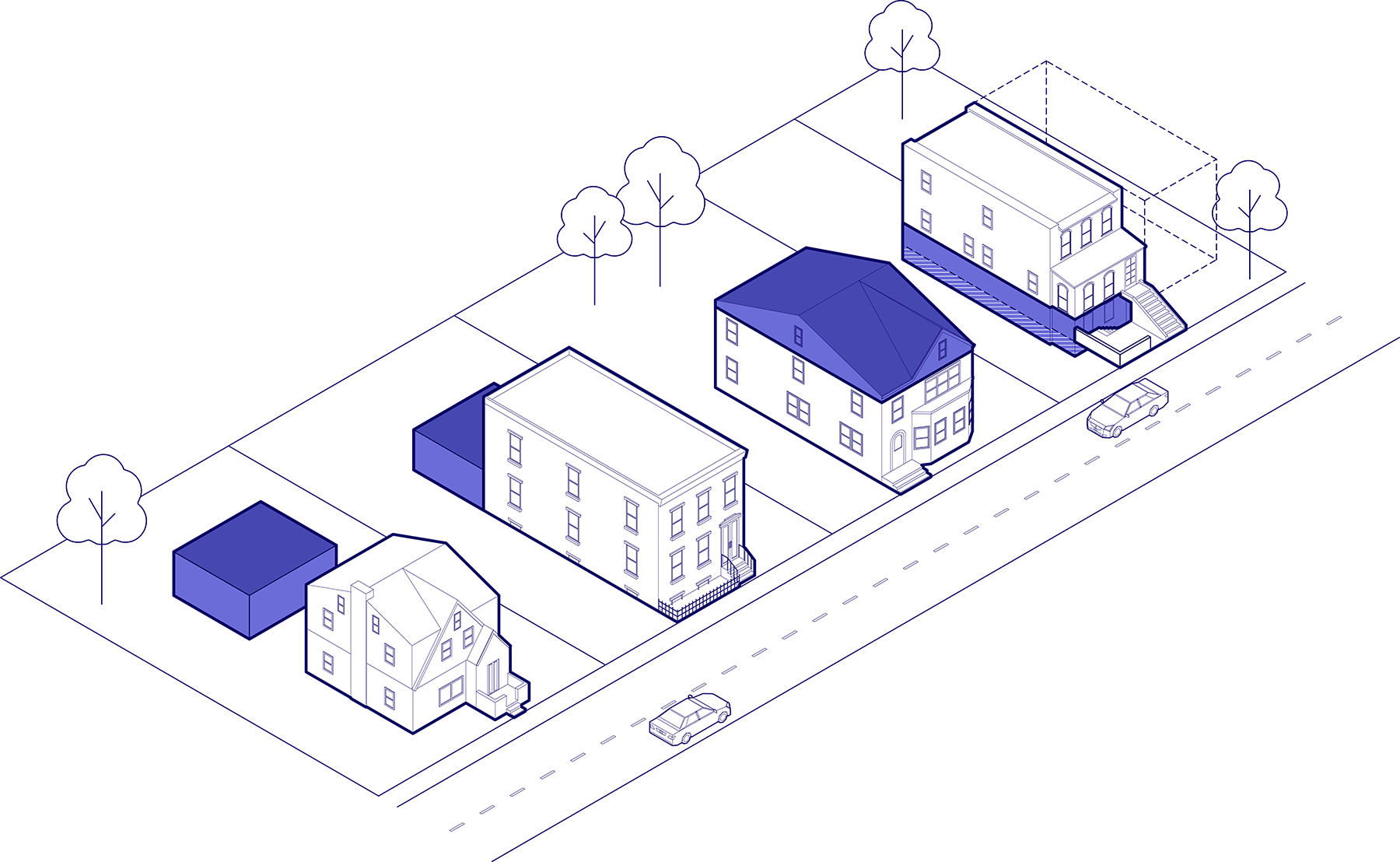
Illustration: the four kinds of ancillary dwelling unit New York now allows on a one- or two-family lot (a backyard cottage, a rear addition, an attic, and a basement), via NYC HPD, ADU for You.
New York City will put up to $395,000 behind your backyard cottage, but first you choose: repay the city's share at interest, or have it forgiven and cap your tenant's rent for 15 years. The Plus One ADU program pairs a state grant of up to $175,000 with a city loan of up to $220,000 for owner-occupants earning up to 165% of Area Median Income, and its intake closed June 12, 2026.
The short version:
- Plus One ADU combines up to $175,000 in New York State HCR grant money with an HPD loan of up to $220,000, for a maximum of $395,000 per property.
- The loan comes in two flavors: a repayable loan starting at 5% over 15 years with no rent rules, or a deferred-forgivable loan that requires renting the new ADU at or below 100% AMI, with increases capped at 2% a year for a 15-year regulatory term.
- Intake is closed as of June 12, 2026. HPD says it is still analyzing thousands of survey responses, and it has not announced another intake.
The $395,000, line by line
The headline number is two different pots of money with two different landlords behind them. The grant comes from New York State Homes and Community Renewal. The loan is city capital from HPD, run day to day by Restored Homes HDFC, the program administrator. The terms below come from HPD's Plus One term sheet and its program FAQ (last updated September 4, 2025).
| Line item | What HPD's documents say | What it means at your kitchen table |
|---|---|---|
| HCR grant | Up to $175,000 per grantee | The part you never pay back |
| HPD loan | Up to $220,000 per borrower | The part that comes with a choice |
| Interest rate | 5%, which "may be reduced" in quarter-point steps to as low as 0% | At 5% over 15 years, $220,000 runs about $1,740 a month (our arithmetic) |
| Loan term | 180 months, extendable to no more than 360 | At 0% over 30 years, the same $220,000 is about $611 a month |
| Affordability floor | Payments set so the household keeps at least $200 a month after debts | HPD counts the new ADU's rent as income when it runs this test |
| Application fee | $200, non-refundable | The only number on this table you pay up front |
| What the money covers | Construction, architectural and engineering fees, environmental testing, developer's fee | No luxury upgrades; the scope stops at a legal unit plus critical repairs |
Read the two payment figures together. The distance between $1,740 and $611 a month is the whole underwriting conversation. HPD lowers the rate first, then stretches the term, and if you still cannot carry a 0% loan over 30 years, it hands you the forgivable version, rent rules attached. Some owners will choose that path. Others will land on it.
The fork: repay it, or cap the rent
The term sheet states the second option plainly.
"Deferred-forgivable loans, with the requirement of rent restriction on the new ADU unit at 100% AMI with annual increases capped at 2%" HPD, Plus One ADU Program Term Sheet, HPD Loan Terms
Pick the forgivable path and you sign a regulatory agreement with the City of New York for 15 years from completion. The new unit must rent at or below 100% AMI at first lease-up. Rent rises no more than 2% a year, and the tenant must be offered a renewal. For scale, HPD's own FAQ example puts a family of four earning $145,800 at 90% AMI, which makes 100% AMI for that household roughly $162,000 a year. That is a ceiling pegged to a middle-income household, not to the bottom of the market.
Pick the repayable path and the rent is yours to set, but the residency rules travel with both. You must live in the home at least 270 days a year: for 10 years, or 15 under a regulatory agreement. Sell to a non-eligible buyer or take a cash-out refinance during the loan term and the loan comes due. Renting out both the house and the ADU is prohibited outright.
If you're a tenant. A Plus One unit on the forgivable track is one of the few new accessory homes in the city that arrives with a written rent ceiling and a renewal right. Ask the owner which loan financed the unit. The answer tells you whether the 2% cap applies to you, and family members living in the unit may be exempt from those provisions.
Where people get stuck
The architect. The ADU for You Pre-Approved Plan Library connects you to the registered design professional behind each design. Plus One does not let you bring your own: the FAQ says Restored Homes provides the list of program-approved architects and general contractors. Whether a library designer is on that list is a question to ask before you fall for a rendering. On the library's size, the city's two launch releases do not agree. The Mayor's release counted eleven DOB-reviewed designs on March 18. HPD's release the same day counted nine, all detached backyard cottages.
The envelope. Every design still has to fit your lot. Per the FAQ, an ADU tops out at 800 square feet, a detached one can cover no more than one third of your required rear yard, and it stays at one story or 15 feet unless parking sits beneath it. An 800-square-foot ceiling sounds generous until the rear-yard rule takes its share. On a shallow lot, the yard is often what sets the size.
The calendar. HPD tells applicants to expect "a multi-year process," in ten steps from survey through tenant approval. The first intake drew more than 1,300 submissions in two weeks before closing in February 2024. The program page now says the reopened intake closed June 12, 2026 after "thousands of responses," with site analysis to run "over the next several months." State HCR, for its part, said in March it was looking forward to seeing all 37 of its New York City projects completed.
Our read: Plus One is a well-built deal sized for a pilot, not for a city. Thirty-seven projects against thousands of applications makes it a lottery ticket, so plan your ADU as if the program never calls, and treat a call as a windfall.
The cross-street check. Public help for an ADU always comes with strings; the markets differ on which ones. San Diego's signature deal is not a loan at all: its bonus program trades a deed-restricted affordable ADU for the right to build a market-rate one, so the subsidy is extra units, not cash. Portland, as we found when the city left ADUs out of its new-housing fee holiday, still waives system development charges for an ADU in exchange for a 10-year covenant against short-term rentals. New York is the only one of the three writing six-figure checks, and it asks the most in return: 15 years of rent rules on the forgivable path, plus years of required residency on either path.
If you're pricing a New York ADU without Plus One, start with A-du's permit fee calculator, which runs a New York City version alongside California's.
HPD has said only that its review of this year's applicants will take "the next several months," so the next number to watch is how many of those thousands become the program's next class.
Elsewhere on the ADU beat
- Governor Newsom signed all six California YIMBY-sponsored housing bills, including the ADU fee and two-detached-ADU measures, Davis Vanguard.
- California's newest housing laws include a 60-day fast track for townhomes and a marginal ADU impact fee above 750 square feet, Planetizen.
- Washington County, Oregon, now allows one ADU of up to 900 square feet per lot in some rural residential zones, Washington County.