In San Diego, a Pre-Approved ADU Plan Buys a 30-Day Clock
Chris Koss, AIA|Published: July 31, 2026
Last updated: September 25, 2026
San Diego has to rule on a detached ADU built from a pre-approved plan within 30 days, but the clock only holds if you leave the drawings alone. Here is how the city's accepted-plan rosters really work.
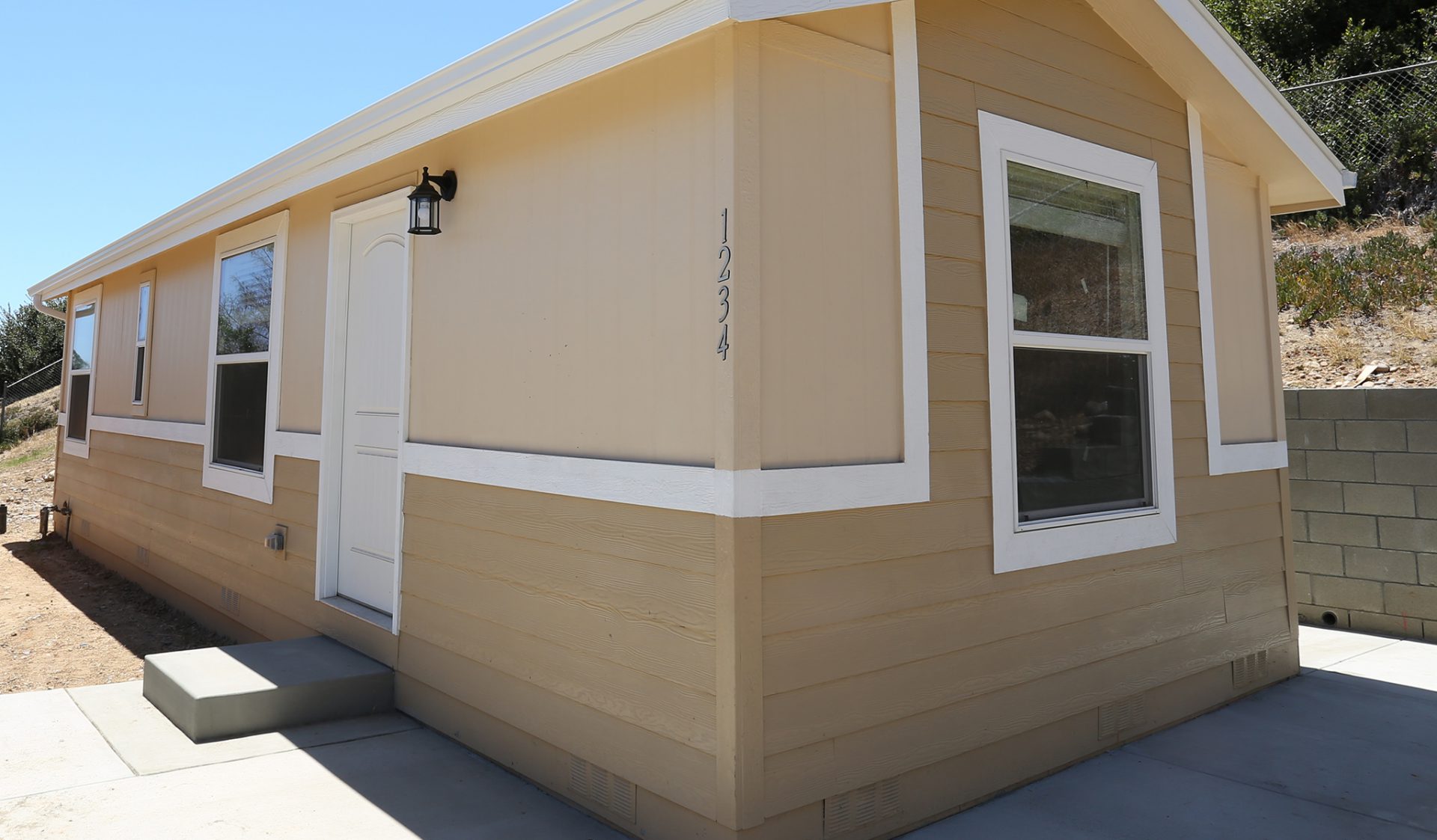
Photo: an accessory dwelling unit built with public financing help, via the San Diego Housing Commission.
You own a lot in North Park, you want a detached studio in the back, and someone told you a pre-approved plan makes the permit fast. It can, but only once you understand what the word "pre-approved" actually buys you here. Under California's AB 1332, the City of San Diego has to approve or deny a detached ADU built from a pre-approved plan within 30 days, a hard clock a one-off custom design never gets.
The short version:
- AB 1332 requires every California city, San Diego included, to run a pre-approved ADU plan program and to rule on a detached ADU that uses one within 30 days (Government Code Section 65852.27).
- San Diego keeps two rosters of drawings it will accept, its Standard ADU plans and its Permit-Ready ADU plans, so a first-time client does not always start from a blank sheet.
- The 30-day clock only holds if the unit stays detached and the plan stays unchanged. Attach it, modify it, or bolt on a junior ADU and you are back in the ordinary queue.
What "pre-approved" actually means
A pre-approved plan is a set of construction drawings the city has already checked against its building and zoning standards, so the plan-check line you dread is mostly done before you walk in. San Diego posts two accepted rosters: its Standard ADU Building Plans and its Permit-Ready ADU Building Plans, both listed on the city's Development Services ADU page alongside Information Bulletin 400 and the companion-unit handbook. Many of those drawings were authored by outside designers who submitted them for preapproval, which is exactly the arrangement the state law contemplates: the statute makes the city post the plans and the applicant's contact information on its website.
If you are a first-time ADU client, this is the part worth slowing down on. A pre-approved plan is not a permit. It is a head start on one.
From the text
The bill would require a local agency to either approve or deny an application for a detached accessory dwelling unit within 30 days that utilizes either an accessory dwelling unit plan preapproved by the local agency within the current triennial California Building Standards Code rulemaking cycle or a plan that is identical to a plan used in an application for a detached accessory dwelling unit approved by the local agency within the current triennial California Building Standards Code rulemaking cycle. AB 1332 (2023), Legislative Counsel's Digest; codified at Government Code Section 65852.27.
Read that clause twice, because every qualifier in it is load-bearing. Detached. Within the current code cycle. Preapproved, or identical to something already approved. Miss any one and the 30-day guarantee evaporates.
The steps, in order
Confirm your lot. On a single-family lot with a house on it, San Diego's code lets you add one ADU inside the house or an existing accessory structure, one new attached or detached ADU, and one junior ADU. On a lot with an existing multifamily building the math changes: up to eight detached ADUs (never more than the number of existing units), plus ADUs carved out of non-livable space such as storage rooms and garages (at least one, and up to 25 percent of the unit count). That is generous, but only a detached unit built from an unaltered pre-approved plan rides the 30-day clock.
Pick a plan from the accepted rosters. Shortlisting is the same exercise we walked through when we compared California's city plan programs side by side: match the footprint to your setbacks, your utility runs, and your daylight before you fall for a rendering. A design that already cleared review moves straight to the site check.
File for the site-specific review. Here is the catch every builder will tell you and every brochure will bury. Preapproval clears the building itself, not your dirt. San Diego still reviews the plan against your specific lot: soils, slope, drainage, fire access, the panel you will have to upgrade. Approval is not automatic.
Start the 30-day clock. When your application uses an accepted plan and the unit is detached, the statute puts the city on a 30-day decision timer. That is the prize. Not the free drawings, the calendar.
Where people get stuck
Two places, reliably. The first is treating a pre-approved plan as a finished permit and being surprised when the site review asks for a retaining wall or a service upgrade. The second is quietly editing the plan. Move a window, widen the great room, add a junior ADU inside the house, and you have built something the city never preapproved, which means the 30-day clock does not apply and you rejoin the standard review line. If you want the speed, keep the box as drawn.
Financing is the other stall. The San Diego Housing Commission runs an ADU Finance Program that offers construction loans and technical help to lower-income homeowners in the city, which can be the difference between a plan on paper and a unit in the yard. It is worth a call before you assume you are priced out.
The cross-street check. The 30-day clock is state law, so it lands the same in Los Angeles and San Francisco, but the programs underneath it do not. San Francisco charges designers a flat $2,408 review fee for its 25-foot-lot designs and excludes lots in slope protection, landslide, liquefaction, Maher, and flood zones outright, so a fog-belt owner can be ruled out before choosing a plan. Los Angeles runs the deepest catalog in the state through LADBS, roughly 90 plans listed and more than 50 of them currently approved, but a city address and an unincorporated-county address answer to two different counters. San Diego sits in the middle: a real accepted-plan roster, a genuine 30-day obligation, and a site review that still decides whether your lot cooperates.
The ledger this changes
Pencil out what the clock is worth before you shop for drawings. Weeks of plan-check on a custom ADU can mean another mortgage payment or two of carrying cost, plus the risk your construction-loan rate lock expires while you wait. A detached, unaltered, pre-approved plan trades some design freedom for a decision you can put on a calendar. If your priority is a distinctive backyard building, pay for the custom design and the wait. If your priority is a rentable unit finished this year, the accepted roster is the cheaper path, and the 30 days is the reason.
Our read: San Diego's plan catalog is thinner than LA's, and that is not the number that matters. The 30-day statutory clock is where the money actually sits, and it only pays out if you keep the unit detached and the drawings untouched. Treat "pre-approved" as a discipline, not a discount.
If you are weighing accepted plans against a custom build, A-du's build marketplace lets you compare designs and the builders who put them up before you commit a dollar.
Watch the accepted-plan rosters, not just the bonus program: as more outside designers submit drawings for preapproval, the fast lane in San Diego gets wider without the city drawing a thing.
Elsewhere on the ADU beat
- San Diego's council adopted a 25-item package of ADU and bonus-program reforms, including a new community-enhancement fee, Inside San Diego reports.
- New York City released proposed rules for legalizing existing basement and cellar apartments, a track that is still not open for filing, per 6sqft.
- Dezeen rounded up ten American ADUs from California to Kansas that show how far the form now stretches, at Dezeen.