Your 2026 California ADU Needs Rooftop Solar. Unless It's Small.
Chris Koss, AIA|Published: August 25, 2026
Last updated: September 25, 2026
Starting January 1, 2026, a new detached ADU in California is a brand-new home to the energy code: rooftop solar, a heat-pump water heater, and HERS testing, unless it is small enough to be exempt.
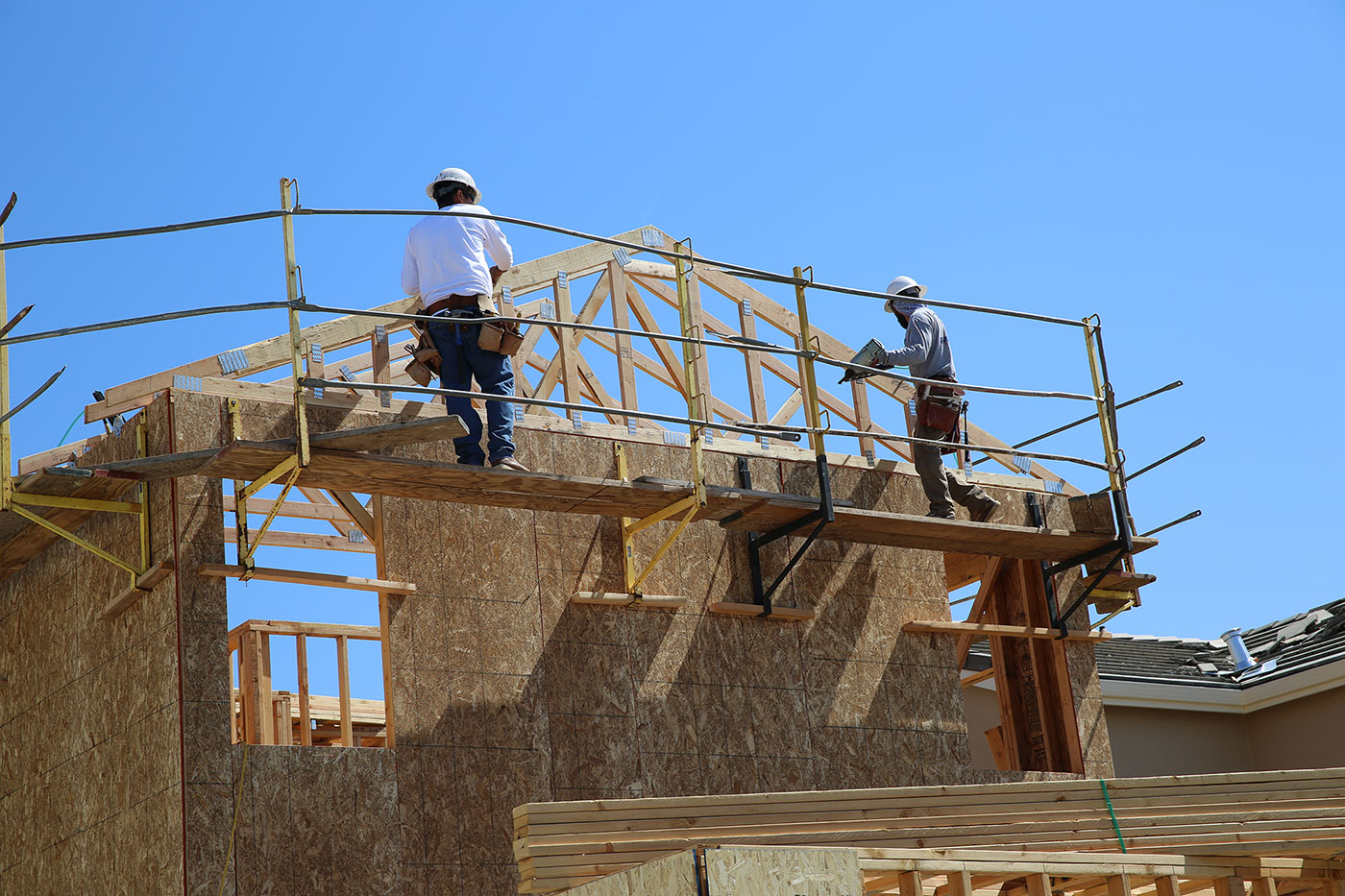
California's energy code decides what a new backyard unit must carry before you frame a wall. Photo via the California Energy Commission.
You picked the lot and the floor plan, and then the energy consultant turns your 700-square-foot backyard studio into a small power plant: solar on the roof, a heat-pump water heater, and wiring for a battery you may never buy. As of January 1, 2026, a new detached ADU in California is a brand-new home to the 2025 energy code, which means rooftop solar, all-electric-ready construction, and HERS testing before final inspection.
The short version:
- A detached ADU permitted on or after January 1, 2026 follows California's 2025 energy code and is treated as a new low-rise home: a heat-pump water heater, all-electric-ready wiring, third-party HERS verification, and rooftop solar unless it qualifies for an exemption.
- The solar mandate has an out. The 2022 code exempts a detached ADU whose calculated solar requirement falls under 1.8 kilowatts, exempts a roof with under 80 square feet of usable sun, and does not apply to HUD-code manufactured homes, which sit outside the energy code, though factory-built modular units must still comply.
- A garage or basement conversion is an alteration, not a new home, so it skips the solar mandate entirely. That is the single biggest reason the same square footage can cost thousands less to make code-legal.
If you are a first-time ADU client, none of this shows up on the glossy plan set. It shows up on the Title 24 compliance forms, the CF1R and its cousins, that your designer files with the permit. The 2025 Building Energy Efficiency Standards took effect on January 1, 2026, and they apply to any ADU permitted on or after that date. The rules are not punitive. They are the same standards a new tract house meets. The surprise is that the state counts your backyard studio as a house.
What the code turns your ADU into
A detached ADU built from scratch is, in the code's eyes, a new low-rise residential building, so it inherits the full prescriptive package. A heat-pump water heater is now the baseline; a gas water heater is allowed only if you buy your way back through the performance compliance path, which usually means adding efficiency somewhere else. Space conditioning leans the same way, toward a heat pump. The unit has to be electric-ready and battery-ready, with panel capacity and dedicated circuits reserved for an energy storage system you are not required to actually install. And a third-party HERS rater has to verify the parts you cannot see, duct leakage, refrigerant charge, and ventilation airflow, before the unit passes. California's Department of Housing and Community Development folds all of this into its ADU guidance: the energy code is not optional, and it is not waived because the home is small.
The bill, line by line
Here is the part nobody hands you up front. These are budget ranges, not quotes, and every lot is different, but they are the right order of magnitude to plan around.
| Line item | What the 2025 code wants | Rough budget |
|---|---|---|
| Rooftop solar (PV) | Required on a new detached ADU unless it qualifies for an exemption | Roughly $8,000 to $15,000 |
| Heat-pump water heater | The prescriptive baseline; gas allowed only on the performance path | Roughly $1,500 over a standard tank |
| Heat-pump space conditioning | The baseline for heating and cooling | Often a wash, sometimes a few thousand more |
| Battery-ready (ESS) wiring | Reserved panel capacity and dedicated circuits | Roughly a few hundred to $1,000 |
| HERS verification | Third-party testing of ducts, refrigerant, and airflow | Roughly $400 to $900 |
Add it up and the all-electric package lands somewhere around $10,000 to $18,000 on a typical new detached build. That is real money, and it arrives at the worst time, when the framing bids are already over budget. It is also roughly a third of what the state used to hand you. The CalHFA grant paid up to $40,000 toward exactly these predevelopment costs, and as we covered when the money ran dry, that program has been paused since the end of 2023 with no new round announced. The mandates stayed. The subsidy left.
Small enough, though, and even a new detached unit skips the panels. The 2022 energy code, still the reference for the exemption math, lets a detached ADU out of the solar mandate when its calculated requirement comes in under 1.8 kilowatts, and it exempts a roof with less than 80 square feet of usable sun. This is why two backyard studios that look identical can carry very different bills of materials: one cleared the exemption, the other did not.
The conversion that skips the worst line
There is one legal way to make the biggest number disappear: do not build new. A garage conversion or a basement conversion is an alteration, not a new dwelling, and the solar mandate does not attach to an alteration. The new mechanical systems still have to meet current efficiency standards, so the heat pump and the electric-ready wiring follow you, but the panels do not. On a 500-square-foot garage, skipping solar alone can be the difference we flagged when we broke down why the free LADBS plan is not a free ADU: the plan costs nothing and the build costs a fortune, and solar is one of the fattest hidden lines. If your goal is the cheapest legal unit, the conversion wins on this specific rule. If your goal is a detached studio with its own front door, you pay the premium.
The cross-street check. California is the only market we cover that puts rooftop solar on a new backyard house by default. Washington builds to the Washington State Energy Code, tougher than the base national code on insulation and air-sealing, but it does not mandate panels on every new home, so a Seattle DADU clears its energy review without a solar array. New York's new basement and backyard ADUs answer to the state and city energy conservation codes, which again do not force rooftop solar on a small unit, and a below-grade cellar could not host one anyway. Oregon's Energy Efficiency Specialty Code sits in the same place: efficient, electric-friendly, no statewide solar-on-every-roof rule. If you are comparing a California build to one across a state line, solar is the line that moves the most.
Our read: treat the all-electric premium as the price of the detached backyard house, not a line to fight. The heat pump and the electric-ready wiring are coming to every code cycle from here, and the solar either clears the exemption or it does not. There is no version of 2026 where a new California ADU is cheaper to make efficient than it was in 2022. The lever you actually control is new build versus conversion, and that choice is about the unit you want, not the code you can beat.
If you would rather price the heat pump and the HERS rater before you fall in love with a plan, the builders on A-du's build marketplace quote Title 24 compliance as a line, not a surprise.
The 2025 code is the floor, not the ceiling. The Energy Commission has already opened pre-rulemaking on the 2028 standards, and every cycle so far has pushed the baseline further toward all-electric. Budget for the next one, too.
Elsewhere on the ADU beat
- San Diego's City Council adopted a package of reforms to its ADU program, including a new community enhancement fee on smaller bonus units, Inside San Diego.
- Los Angeles is weighing a motion to let homeowners sell ADUs separately as a cheaper path to ownership, LAist.
- Legal basement conversions are coming to New York City, and the map of where they fit is narrower than it looks, Gothamist.