A $210K Highland Park ADU Chose Light. Inland LA Charges for It.
Chris Koss, AIA|Published: September 2, 2026
A Highland Park couple added a $210,000 glass-walled Cover ADU for all-day light. In an inland California climate zone, that same glass drives the summer cooling bill, unless the design fights back first.
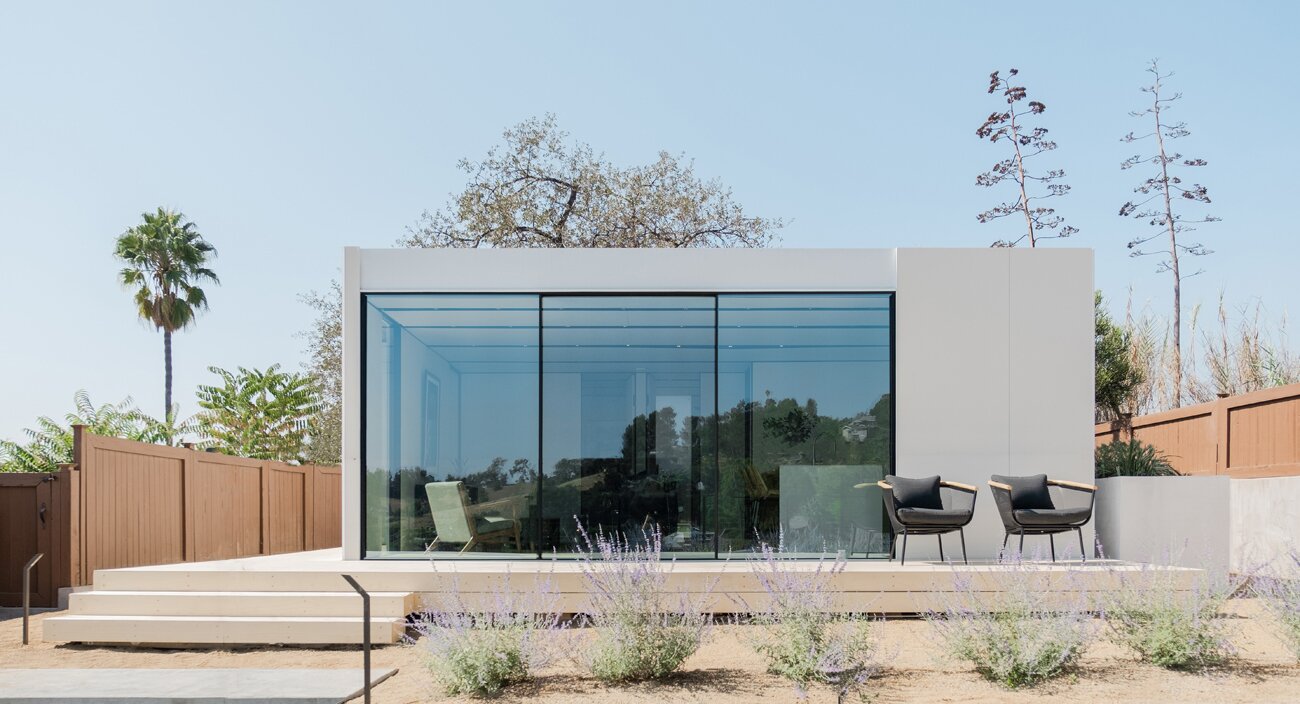
Photography by Cover, via Dwell.
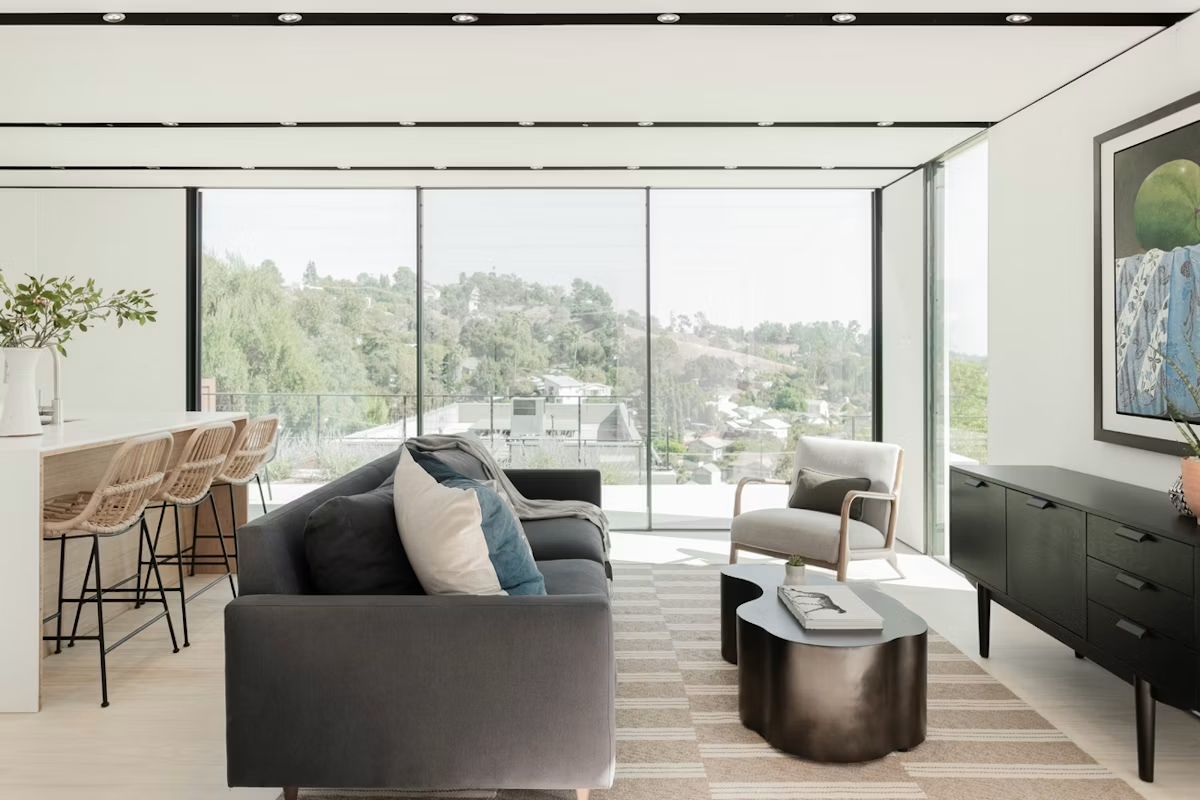
Oni Lazarus designs interiors for lifestyle hotels, so when she and her partner added a backyard rental to their Highland Park lot, they wanted it to feel like a place you would book on purpose. They spent about $210,000 on a turnkey Cover ADU wrapped in floor-to-ceiling glass, and the interiors pull in all-day light. In the hotter half of Los Angeles, that same wall of glass is also the single biggest decision you make about your August electric bill.
The short version:
- California sorts every address into one of sixteen climate zones, and the window and insulation rules tighten as the zone gets hotter, so an inland Los Angeles ADU and a coastal one do not carry the same glass.
- West- and south-facing glass is a daylight gift and a heat penalty at once; orientation, low-gain glazing, and real shade decide which one you actually get.
- The 2025 California Energy Code, in effect since January 1, 2026, pushes a new ADU toward an electric heat pump for both heating and cooling.
The project. The Highland Park unit came from Cover, the Los Angeles prefab builder, on an all-steel panelized frame clad in gray fiber-cement panels chosen to match the stucco on the couple's existing house. It runs on hydronic heating and cooling, and the finishes arrived in a fixed neutral palette, which Lazarus, whose day job is choosing finishes, called a relief. The number the rest of us should copy down is the roughly $210,000 all-in: a turnkey figure that, per Cover, folded in permitting and construction. That is real money. It is also a Highland Park down payment's worth of rentable square footage in one of the hotter corners of the county.
The daylight you pay for. Floor-to-ceiling windows are why the unit photographs the way it does, and they are why the room works hardest on a 100-degree afternoon. Glass is the weakest part of any wall: it lets light in, and it lets heat in right behind it. How much heat depends on where the address sits, which in California is not a vibe but a mapped fact.
"Several efficiency standards, such as those for envelope and fenestration (window and door) materials, depend on the specific climate zone that the building is located in." California Energy Commission, climate zone information.
Highland Park sits inland, in a hotter zone than the coastal strip a few miles west, and the California Energy Code answers by capping two window numbers: the U-factor, or how much heat a window leaks, and the solar heat gain coefficient, the share of the sun's heat it lets through. The hotter the zone, the tighter the cap on solar gain. A window schedule that sails through in Santa Monica can fail inland, and the fix is not free.
The boring fixes that work. Put the big glass on the north, where light is even and heat gain is low. Where a wall has to face west or south, spec a low solar-gain coating and back it with real shade: a deep overhang, an exterior screen, a covered porch. The code hands an LA ADU only a shallow eave to work with, so the shade has to be designed, not wished for. Add a light-colored, high-reflectance roof, which the code already leans on in hot zones, and the box stops acting like a solar oven. The Cover unit's hydronic system does the rest, and here the state has made the choice for you: as we covered when the 2026 energy code landed, an electric heat pump is now the assumed way to both heat and cool a new California ADU.
Our read: in an inland climate zone, a wall of glass is a daylight win you pay for every August unless the orientation and the glazing spec do the work up front. Treat a window as a finish rather than a heat decision, and you learn the difference on the July bill, not the floor plan.
The cross-street check. None of this math travels. California's climate-zone fenestration rules stop at the state line: a Seattle backyard cottage answers to the Washington State Energy Code, where mild summers make cooling an afterthought and daylight the prize, and a New York City cellar unit lives under New York's code with a humidity problem, not a solar-gain one. The calculus even flips inside California. In San Francisco's fog belt we watched an Outer Sunset garage chase every photon it could catch; inland, in Highland Park, the same floor-to-ceiling glass is a heat source to manage, not a scarce resource to capture. One state, two opposite design problems, both solved with the window schedule.
For your lot. If you are furnishing or finishing out an inland unit, treat the window schedule and the shade plan as your first two furnishing decisions, ahead of the sofa; a room that overheats at four o'clock is not one a tenant renews in. First-time building clients should ask the designer two questions early: which climate zone the address falls in, and what solar heat gain the plan assumes. Those two answers set the comfort ceiling for everything that follows, and they are far cheaper to change on paper than after the drywall.
When you are ready to price a climate-smart build, A-du's build marketplace lets you compare designers and prefab builders who quote the glazing and the heat pump as line items rather than afterthoughts.
The 2028 energy code is already in pre-rulemaking, and every cycle so far has pushed the window and heat-pump numbers one notch tighter. Design for the zone you are standing in, and the unit will still be comfortable when the next code lands.
Elsewhere on the ADU beat
- LADBS rewrote its ADU and JADU standards into a new 2026 bulletin, folding in the state's amnesty for pre-2020 unpermitted units, LADBS.
- Byben wrapped a sculptural backyard ADU in Mar Vista in ipe wood and soft curves, Dezeen.
- Dwell rounded up sixteen of the best ADUs in Los Angeles, from prefabs to architect one-offs, Dwell.