Portland Waived SDCs for New Housing. Your ADU Didn't Make the List.
Chris Koss, AIA|Published: August 5, 2026
Last updated: September 25, 2026
Portland waived development fees on most new housing through 2028, about nineteen thousand dollars a unit on average. ADUs are cut out, and still run on an older waiver that swaps those fees for a 10-year ban on short-term rentals.
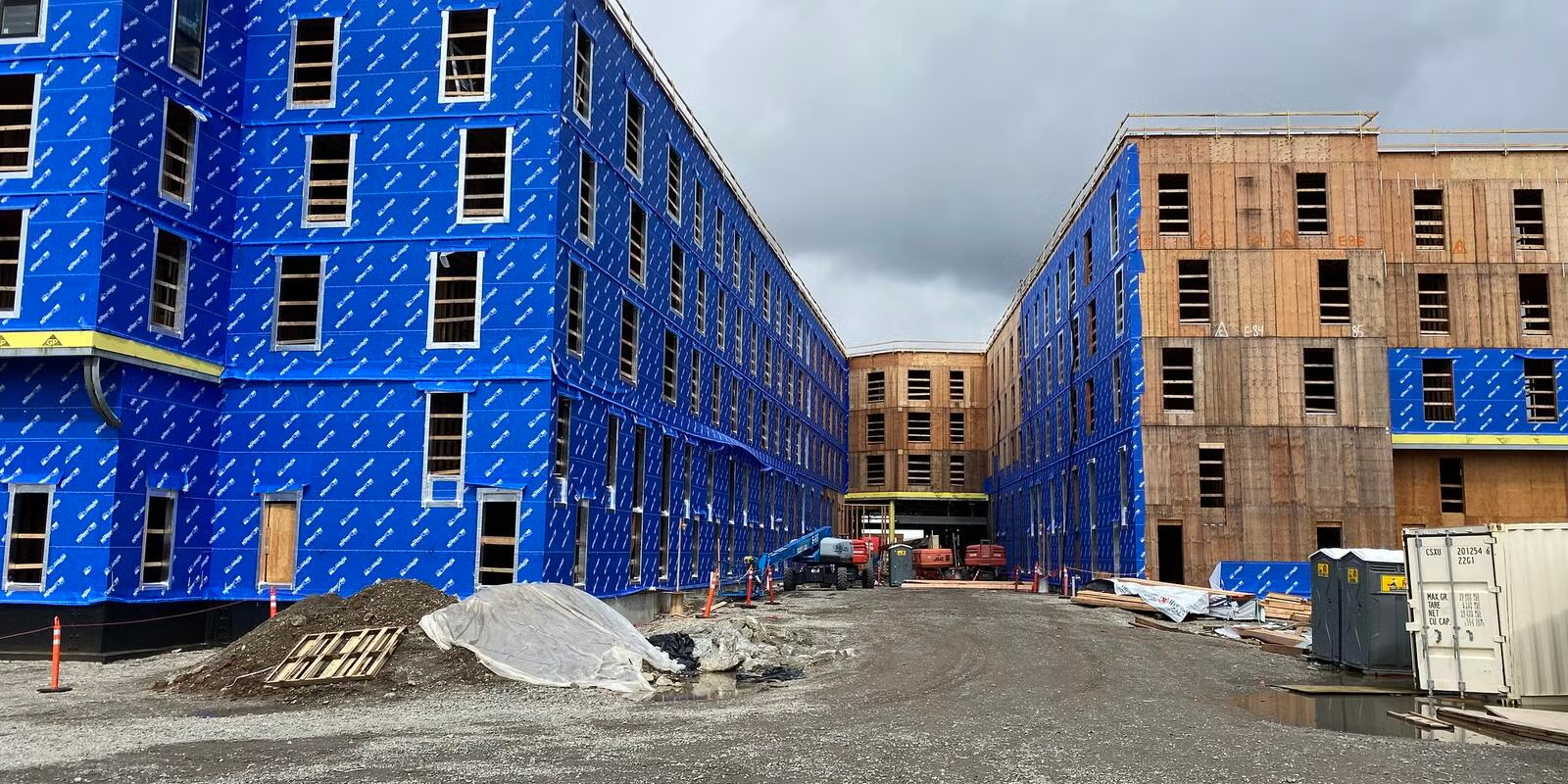
Housing under construction in Portland, where the city is testing what a fee holiday does to the pace of building. Portland Permitting and Development.
Portland just handed thousands of homebuilders a fee holiday worth roughly nineteen thousand dollars a unit on average, and then wrote your backyard cottage out of it. The city's temporary exemption from system development charges runs from August 15, 2025 through September 30, 2028, but it does not cover accessory dwelling units, which still fall under a separate, older waiver that trades those charges for a decade without short-term rental income.
The short version:
- Portland's headline SDC exemption for new housing skips ADUs by name; a backyard unit still uses the ADU SDC Waiver, a binding 10-year covenant.
- The waiver zeroes out your ADU's SDCs, but it bars every structure on the lot from short-term rental for ten years, and backing out costs 150 percent of the current fees.
- Across the citywide program's first 1,720 units, Portland projected 32.77 million dollars in waived charges if every permit qualifies, about nineteen thousand dollars per unit. ADUs are excluded from that program, so read the average as a sense of scale for what an ADU owner is bargaining over, not a quote.
The benchmark: about nineteen thousand dollars a unit
Portland does not publish one tidy SDC figure for an ADU, because the charge is stitched together from four bureaus (sewer, parks, transportation, and water) and it shifts with your lot. The cleanest public number comes from the citywide exemption's first report. As of January 15, projects in that program represented 1,720 units, and the city put the foregone charges at 32,773,500 dollars, per its February report. Divide it out and you land near nineteen thousand dollars a unit. Treat that as an order-of-magnitude benchmark, not your bill: it averages every new unit in a program that excludes ADUs, and your own charges depend on your unit and your lot. Before you decide, price the four bureau charges for your project from the rate schedules linked below.
If you are a Portland homeowner weighing a backyard unit, here is the ledger the waiver actually changes:
| Line item | Without the ADU waiver | With the ADU SDC waiver |
|---|---|---|
| Permit and plan review | based on project valuation | based on project valuation |
| System development charges (four bureaus) | varies by unit and lot (the citywide program averaged about 19,000 dollars a unit) | 0 dollars |
| Strings attached | none | 10-year covenant, no short-term rental on any structure |
| Cost to back out later | not applicable | 150 percent of the current SDCs |
The covenant is the price. The waiver is not a discount you pocket and forget. It records a 10-year agreement on your property, and Portland is blunt about the scope: during those ten years, no structure on the lot can be offered as a short-term rental, and the city spells out that this includes single bedrooms in the main house. List one room on Airbnb and you have broken it. Sell the house, and the covenant rides along to the next owner.
Backing out is expensive by design. The exit price is 150 percent of the SDCs in effect when you revoke, and the city adjusts those charges for inflation every July 1. If your ADU's charges matched the program's average of about nineteen thousand dollars, revoking the covenant to open the unit to nightly stays would cost about 28,500 dollars: the fees you skipped plus a 9,500-dollar premium for the privilege. That is the same rate the city charges if you simply violate the covenant and get caught. The waiver, in other words, is a bet that a long-term tenant beats a nightly one for at least a decade.
Why your ADU is on the outside
The exclusion is not an oversight; it is written into the ordinance. Portland's temporary exemption, adopted last July to chase 5,000 new units in three years, carves ADUs out in plain language:
The dwelling unit is not an accessory dwelling unit or caretaker quarters, as those terms are used in Title 33 of Portland City Code, or a transient lodging facility as defined in Section 24.31.010.
That sentence, from the city's exemption program page, is the whole story for a backyard builder. Apartments, infill houses, and congregate living get the clean, no-strings holiday through 2028. ADUs get pointed back to the covenant waiver, the same deal Portland has offered for years and the reason the city's ADU boom happened at all. You can read the underlying terms on the ADU SDC Waiver page and the four bureau rates on the SDC fee schedule.
Our read: excluding ADUs from the headline exemption is a quiet downgrade dressed as continuity. Portland is steering its most generous housing incentive toward apartments and infill while leaving backyard builders with a 2010-era bargain that asks them to surrender a rental option their neighbors building fourplexes now keep for free. It is defensible on paper, since the ADU waiver already exists. It still means the smallest, cheapest form of new housing carries a string the city just cut from everything else.
The cross-street check. This trade looks very different one state line away. In Washington, HB 1337 caps ADU impact fees at 50 percent of the single-family charge with no covenant attached, so a Seattle owner pays a reduced fee and keeps every rental option Portland asks you to give up. In California, the statewide break is narrower: state law bars impact fees on an ADU of 750 square feet or less, and the CalHFA grant that once refunded up to 40,000 dollars has sat paused since late 2023, so an LA or San Diego owner building larger pays impact fees prorated against the size of the main house and hopes a program reopens. Portland's version is the most generous of the three on the sticker price and the only one that bills you a decade of short-term rental income to collect it.
The math has a real deadline behind it. When we toured the Wedge, a passive-solar ADU built to squeeze value out of a tight Portland lot, the SDC waiver was part of what made the budget close. The citywide exemption sunsets September 30, 2028; the ADU waiver has no such end date today, but nothing about Oregon fee policy is permanent, and the last big Portland ADU subsidy was scaled back once already.
For a Portland owner, the decision the waiver forces is simple to state and hard to answer: is ten years of guaranteed long-term-only renting worth your ADU's SDC bill, paid up front? If you were never going to run a nightly rental, the covenant costs you nothing and the waiver is close to free money. If you wanted the flexibility, price the 150 percent exit before you sign, because the city has priced it for you already.
When you are ready to turn covenant math into a real budget, A-du's build marketplace lets you compare builder bids on the same Portland scope, fees included.
The next question is whether Portland renews the citywide exemption in 2028, and if it does, whether ADUs finally get invited in.
Elsewhere on the ADU beat
- San Diego's City Council tightened its ADU Bonus Program with new community enhancement fees and a rule barring bonus projects on streets without two evacuation routes, via FOX 5 San Diego.
- Seattle is refreshing its pre-approved DADU catalog, with new plan winners expected in August and a gallery relaunch later this year (as of September 2026, the 15 winners are named and the plans are expected to be usable starting January 2027), via Seattle OPCD.
- New York City's HPD and Department of Buildings rolled out new tools this spring to help homeowners turn backyards into ADUs, via NYC HPD.