ADU Rules in New York City
What City of Yes and Local Laws 126 and 127 actually allow, who has to live on the lot, why a garage conversion is not a backyard ADU, what the certificate of occupancy has to say, and where the pre-approved designs are.
An ADU in New York City is an ancillary dwelling unit of up to 800 square feet on the same zoning lot as a one- or two-family residence, permitted since the City of Yes for Housing Opportunity amendment was adopted on December 5, 2024.
The city's own term is ancillary, not accessory, and it is a defined term: what counts is what Zoning Resolution 12-10 says counts. One ancillary dwelling unit is allowed per one- or two-family residence.
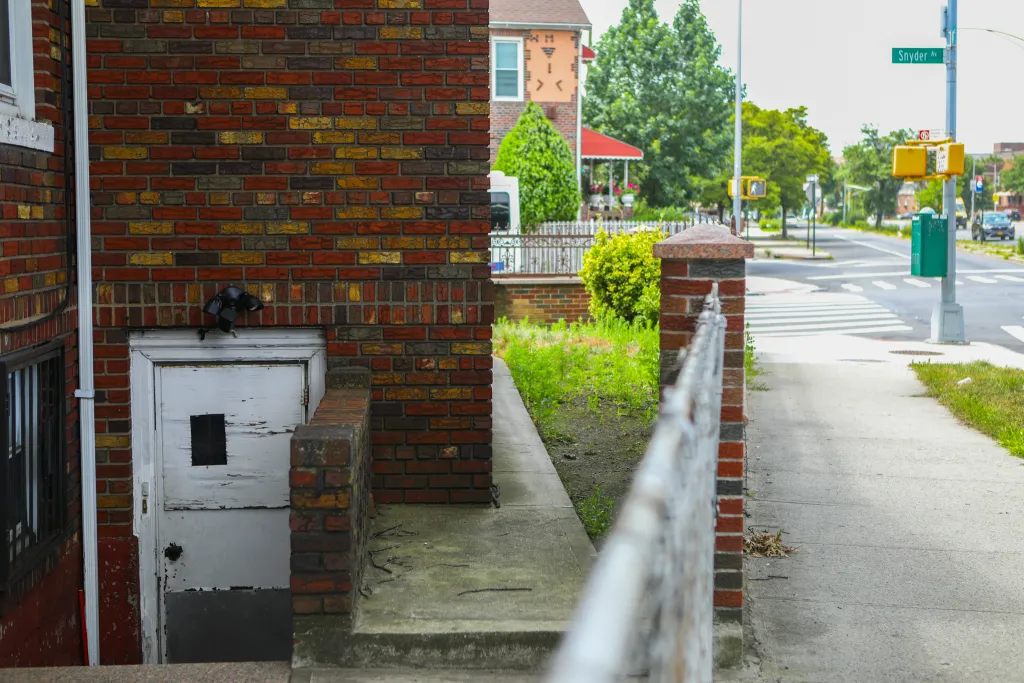
In August 2024 a city car drove Sadé Singh from her house in St. Albans, Queens to a podium at City Hall, where she stood beside the mayor and called accessory dwelling units a lifeline for people like her. When the Council passed City of Yes that December, an aide texted her that her ADU was now allowed. More than a year and a half later she still cannot build one: her lot sits a few blocks outside the transit zone that permits a backyard cottage, her cellar ceiling is too low, her yard is too small for an attached unit. A Regional Plan Association analysis put the share of the city’s one- and two-family lots that actually qualify at 12 percent. So the first thing this page will do is tell you how to find out which side of that line your address is on.
New York City legalized ADUs in two halves, and knowing which half you are dealing with is what tells you whether you can file today. City of Yes did the zoning. The construction rules, the fire safety standards and the filing path came from Local Law 127 of 2024, which took effect on June 16, 2025 and produced Building Code Appendix U; its companion, Local Law 126, created the basement and cellar legalization pilot. The Department of Buildings began accepting ADU applications in DOB NOW on September 30, 2025. A guide that stops at "City of Yes legalized ADUs in December 2024" leaves out the half that governs what you actually build. A 2025 court challenge to City of Yes was dismissed in November 2025; the petitioners said they would appeal, and City of Yes has remained in effect throughout.
What is allowed, and where
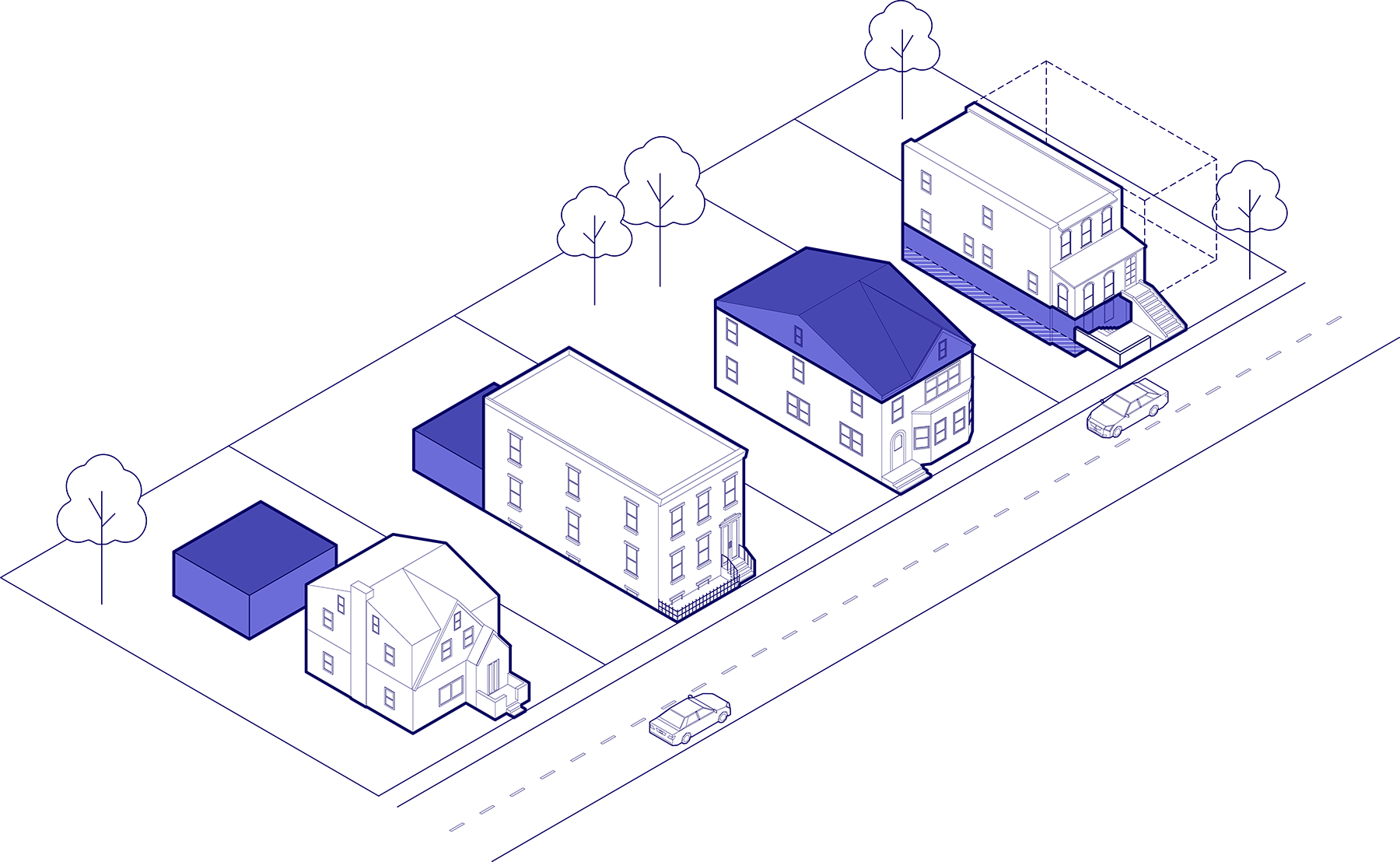
The definition and the limits both live in Zoning Resolution 12-10. An ancillary dwelling unit is an additional dwelling unit on the same zoning lot as a single- or two-family residence, not exceeding 800 square feet of floor area. The types the city recognizes include backyard cottages, garage conversions, attic conversions, above-grade units, basement and cellar units, and detached units. What actually disqualifies a lot is a shorter list than the rumor mill suggests, and four items on it matter more than the rest:
- Owner-occupancy, at initial occupancy. The lot has to be the primary residence of an owner when the unit is first occupied. This is the reverse of California, where a city may not impose an owner-occupancy condition on a standard ADU at all.
- Flood areas. Basement and cellar units are barred in the Special Flood Hazard Area, the Coastal Flood Risk Area and the city’s 10-year rainfall flood risk area; no backyard ADU is permitted in those two DEP flood risk areas either; and in the high-risk flood zone no ADU is permitted below the flood-resistant construction elevation.
- Backyard ADUs, in certain districts. A backyard ADU is barred in historic districts, in R1-2A, R2A and R3A districts outside the Greater Transit Zone, and in part of the Special Bay Ridge District.
- A garage conversion is not a backyard ADU. In the zoning definition a backyard ADU is one in a building developed after December 5, 2024 whose only dwelling unit is the ADU. Converting an existing garage does not meet that description, so the district restrictions above do not reach it. This is the point secondary coverage most often gets wrong, and it is the difference between a project being possible and impossible on a lot in a historic district.
In the rear yard, an ADU may not cover more than a third of the yard, needs a five-foot setback from the lot lines, and is limited to one story and 15 feet, or two stories and 25 feet where accessory parking sits below (ZR 23-341(b)(4)). A backyard unit also has to be reachable from a side yard or open area along a side lot line at least five feet wide (ZR 12-10). A detached unit must stand at least ten feet from the house (ZR 23-371).
The two-family trap
If you own a two-family house, adding an attic, basement, cellar or attached ADU makes the building a three-family building under the New York State Multiple Dwelling Law, which brings a different and more demanding set of requirements. The exception is an ADU separated from the house by a fire wall under Building Code Appendix U, which keeps the property in its existing occupancy classification. Owners of two-family homes should settle this question before paying for drawings, because it changes the project rather than adding to it. And in New York, those drawings come from a licensed design professional; there is no owner-drawn path.
What makes a New York City ADU legally rentable
One document answers it: the certificate of occupancy. No ADU may be occupied without one, and for an ancillary dwelling unit the certificate has to name it as such, referencing Zoning Resolution 12-10 and Building Code Appendix U. That is the test to apply to any unit you are about to rent out or rent: pull the certificate and look for the words. A unit that does not appear on a certificate of occupancy is not a legal dwelling unit, however finished it looks.
Behind that certificate sit the requirements that earn it: a separate entrance, seven-foot ceilings in habitable rooms, natural light and ventilation, emergency escape and rescue openings, sprinklers in most configurations, and separate controls and shutoffs for heating, cooling, electrical and gas even where the services themselves are shared. Basement and cellar units carry more: water sensors and alarms in every habitable space, two independent means of egress, a certified radon and vapor test before a temporary certificate of occupancy, and a directional sign where the entrance is not visible from the street. These are set out in 1 RCNY 105-08 and Appendix U, and summarized in the Department of Buildings ADU FAQs.
Under the Housing Maintenance Code a cellar room in a one- or two-family home may not be rented unless it is an ancillary dwelling unit holding a certificate of occupancy or a temporary one (HMC 27-2087, as amended by Local Law 80 of 2026), which is why an existing below-grade apartment cannot simply be rented as it stands. Local Law 126 of 2024 created a pilot for exactly those units, covering fifteen named community districts, for apartments that already existed before April 20, 2024, with an application deadline of April 20, 2029. As of September 2026 the Department of Buildings is not yet accepting applications under that pilot, pending its rules; here is what the process will look like when it opens. Meanwhile a narrower door did open: since April 9, 2026 a one-family home can file to build a new cellar ADU under Local Law 80, even as legalizing an old one waits. Check the DOB ADU page rather than trusting any date you read elsewhere, including this one.
Plans and money
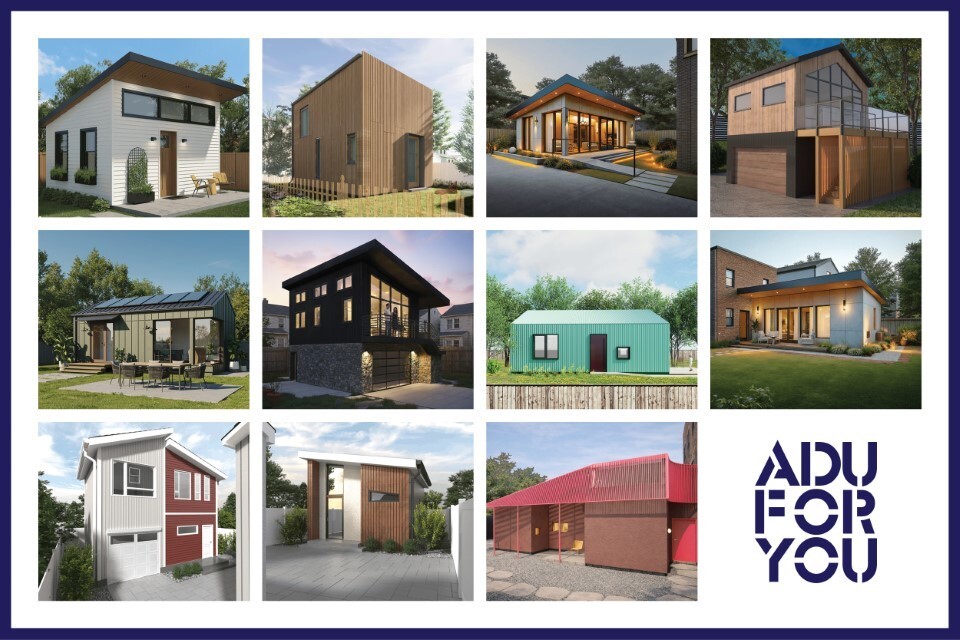
HPD publishes a Pre-Approved Plan Library of ADU designs that DOB has reviewed for general code and zoning compliance. As of September 2026 it holds eleven published designs, and the number grows as DOB approves more submissions. Two things to understand before you plan around it: every design in the library is a backyard unit, most of them detached cottages, two above a garage and at least one built against the house, and the library is a catalog rather than a download. To use one you contact the registered design professional behind it, who reviews your site, prices the work and files the job. A pre-approved plan is site-agnostic, so the zoning analysis, the foundation, the exterior walls and the utility connections are still site-specific work.
On financing, the program to know is Plus One ADU, run by New York State Homes and Community Renewal and, in the city, jointly funded with HPD and administered through Restored Homes HDFC. Intake is closed as of June 12, 2026, after reopening in March 2026 for the first time since 2024, so treat any "apply now" language you find elsewhere as out of date and join the mailing list instead. The terms are worth knowing in advance because they bind for years: the deferred-forgivable option carries a fifteen-year regulatory agreement with an income-limited initial rent, a two percent annual increase cap and a renewal offer requirement, while state funds separately require a long-term tenant for ten years and treat short-term rental as non-compliance. Eligibility and the award stack are in their own post, and so is the question of what a Brooklyn ADU does to an appraisal if you are financing it yourself.
Permit fees come from Administrative Code 28-112.2 and its table, and the two kinds of ADU are priced on entirely different bases. A detached backyard unit is its own new one-, two- or three-family building, billed on floor area at six cents a square foot but never less than $130 per structure, so every ADU small enough to be permitted lands on that minimum. A unit carved out of the existing building is an Alteration Type 1, billed on the estimated cost of work: a $170 minimum filing fee covers the first $5,000, then $2.60 for each $1,000 or fraction of one above it. Type 1 is the right row precisely because an ADU always produces a new or amended certificate of occupancy, and where that is so, half the fee is due with the first application for approval of construction documents and the rest before the permit issues. Both carry a flat $45 records fee. Our NYC ADU permit fee calculator itemizes it; DOB NOW computes the real figure at filing, and the statute lets the department raise these rates by rule.
How New York City compares with California
If you have read about ADUs anywhere else, most of what you absorbed was California law, and three of its load-bearing rules are simply not true here. California forbids an owner-occupancy requirement; New York City imposes one at initial occupancy. California guarantees a ministerial decision on a complete application within statutory deadlines; New York City runs the ordinary Department of Buildings plan examination. California caps what a city may require on an exempt unit; New York City layers zoning, the Building Code, the Housing Maintenance Code and, for a two-family house, potentially the Multiple Dwelling Law. Our Los Angeles County guide covers the California side if you own property in both places.
List a finished ADU for rent, free, or read the best tools for renting one out in New York City.
Frequently asked questions
- Are ADUs legal in New York City?
- Yes. The City Council adopted the City of Yes for Housing Opportunity zoning amendment on December 5, 2024, which permits an ancillary dwelling unit of up to 800 square feet on the same zoning lot as a one- or two-family residence, one per residence. Local Law 127 of 2024 added the construction side, Building Code Appendix U, and took effect June 16, 2025; its companion Local Law 126 created the basement and cellar legalization pilot. The Department of Buildings began accepting ADU filings in DOB NOW on September 30, 2025.
- Do I have to live on the property to build an ADU in New York City?
- Yes, at least when the unit is first occupied. The zoning text and the DOB rule both require that the zoning lot be the primary residence of an owner at the time of initial occupancy for the ancillary dwelling unit, and DOB can ask for the same proof of primary residence it uses elsewhere. This is the opposite of California, where owner-occupancy requirements for standard ADUs are prohibited outright.
- Can I convert my garage into an ADU in a historic district?
- A garage conversion is not a backyard ADU under the zoning definition, so the district restrictions that apply to backyard ADUs do not apply to it. Those restrictions cover buildings developed after December 5, 2024 whose only dwelling unit is the ADU, and they bar those in historic districts, in R1-2A, R2A and R3A districts outside the Greater Transit Zone, and in part of the Special Bay Ridge District. This distinction is the point secondary coverage most often gets wrong.
- How do I tell whether an existing basement apartment is legal?
- Pull the certificate of occupancy and read it. For a legal ancillary dwelling unit the certificate has to say so, naming the unit as an ancillary dwelling unit under Zoning Resolution 12-10 and Building Code Appendix U. No certificate of occupancy naming the unit means it is not a legal dwelling unit, whatever it looks like. For a cellar that is the whole story: since Local Law 80 of 2026 the Housing Maintenance Code allows a cellar room in a one- or two-family home to be rented only as an ancillary dwelling unit with a certificate of occupancy or a temporary one.
- Can I rent an ADU in New York City on Airbnb?
- As a practical matter, no. Local Law 18 of 2022 bars renting an entire apartment or home for fewer than 30 days and allows short-term rental only where the host is present in the same unit and the guest has full access to it, with a limit of two guests. An ADU is by definition a separate, self-contained dwelling unit with its own entrance, so it cannot meet that test. Long-term rental is expressly contemplated: HPD describes the rental income as one of the reasons to build one.
- Will my New York City ADU be rent stabilized?
- Ordinarily not. Rent stabilization reaches buildings of six or more dwelling units, generally those built before 1974 or receiving certain tax benefits, and a one- or two-family home plus one ADU is well under that threshold. The rules that are likely to bind you instead are contractual: an ADU financed by a Plus One ADU deferred-forgivable loan carries a 15-year regulatory agreement with an income-limited initial rent and a 2 percent annual increase cap. That is a regulatory agreement, not rent stabilization. Confirm your own situation with New York State Homes and Community Renewal.
This guide is general information, not legal advice, and it is not a substitute for the Department of Buildings. Sources: the New York City Zoning Resolution, Local Laws 126 and 127 of 2024, Building Code Appendix U, 1 RCNY 105-08, and the published DOB and HPD guidance, each linked above and read in September 2026. New York City ADU rules are changing quickly; confirm current requirements before you build or rent.