California's First Fire-Resistant 3D-Printed ADU Uses No Wood
Chris Koss, AIA|Published: July 27, 2026
Last updated: October 1, 2026
In a Walnut backyard, a robotic arm printed the concrete walls of what its builders call California's first fire-resistant ADU: 1,200 square feet, two bedrooms, and not one stick of wood in the main structure.
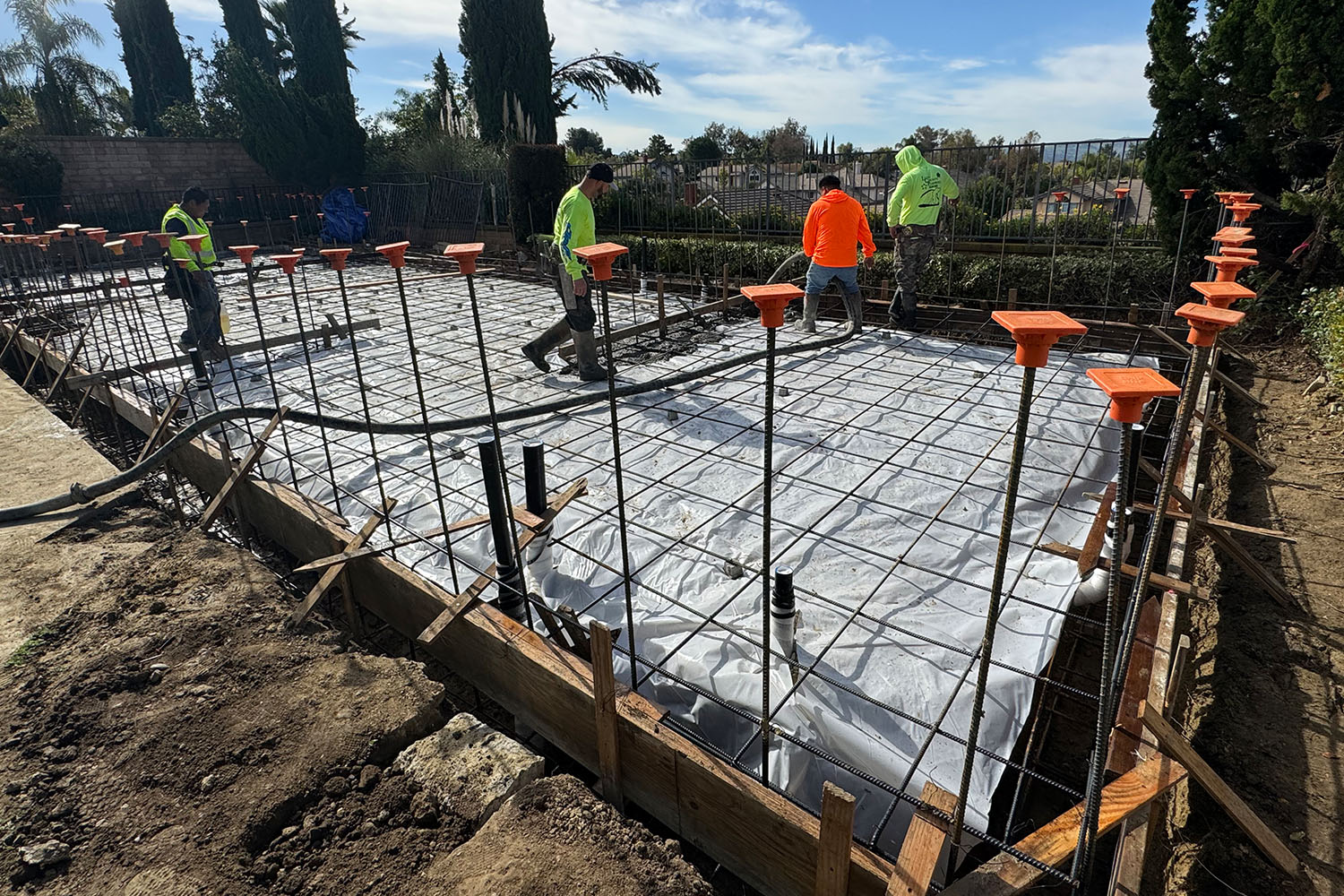
The printed concrete shell of the Walnut ADU, mid-build. Parametric Architecture, photo via RIC Technology.
Philips and Constance did not set out to make history in their Walnut backyard. They set out to not lose their house, and what went up behind it is, by its builders' account, California's first fire-resistant accessory dwelling unit built on site out of concrete: 1,200 square feet, two bedrooms, two and a half baths, and not a single stick of wood in the main structure.
The short version:
- A robotic arm from RIC Technology printed the ADU's exterior walls in non-combustible concrete, a print phase the team put at roughly 20 days.
- The roof is light steel and Sure-board rather than wood, and the eave vents and windows, the openings embers exploit first, are reinforced.
- It was designed with the City of Walnut and the Los Angeles County Fire Department and pulled construction permits under existing code, which is the part that travels to your lot.
The build
The general contractor is Builtech Construction Group, run by Aaron Liu, who holds an NFPA wildfire mitigation certification (the CWMS credential). His framing of the problem is the whole design brief in one sentence. "During wildfires, heat and oxygen, two of the three components of the fire triangle, are beyond control," Liu said, so his team went after the third: fuel. The main structure is built without a single piece of wood or nail. Concrete exterior walls, a light-steel and Sure-board roof, hardened vents and windows. There is nothing on the shell for an ember to catch.
The walls come from RIC Technology, whose founder Ziyou Xu makes a compact modular robotic arm rather than the room-sized gantry most construction printers ride on. K4K Construction Design ran the printing as a subcontractor. If you are a first-time ADU client, the sequence is worth knowing: Builtech laid plumbing and foundation first, then the arm arrived to print the walls, then the wood-free roof went on. The novelty is the material and the machine, not the permit path. This unit went through the same Los Angeles County plan check any backyard ADU does.
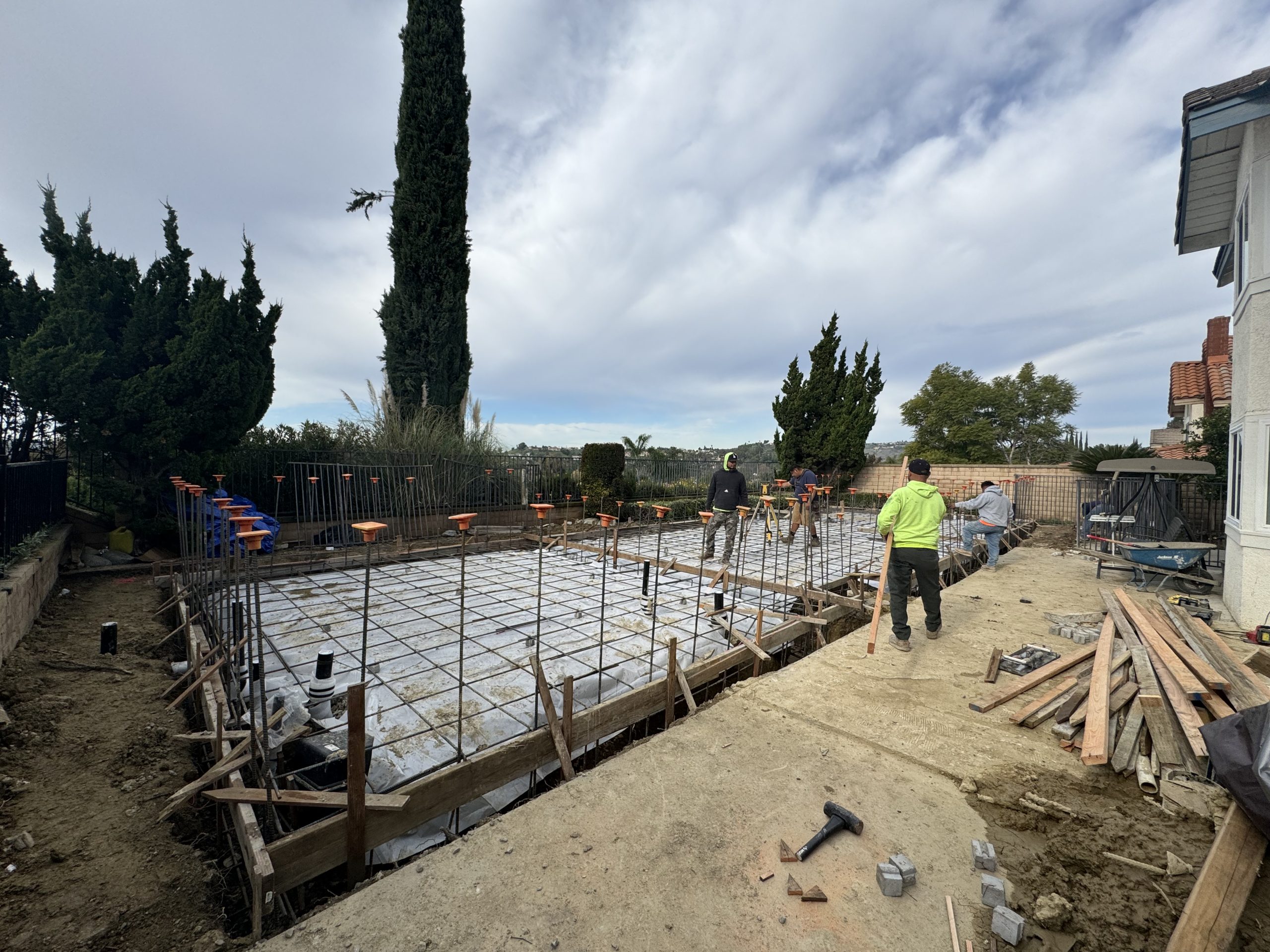
The one hard part: a robot that fits in a backyard
Most construction 3D printers are gantry systems, big rigs that need an open pad and clear sides to run their rails. A typical ADU lot offers neither. The house is already there, the fences are close, and the buildable rectangle is whatever the setbacks leave you. RIC's answer was to shrink the printer into an arm that can work in a confined space, which is the difference between a technology that demos on a vacant lot and one that can actually print behind an occupied single-family home. For infill ADUs, that constraint is the entire game. A method that cannot fit between your house and your neighbor's fence is not a method you can use.
What the fire code already asks of your lot
None of this is exotic where wildfire risk is mapped. California's Chapter 7A, the building-code chapter on materials and construction methods for exterior wildfire exposure, already governs any new building in a Fire Hazard Severity Zone or the wildland-urban interface. It reaches the roof, the siding, the exterior walls, the windows, the decks, the soffits, and the vents, and it requires a Class A roof, because embers and small flames, not a wall of fire, are what the USDA Forest Service's Wildfire Risk to Communities data shows starting most home losses. Read the chapter itself in the Los Angeles County code and you will see the Walnut ADU is not fighting the rules; it is over-answering them. Chapter 7A hardens the shell. This build removes the fuel from the shell entirely.
That distinction matters right now in Los Angeles County, where thousands of Eaton and Palisades households are deciding what to rebuild first. We covered LA County's Eaton fire ADU grant and the demand that instantly outran it, and we noted, covering SB 1090's pause on Altadena subdivisions (signed September 30, 2026, it reaches SB 1123 subdivisions, not SB 9 lot splits or ADUs), that the ADU is the one move fire-zone owners can still make fast. A non-combustible ADU that clears county fire review is exactly the proof of concept those owners have been asking whether they can trust.
The cross-street check. This is a California problem with a California answer. In New York City, an ADU's fire question is interior, not wildland: a cellar or basement unit legalized through the pilot has to add automatic sprinklers within two years of its temporary-residence certificate, and egress is the fight, not embers. Washington and Oregon owners in a fire-prone area answer to their own states' wildland-urban interface provisions, not to California's Chapter 7A, so a printed, wood-free wall that satisfies LA County Fire would still have to be checked against Seattle's or Portland's code before it means anything there. The technique is portable. The code approval is not.
What it means for your own lot
Start with the number that already applies to you. 1,200 square feet is the size at which California treats a detached ADU as ministerial, so Philips and Constance built to the largest footprint state law waves through without discretionary review. If your lot sits in a Fire Hazard Severity Zone, you are going to pay for Chapter 7A compliance no matter what you frame the walls out of; the question this build raises is whether spending it on non-combustible concrete instead of hardened wood changes your insurance and your odds in the next fire.
Our read: fire performance is no longer the open question here. The unit cleared a Los Angeles County permit and passed the county fire department under existing code, in 2024, on an ordinary residential lot. The open question is cost. Until a printed, non-combustible ADU pencils against a wood-framed one after you price the insurance discount and the financing, it stays a well-documented demonstration on one Walnut lot rather than the default in Altadena. The proof exists. The math is what has to catch up.
If you are weighing a fire-hardened build, A-du's build marketplace lets you compare pre-approved ADU plans, filtered by what your city approves, before you commit to a construction type.
The next thing to watch is whether RIC and Builtech get a second lot, ideally a rebuild address in the Eaton footprint, because one demonstration is a story and the tenth one is a supply chain.
Elsewhere on the ADU beat
- San Diego's City Council adopted a 25-part reform package that caps bonus ADUs by lot size and adds a community enhancement fee, Inside San Diego.
- Seattle has opened a call for a refreshed pre-approved DADU catalog after its own height and lot-coverage rules outgrew the old designs, Seattle OPCD.
- Portland still waives System Development Charges for owner-linked ADUs up to 800 square feet, a subsidy worth tens of thousands, Portland.gov.